Vase-Life Routines: A Room-by-Room Style Playbook
Vase life is mostly a placement decision. A room-by-room style playbook for where a vase belongs, how it should sit on its surface, and the short weekly routine that keeps blooms looking fresh.
A bouquet rarely fails all at once. It fades because of where it sat for a week. Vase life is decided less by clever tricks than by placement and a short routine you repeat: a cool spot, clean water, trimmed stems, and a glance every few days. Those four habits do more for an arrangement than any additive, and they cost about five minutes a week.
This playbook treats the vase as part of the room rather than an ornament dropped on the nearest shelf. Each section takes one real setting, from the entry console to a dim bedroom corner, and covers where the vase belongs, how it should relate to the surface and the wall behind it, and what to check as you walk past.
The First Hour Decides More Than the First Week
Unpack with the destination already chosen. A vase set down for now beside a radiator or in a hot patch of afternoon sun usually stays there, and the first day is when stems draw water fastest. Pick the cool, bright, out-of-the-way spot first, then open the wrapping.
In that first hour, cut an inch or so off each stem at an angle with sharp shears, strip any foliage that would sit below the water line, and fill the vase with cool water plus the flower food if one came with the arrangement. Angled cuts keep stem ends from resting flat against the bottom of the vase, and clean water is the strongest thing you control.
Four Room Tests Before the Vase Lands
Almost every placement question comes down to four checks you can run in under a minute.
- Light: bright and indirect keeps colors clear, while direct sun through window glass heats the water and bleaches petals.
- Heat: keep distance from radiators, ovens, stovetops, and appliances that vent warmth.
- Air: avoid forced-air vents, open doorways, and ceiling fans that push dry air across the blooms.
- Traffic: stay out of the path of bags, elbows, and wagging tails, since a toppled vase ends the routine early.
There is a fifth, quieter factor: ripening fruit. Florists commonly blame the gas from a bowl of bananas or apples for faster aging, so give the fruit bowl a few feet of separation rather than setting the vase beside it on the same counter.
Surface, Height and the Sightline
A vase looks deliberate when its height agrees with the surface beneath it. On a console or narrow sideboard, an arrangement that fills roughly a third to a half of the open wall above it reads balanced. On a dining table, keep the top of the blooms below the eye level of a seated guest so conversation stays open across the table. Our guide to bouquet shape and proportion walks through the same logic in more detail.
Check it from the doorway
Stand where guests actually enter and look at the arrangement against its wall. If the top third disappears into a busy pattern or a dark bookshelf, raise the vase on a short stack of books or move it to a quieter stretch of wall. Depth matters too: pull the vase a few inches forward from the wall so the shape reads in three dimensions instead of flattening into it.
Color Reads Differently Against a Wall
Wall color changes a bouquet more than most buyers expect. Pastels soften into the paint on a pale wall and can look washed out from across a room, while saturated blooms hold their own against deep or dark paint. If you want an arrangement to feel calm, let it echo the wall; if you want it noticed, give it contrast. The beginner's guide to flower color and style covers how to build that contrast deliberately.
Entry and Console: The Thirty-Second Impression
The entry is the one spot every visitor sees at close range, so it rewards an arrangement that looks fresh without fuss. Morning light is ideal here as long as it stays indirect; a west-facing console that bakes from two in the afternoon is not. Something like Sunshine & Serenity, with sunny yellow roses, white lilies, purple blooms, and greenery in a clear glass vase, suits a bright console where the colors can do the greeting.
Clear glass earns its place in this routine because the water level stays visible from standing height. You will notice a low vase on your way out the door, which is exactly when a top-up takes ten seconds.
Dining Table and Kitchen Counter
The kitchen is the hardest room in the house for cut flowers: steam from the sink, heat from the stove, and a fruit bowl all work against them. If the counter is where you want the arrangement, choose the end farthest from the cooking zone and accept that it may need a water change sooner than a vase in a cooler room.
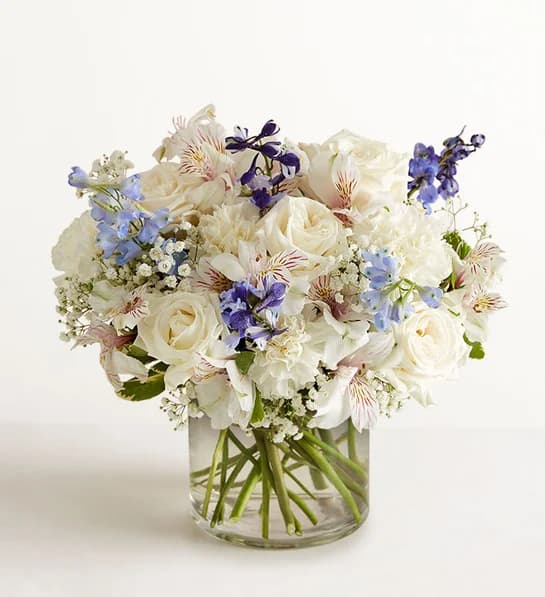
At the table, calm colors hold up better than a shouting mix, and creamy whites stay readable under evening lamplight. Warm & Meaningful pairs creamy white roses with blue and lavender blooms and soft white filler in a clear glass vase, a combination that sits quietly beside plates and glassware without competing with them.
Two habits keep a table arrangement looking cared for: move candles and hot serving dishes away from the blooms, and lift the vase rather than sliding it when you clear the table.
Bedroom, Bath and Dim Corners
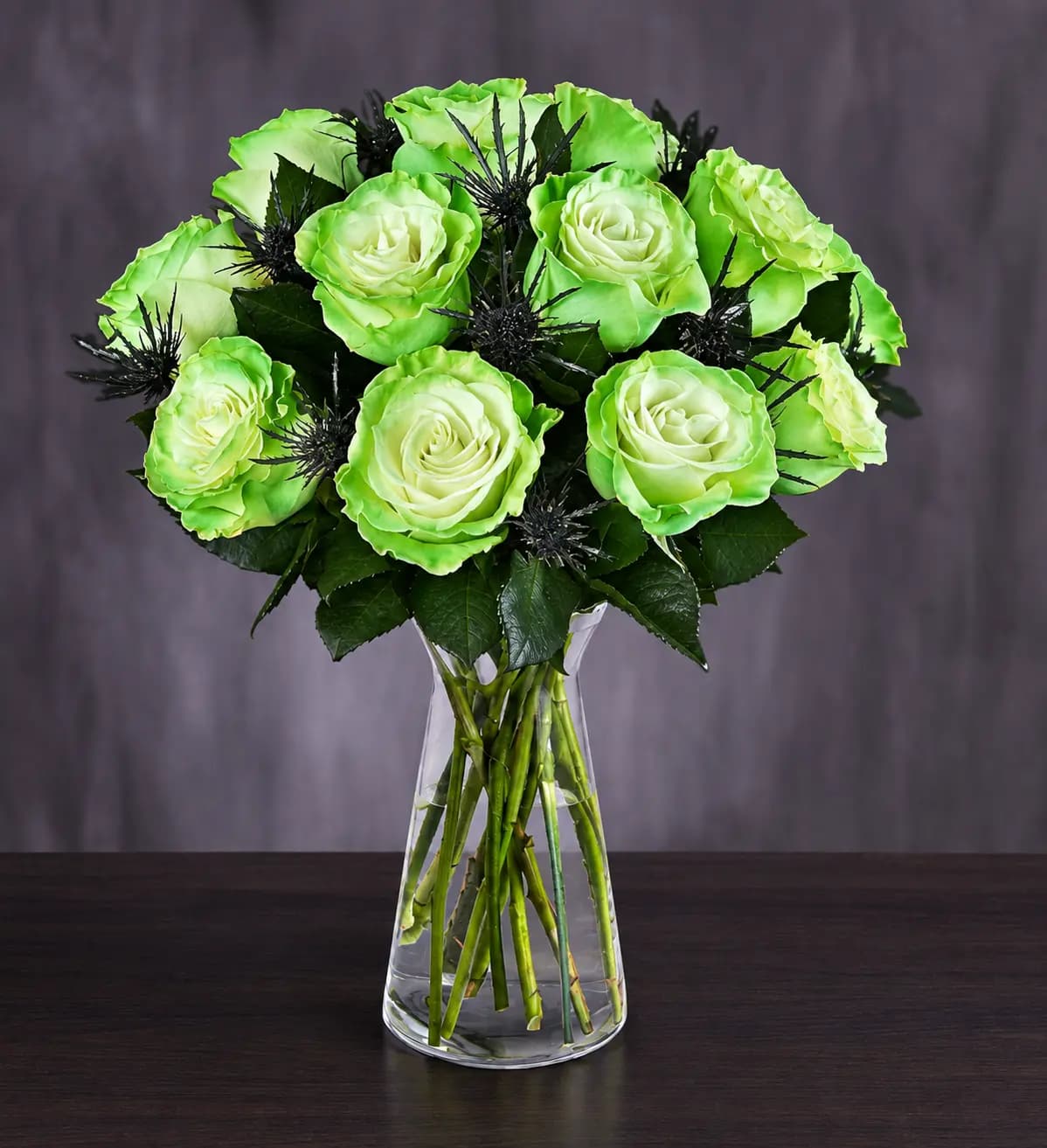
Low-light rooms are not a problem for a vase as long as you skip direct sun and keep the water clean; a dim corner actually slows the fade. What those rooms need is contrast. Wicked Midnight Bloom, with lime-green roses accented by black thistle-like blooms and greenery, holds its own against a dark wall where softer colors would disappear.
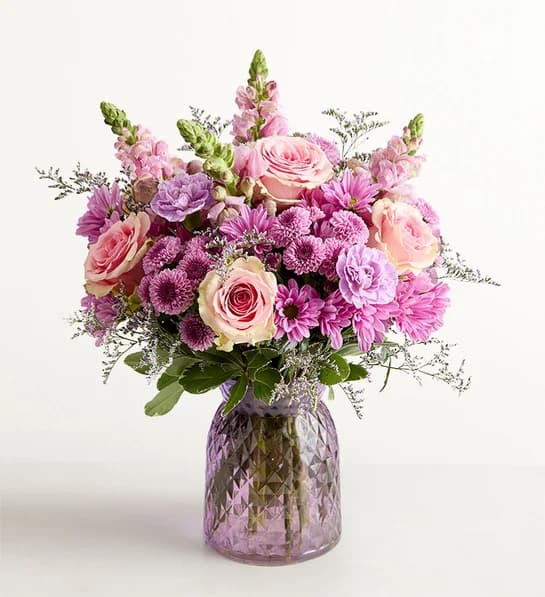
A colored vase can carry a small room on its own. Lavender Dreams brings pink roses, lavender snapdragons, soft lavender carnations, and daisy blooms together in a lavender glass vase, so the vessel continues the palette instead of interrupting it. On a nightstand or bath shelf, keep the arrangement short enough to clear a lamp and stay out of the splash zone.
The Midweek Reset
Set a five-minute reset every two or three days and the routine stays small. Change the water, rinse the vase to clear the slippery film that builds on the glass, re-cut the stems at an angle, and pull any spent blooms or fallen leaves. Rotate the vase a quarter turn so the same side does not face the light all week, and nudge stems that have drifted back toward the shape you liked on day one.
Reading the water
Cloudy water, a slick vase wall, or yellowing leaves near the rim all mean the water should have been changed yesterday. None of those signals call for a home remedy; fresh water and a fresh cut handle almost every case.
Rework Instead of Rescue
When a mixed arrangement loses its first flowers, do not wait for the rest. Split what remains into a smaller vessel, group the stems by color, and treat it as a new, shorter arrangement rather than a fading one. Three stems in a small vase on a nightstand or desk looks intentional, and it keeps the last good days of the bouquet in view instead of hidden behind spent blooms.
A Routine You Can Keep
Choose the cool, bright, low-traffic spot before you unwrap, trim and strip in the first hour, glance at the water daily, reset every few days, and rework the stems when the mix thins out. Placement is the part most people skip and the part that buys the most days. When you are ready to send an arrangement with a good week ahead of it, Great Flowers can help you choose one.