Wedding Flowers for Ceremony Planning: A Decision Guide
A decision guide to wedding flowers for ceremony planning: how to choose bouquets, ceremony arrangements, and details by venue, season, budget and who is wearing them.
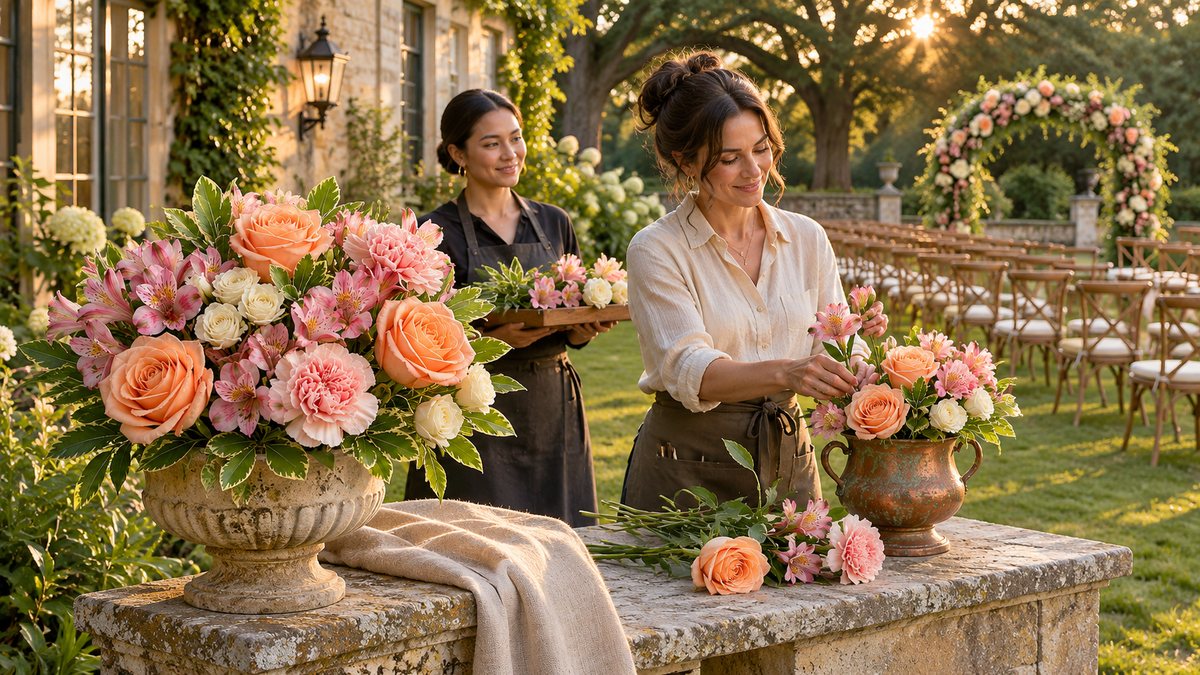
Decide ceremony flowers by where the service happens first, then match the palette, scale and stem mix to that setting, and order early enough that nothing has to be improvised on the morning. Couples who sort the wedding into three visual moments — the walk down the aisle, the altar or arch, and the photos afterward — almost always spend less and like the result more. This guide walks that order through real trade-offs so you can choose with confidence rather than guess.
Start With the Ceremony Space, Not the Flower List
Venue and season decide far more than any inspiration board. A grand ballroom swallows loose garden-style arrangements; a small chapel turns a dramatic installation into clutter. Before choosing a stem, note four things: ceiling height, natural light, the material underfoot, and the distance between the front row and the altar.
A high-ceilinged hall rewards height. A long banquet table or a tall stand keeps flowers visible from every seat, which matters when guests are talking rather than watching. In a low room, compact designs read better and never block sightlines. Ask what the venue allows, too. Historic churches often restrict open flame, nails and tape, and may require a licensed florist; outdoor sites give freedom but no shelter, which changes both the stems and the delivery window.
Match the Palette to the Light, Not Just the Bridesmaid Dresses
Choose color against the room as much as against the fabric. Strong midday sun washes pastels flat and makes whites glaring, so an outdoor summer service usually looks best with one saturated accent among softer tones. Candlelit interiors do the opposite, warming pale petals until they glow and making deep colors nearly vanish without contrast.
Hold dress swatches next to sample stems in the same light before committing. What reads elegant in a bright bridal salon can go muddy in a dim sanctuary. Two close shades of one family often beat an exact match: the palette photographs better and forgives small dye-lot differences.
Bridal Bouquet Shapes and How They Behave
Four shapes cover most ceremonies. A hand-tied rounded bouquet is the classic: it sits comfortably at waist height and suits most silhouettes. A cascading design photographs beautifully but needs a steady arm and room to move. A loose, airy garden style feels relaxed at barns, gardens and wineries, though it asks for stems that hold their shape in heat. A compact posy or single-stem statement suits courthouse services and elopements, where a large arrangement overwhelms the scene.
Scale should follow the wearer. A smaller frame reads best with a narrower bouquet, and heavy gown texture pairs better with clean lines.
Ceremony Arrangements: Altar, Aisle and Entrance
Treat these as three separate jobs. The altar or arch carries the whole service in photographs, so it takes the largest investment and the most distinctive blooms. Aisle markers set rhythm and guide the eye forward; keep them small enough to stay clear of elbows and legs in tight rows. Entrance pieces welcome guests, but they are seen briefly, so simple usually suffices.
A workable split is most of the budget on the focal point, the rest between aisle and entrance. Ceremony pieces can then move to the reception during cocktail hour, stretching the work instead of paying twice for the same effect.
Seasonal Choices That Stay Credible
Seasonality is a planning tool, not a rulebook. Peonies, garden roses, sweet pea and ranunculus peak in spring and early summer, so a December wedding built around them may cost more or need substitutes. Dahlias, chrysanthemums, sunflowers and ornamental grasses lean autumn; evergreen, branches and berries carry winter without pretending anything is in bloom locally.
The honest approach is one or two seasonal anchors filled out with reliable greenhouse or imported stems. For more on styling with the season, see In-Season Flowers: A Deep Guide to Styling With the Season.
Wedding Party, Family and Small Details
Bridesmaids' bouquets, boutonnieres, corsages and hair flowers should feel related without being identical, so the party stays cohesive and each person wears something flattering. A boutonniere should sit cleanly on a lapel; a large or drooping design pulls sideways once pinned and photographs poorly. Corsages deserve soft, secure bands and a stem angle that stays upright through hugs.
A gentle tonal shift across the party — deeper for attendants, palest for the person walking the aisle — reads intentional in photos. Uniform blooms in varied sizes achieve the same cohesion without it.
Who Is Ordering: Couples, Planners and Family Members
If you are the couple, the fastest path is one palette, one florist and a written list of ceremony moments, which avoids twelve people each ordering something lovely that clashes. Share that list with the planner early, because placement often depends on where the camera stands.
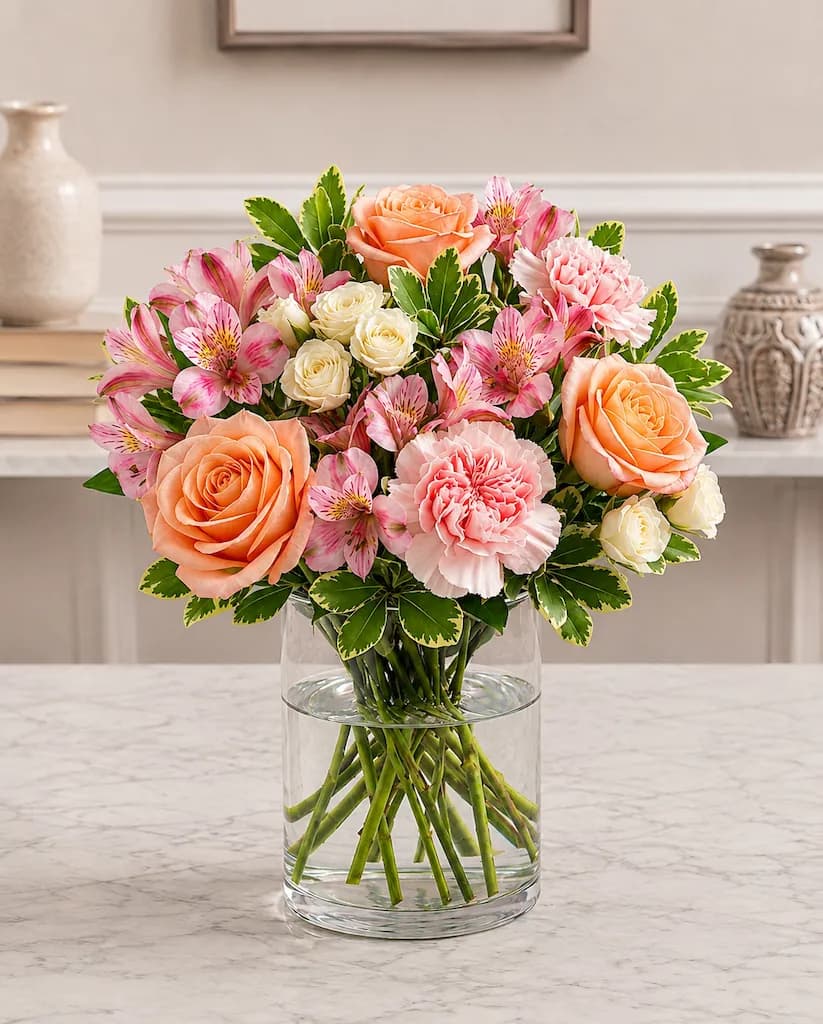
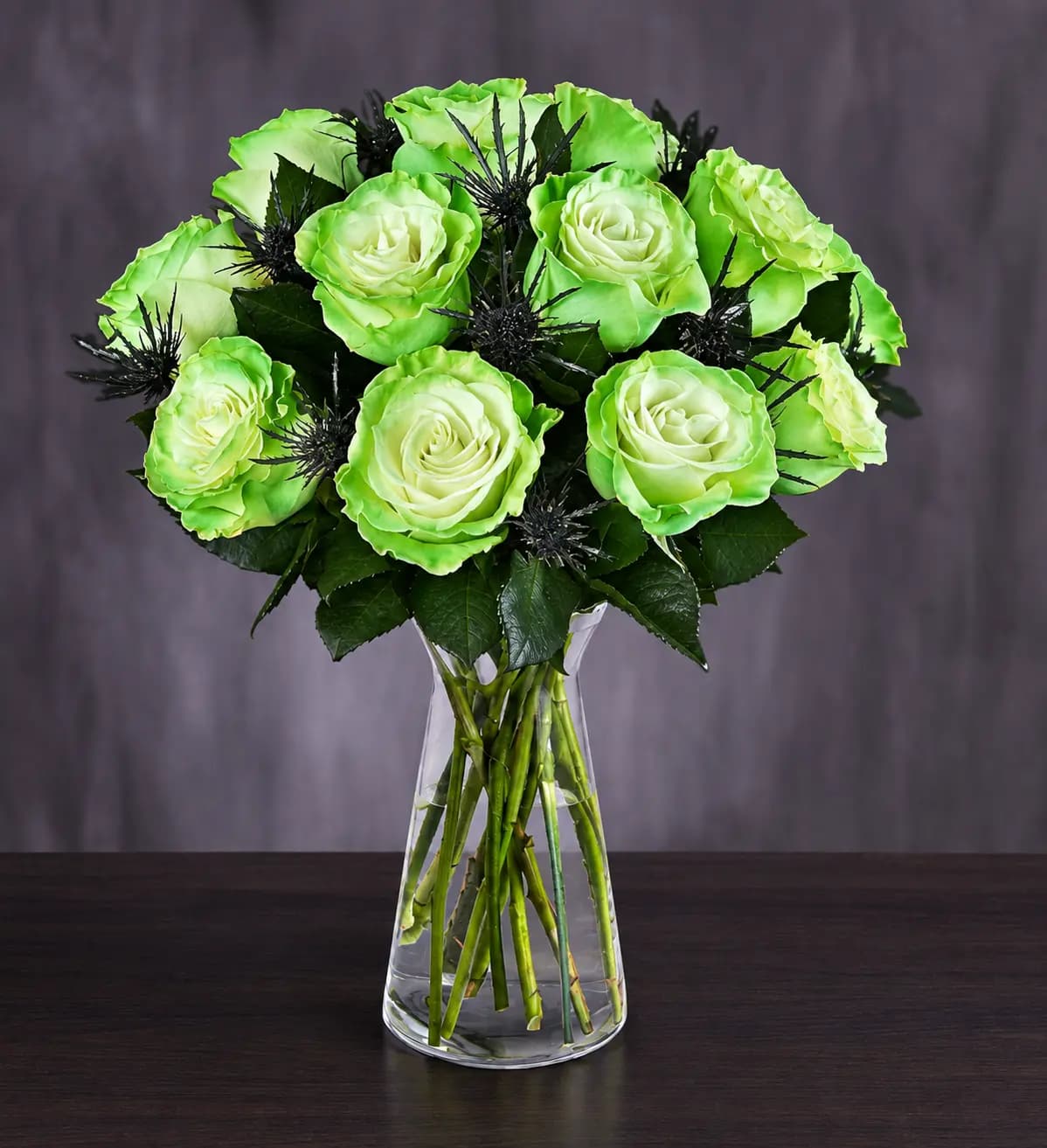
Where a parent or family member is gifting the flowers, a ready-made bouquet keeps the gesture simple. The Sunset Romance, with peach roses, pink carnations, white spray roses and variegated greenery in a clear cylinder vase, suits a rehearsal dinner or at-home celebration. Wicked Midnight Bloom, pairing lime-green roses with black thistle-like blooms, fits a bold modern palette.
Timing, Delivery and the Morning Of
Most ceremony flowers arrive the day before, or the morning of, depending on the venue and the stems. Order well ahead, especially for peak spring weekends, and confirm the delivery window in writing. Ask who receives and unpacks the arrangements, who moves them to the reception, and where buckets and water will live.
Same-day delivery is available in many areas when you order before the local cutoff, though it is not available everywhere and should never be treated as guaranteed for a fixed ceremony hour. Keep vases, tape, shears, ribbon and a spray bottle in one kit near the getting-ready room, and build in slack before the processional.
Care and Handling So Everything Looks Fresh at Four O'Clock
Flowers fail from heat, dry air and neglected water long before age. Keep arrangements cool, shaded and away from direct sun, heaters and hot catering trucks. Top up water whenever you pass a container, and recut stems that sat dry for more than an hour.
Firm buds travel better than fully open blooms on warm days and may still open after arranging. Loose petals tossed into a basket make a quick ceremony accent, and mist exposed petals lightly rather than soaking ribbon.
Conclusion: Decide by Moment, Not by Stem
Good ceremony flowers come from ordering the decisions: space first, palette second, focal point third, everything else last. Rank the aisle, the focal point and the welcome area in that order, fund them accordingly, and let the last one absorb whatever remains. Choose what reads clearly from the back row, keep the party coherent, and leave margin in timing and budget so the day stays calm.
- Confirm venue rules, setup times, and whether a licensed florist is required.
- Choose the palette against real light, with dress swatches and sample stems side by side.
- Decide which pieces move from the ceremony to the reception, and assign someone to move them.
- Order personal flowers last, once dress and suit decisions are final.
- Set a delivery window with slack before the processional, and name a receiver.
- Prepare a care kit with water, shears, tape, ribbon and a spray bottle.
For help with color, A Beginner's Guide to Flower Color and Style for Every Occasion walks through pairing tones by occasion.
For more ideas and ready-to-send arrangements, explore Great Flowers.