Sending Sympathy Flowers: A Beginner's Step-by-Step Guide
A practical walkthrough for first-time sympathy flower senders: choosing where the flowers should go, the right tone and size, a card message in your own voice, and delivery timing that avoids last-minute stress.
When someone you know is grieving, the question is rarely whether to reach out — it is how. Sending sympathy flowers is a steady, familiar gesture that tells a bereaved family they are not carrying everything alone, and you do not need to master floral etiquette to do it well. What matters most is that the arrangement arrives in good condition, reads as calm rather than celebratory, and carries a short message in your own voice. The steps below walk through the whole process in order, from deciding where the flowers should go to confirming the delivery details.
Start Here: What Sympathy Flowers Are Really For
Sympathy flowers are a gesture of presence, not a performance. Across many cultures and faiths, blooms offered at a time of loss carry traditional associations with remembrance, respect, and comfort — and those associations vary widely, so there is no single correct choice. White and cream stems are the most familiar option in many Western traditions, yet soft pinks, lavenders, and relaxed garden mixes are equally appropriate when they feel true to the person being remembered. If you aim for a tone that honestly says "I am thinking of you," you have already made the most important decision.
Step 1: Decide Where the Flowers Should Be Delivered
Choose the destination before you browse arrangements. A funeral-home piece is seen during the service and needs the deceased's full name plus the service date and time so the florist can label it correctly. An arrangement sent to the family's home arrives when they are there to receive it and can stay in the living room for several days, which many people find more comforting. Unless you are immediate family, a home delivery is usually the safer default. Read the obituary first, because many families state a preference — the service, the home, or a charitable donation instead.
When the family asks for donations instead
Respect that request and give to the named cause. Sending a small bouquet or a separate note alongside a donation is not redundant; most families appreciate being honored in both ways, and the flowers give them something tangible to look at in the weeks after the service.
Step 2: Set the Tone Before You Pick the Flowers
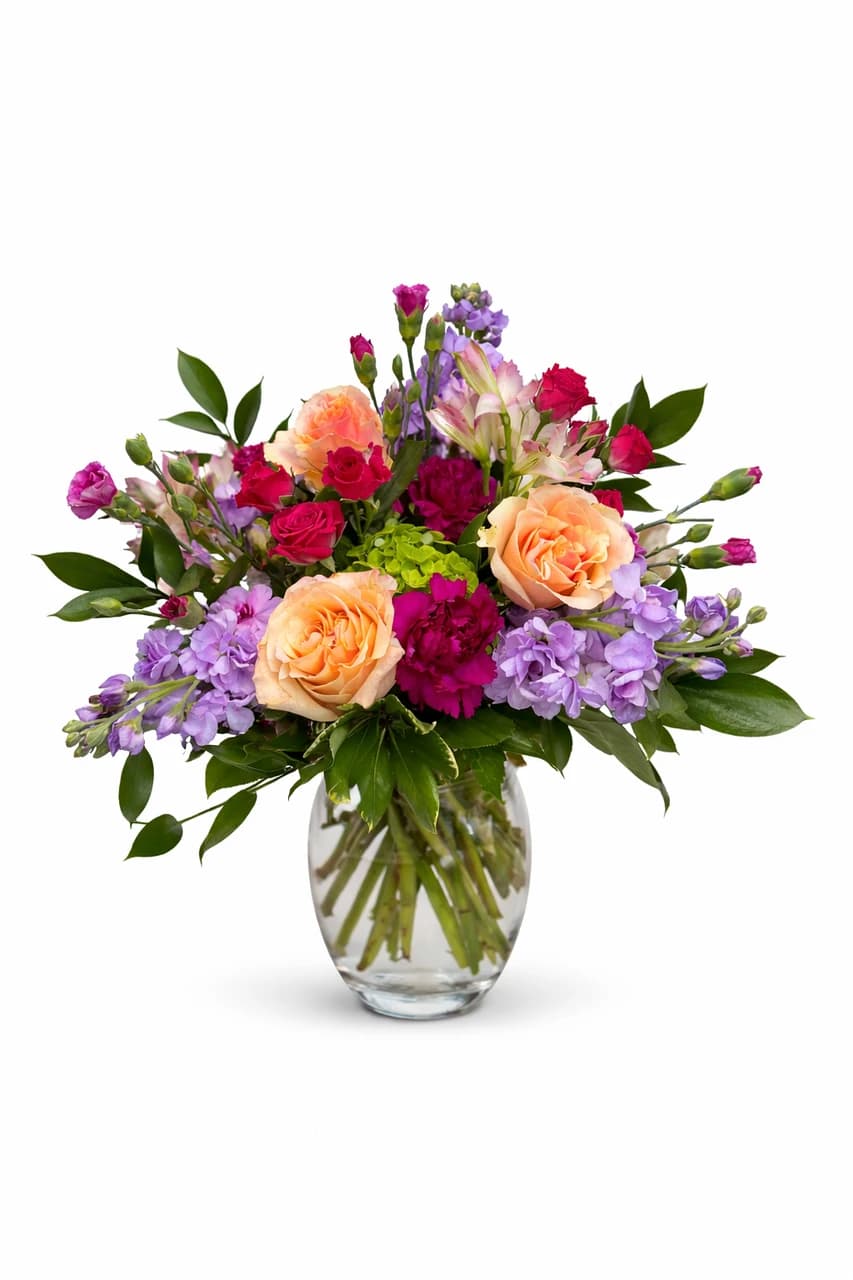
Match the palette to the mood the family wants, not to a rulebook. For a traditional or formal service, creamy whites, soft ivories, and cool blues tend to read as calm and respectful. For a celebration of life, or for a family that found somber rituals uncomfortable, gentle pinks, peach, and lavender can feel warmer without becoming festive. Ask one practical question: would this arrangement look at home beside a photograph of the person being remembered? A loose, garden-style mix like the Giverny Garden Bouquet — peach roses, delicate lavenders, and soft pinks gathered in an airy, informal style — suits that second situation well. If you want a deeper read on how different colors register, see our planning checklist on how to choose flowers by color meaning.
Step 3: Choose an Arrangement Type and Scale
Pick a form that fits the setting. Vase arrangements and baskets are the easiest choice for a home, because the family does not have to find a container. A potted plant lasts longer and suits someone who finds tending something soothing. Standing sprays and casket pieces belong to the service itself and are usually ordered by the immediate family.
Judge scale by the room it will sit in. A compact arrangement suits an apartment sideboard, while a fuller mix holds its own on a mantel or a church fellowship table. Reading scale against real spaces takes practice; our guide to choosing the right bouquet shape and proportion walks through it in detail.
Step 4: Match the Product to the Recipient's Home
Four arrangements cover most sympathy situations. Each one is described plainly so you can picture where it would land.
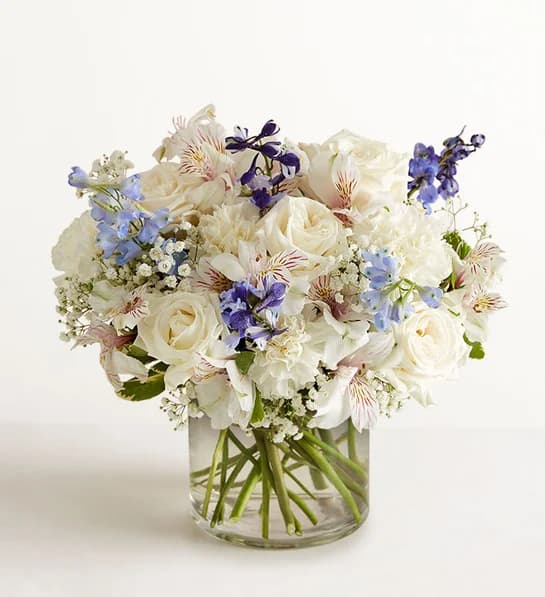
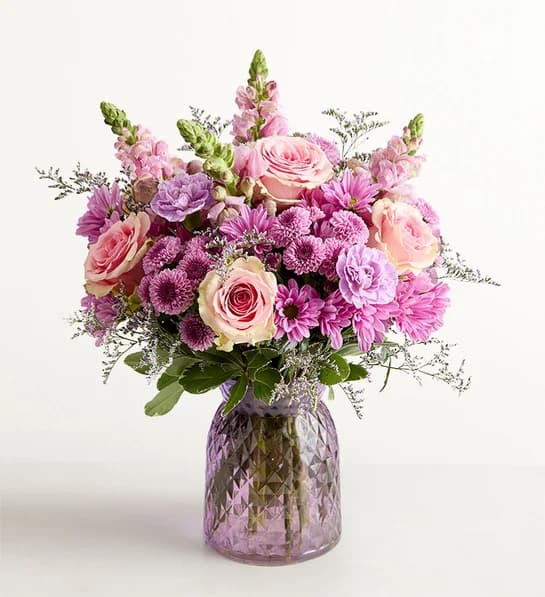
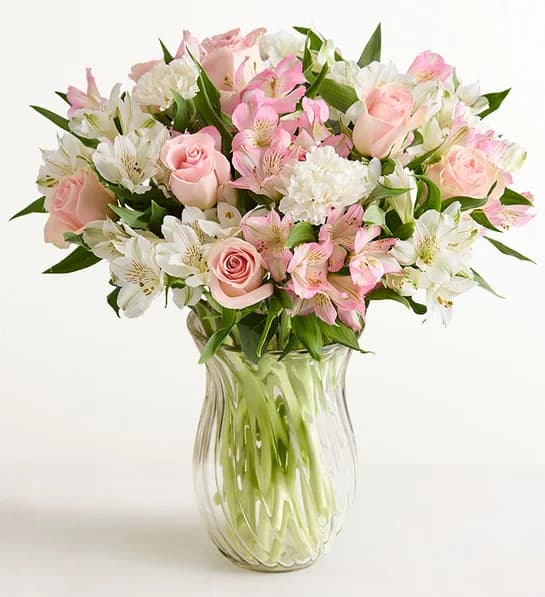
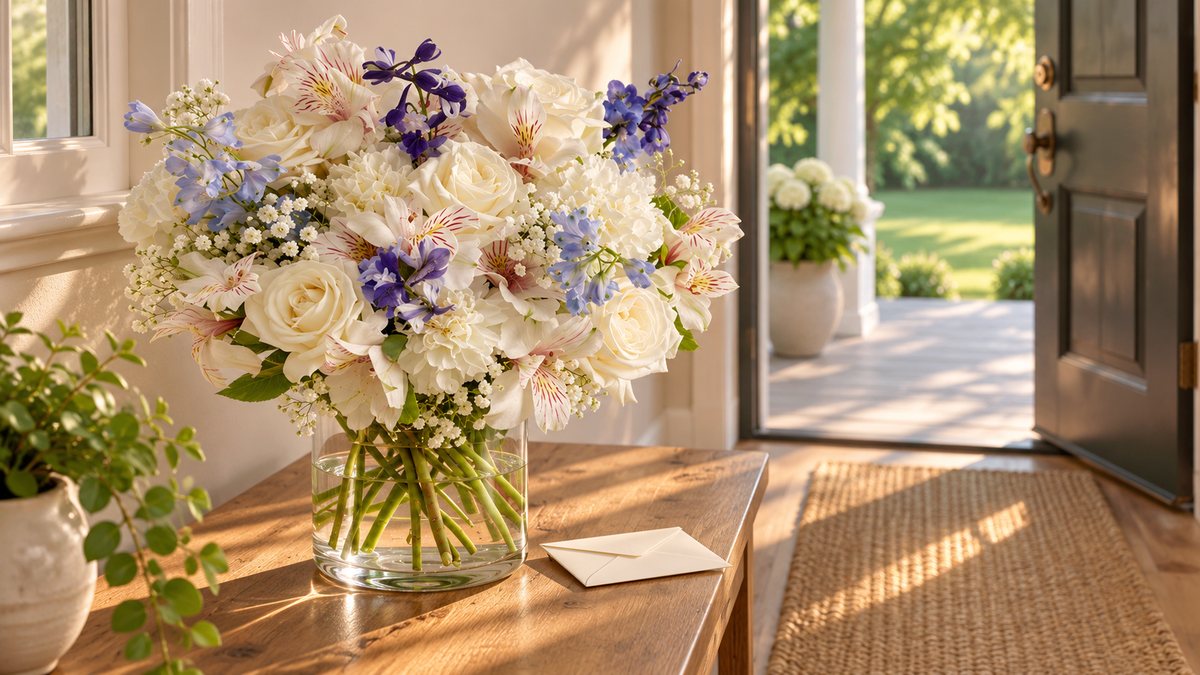
The Warm & Meaningful bouquet is the calmest, most traditional choice: creamy white roses, delicate blue and lavender blooms, and soft white filler flowers arranged in a clear glass vase. Because the stems stay visible, it looks composed in a neutral living room without any extra decoration. The Lavender Dreams bouquet pairs pink roses, lavender snapdragons, lavender carnations, and daisy blooms in a lavender glass vase; the colored vessel creates a soft focal point that holds attention in a quiet corner. For a family that prefers restraint, the Petals of Grace bouquet keeps things understated with soft pink roses, delicate alstroemeria, white carnations, and fresh greenery.
Step 5: Write a Card Message That Sounds Like You
Keep the card brief and personal. Two or three sentences are enough: state who you are, name your connection to the person who died, and offer one specific kindness rather than a vague "let me know if you need anything." If your relationship was warm, share a single small memory. Sign your full name, and if the flowers come from a group, make clear who is included.
- "I was so sorry to hear about your mother. Her kitchen always felt welcoming, and I will remember that."
- "Thinking of your family today. I will drop off groceries on Thursday — no need to reply."
- "Your father's laugh filled every room he walked into. I am holding you all in my thoughts this week."
Avoid phrases like "everything happens for a reason" unless you know they bring genuine comfort to this particular family. When in doubt, simple and sincere beats polished.
Step 6: Time the Delivery Carefully
Florists build sympathy pieces to order, so give them as much runway as possible. For a funeral-home delivery, order at least a day ahead and supply the service date and time. For a home delivery, choose a day when someone will be there and aim for a quieter stretch rather than the hours right after the service. Same-day delivery is available in many areas, but it depends on local florist availability, the recipient's location, and cutoff times, so order early in the day if you need it. Our beginner's guide to planning flower delivery covers the ordering flow step by step.
Step 7: Make the Delivery Details Easy to Follow
Hand the florist everything required in a single pass: the recipient's full name, the street address with apartment or unit number, a daytime phone number, any gate or building code, and — for a service delivery — the funeral home's name, address, and the deceased's full name for labeling. Double-check every spelling, because a misspelled name on a sympathy piece is difficult to repair after delivery. If you are unsure whether others have already ordered, call a close family member before placing what might be a duplicate.
Step 8: Follow Up After the Flowers Arrive
Flowers open the conversation; your presence afterward keeps it going. A short text a few days after the service costs nothing and means a great deal. Remember the date again a month or two later, and once more on the anniversary, since the second year is often harder than the first for many grieving people. If you live nearby, bring a meal, walk the dog, or simply sit with them. The bouquet is the opening sentence, not the whole letter.
Before You Check Out: A Quick Sympathy Flower Checklist
- Delivery destination confirmed: funeral home or family home.
- Tone chosen: quiet whites and creams, or softer pinks and lavenders.
- Arrangement type and scale matched to the room.
- Card message written and signed with your full name.
- Address, phone number, and access details checked twice.
- Service date and time supplied for funeral-home deliveries.
- Same-day need flagged early, with a backup day in mind.
Sending sympathy flowers comes down to a handful of steady decisions rather than one grand gesture. Pick a calm tone, choose a size that suits the space, write a few honest lines, and confirm the delivery details once more before you order. Thoughtful matters far more than elaborate. Find a calm, fitting arrangement at Great Flowers.