How to Choose Flowers by Color Meaning: A Planning Checklist
Plan your flower gift by color symbolism with this chronological checklist. Define the emotion, match it to a palette, consider the recipient's space, and confirm order details before checkout.
Color symbolism lets you send a flower gift with quiet intention instead of leaving the message to chance. This chronological planning checklist guides you from the emotion you want to express, through palette selection and occasion fit, to delivery timing and final confirmation. By the end, your bouquet will carry a clear, traditional message that feels personal and considered.
1. Pin Down the Core Emotion First
Before you look at bouquets, name the feeling you want the recipient to experience. Is it romantic love, grateful appreciation, cheerful encouragement, tender comfort, or respectful remembrance? That emotion anchors every color choice that follows. In Western tradition, red roses have long signaled romantic love, while warm yellow blooms often carry joy and friendship. Soft pink and peach tones suggest gentle affection, and white blooms frequently express purity, peace, or heartfelt sincerity. These associations are traditional, not universal—culture and personal taste can shift them—but they give you a reliable starting point.
Romantic messages
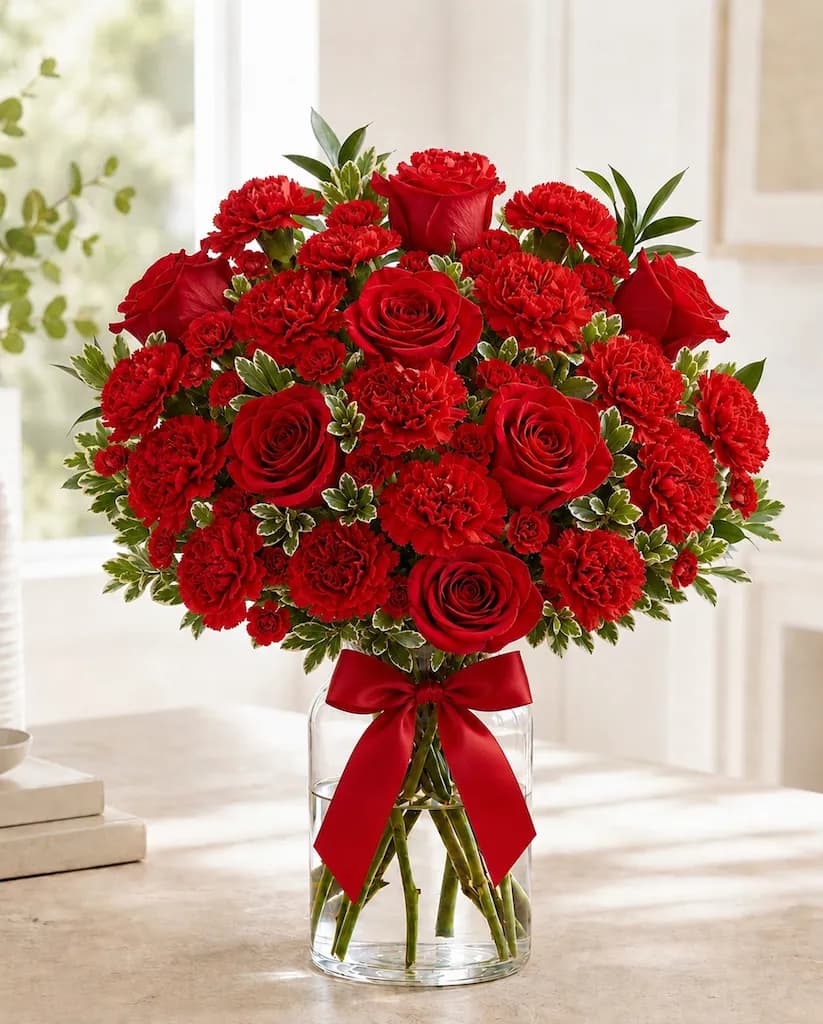
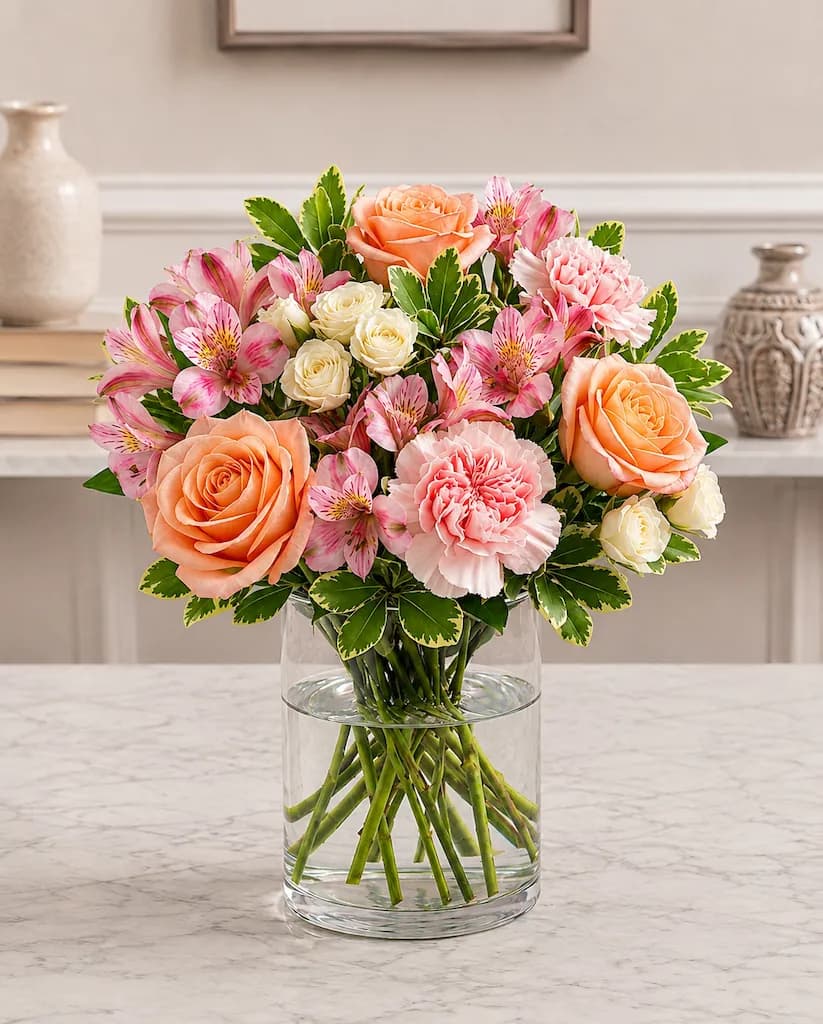
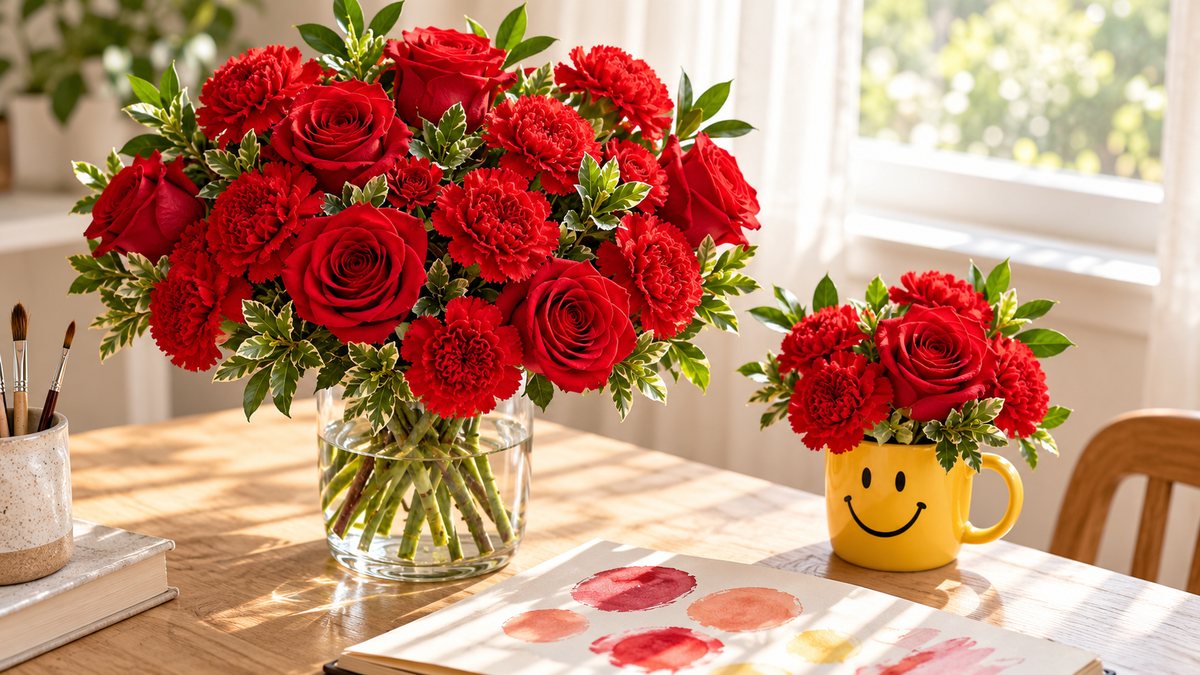
If you want to say "I love you" or celebrate an anniversary, red is the traditional anchor. Deep pink and peach also speak to romance without the intensity of red. A bouquet like Just For You layers rich red roses with red carnations for a straightforward romantic statement, while The Sunset Romance blends peach roses, pink carnations, and white spray roses for a softer, more nuanced sentiment.
Gratitude and warmth
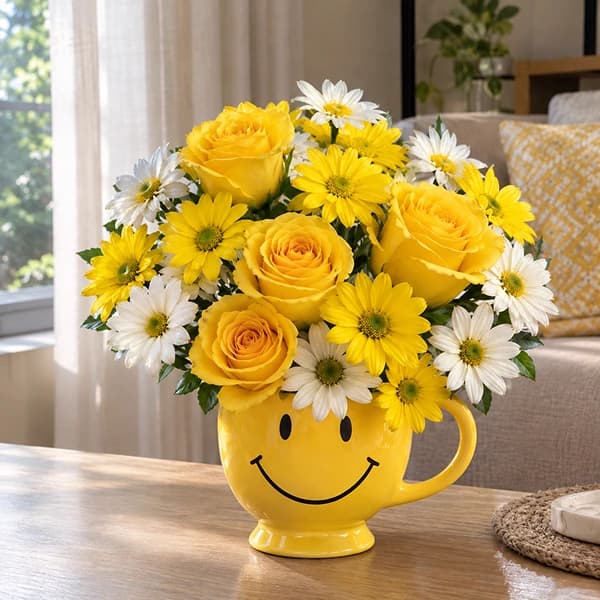
Yellow and orange are classic choices for saying thank you or "I'm thinking of you." They read as energetic and generous. Smiles & Sunshine captures that brightness with yellow roses and daisy mums in a cheerful smiley-face mug, making it ideal for a friend who needs a lift.
Comfort and encouragement
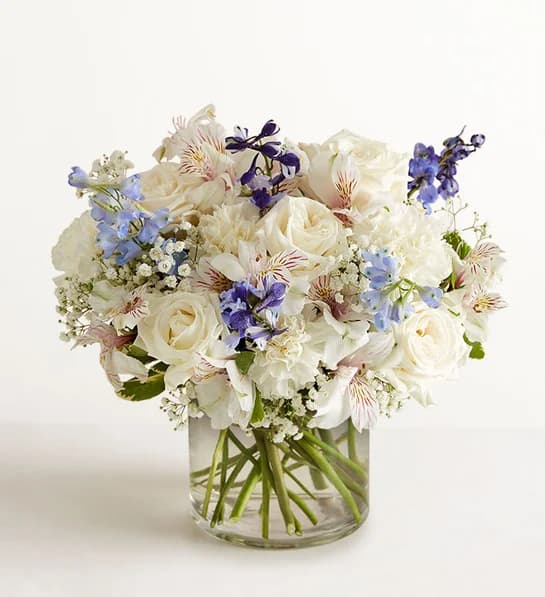
Pink, lavender, and soft blue convey reassurance and gentle support. Warm & Meaningful pairs creamy white roses with delicate blue and lavender blooms, creating a calm, supportive message for a difficult day or a recovery at home.
Sympathy and remembrance
White remains the most traditional sympathy color, symbolizing peace and reverence. Soft greens and muted blues can also express respect without overwhelming a solemn setting.
2. Match Color to Occasion and Setting
The same color can land differently depending on the event and the room where the bouquet will sit. Bright, saturated palettes feel natural in casual gatherings and festive celebrations, while softer, cooler tones suit formal dinners and reflective moments. Consider the lighting, too: a sunny kitchen can handle warm oranges and yellows, while a dimmed dining room may favor deeper reds or elegant whites. If you're unsure, a mixed palette with a dominant hue and a few accent colors often feels balanced and intentional. For broader color guidance, see A Beginner's Guide to Flower Color and Style for Every Occasion.
Celebrations and milestones
Birthdays, promotions, and housewarmings call for lively energy. Orange, yellow, and bright pink all work well for a celebratory table. Let the season guide your exact shade—golden yellows for summer, burnt orange for autumn—and keep the arrangement full and generous.
Everyday encouragement
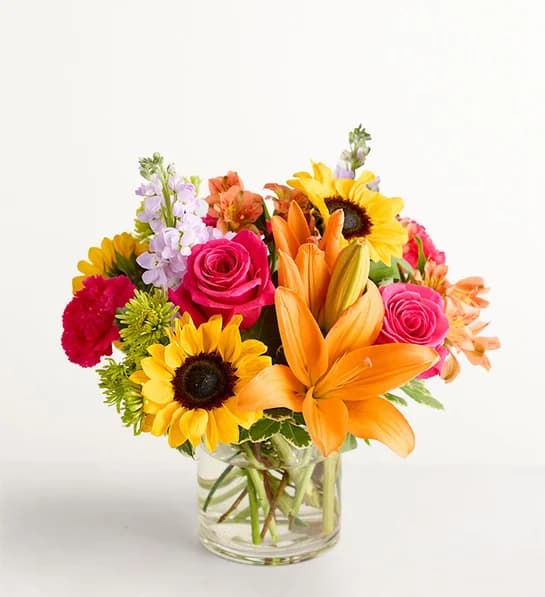
Sometimes the best moment to send flowers is ordinary. Sunny pastels, pink roses, and mixed yellows keep the tone light and genuine. Sunshine & Hugs blends sunny yellow, vivid pink, and soft pastels for exactly that unplanned-but-considered feel.
Solemn gatherings
Memorials and formal remembrances benefit from restrained palettes. White, pale blue, and muted lavender feel respectful and composed.
3. Consider the Recipient's Space and Style
Think about where the bouquet will live. A large, dramatic arrangement suits a foyer or dining room, while a compact vase suits an office or nightstand. Bold colors energize modern spaces; soft pastels complement traditional or minimalist rooms. If you know the person's decor, let it guide your intensity rather than your hue. You can also consult Choosing the Right Bouquet Shape and Proportion for Any Space to make sure the form fits the setting.
4. Test the Palette With a Simple Swatch Check
If you have a color in mind but want to be sure it reads well, try a fast swatch test. Hold a single bloom or a paint chip from a hardware store next to the recipient's sofa, curtains, or tablecloth. This takes thirty seconds and prevents a well-meaning bouquet from clashing with the room. When in doubt, ask the florist for a neutral base—white or green filler flowers—with your chosen accent color layered on top.
5. Choose the Right Vessel and Supporting Greens
The vase or container can amplify or soften your color message. A clear glass vase lets the blooms dominate, while a colored mug or ceramic pot adds personality and warmth. A bright yellow mug can reinforce a cheerful message, while a clear glass vase keeps the focus on gentle blues and lavenders. Supporting greens and white filler flowers provide breathing room, letting your symbolic colors breathe.
6. Review Your Delivery Timing
Timing affects both freshness and impact. Plan to order at least one to two days ahead of the delivery date so the florist can source the best stems. Holidays, Mother's Day, and Valentine's Day fill up early, so book sooner rather than later. For spontaneous moments, same-day delivery is available in many areas, though it is not guaranteed everywhere, so confirm cut-off times when you order. How to Plan Flower Delivery: A Beginner's Step-by-Step Guide covers deadlines and logistics in more detail.
Order lead times
Standard occasions: 1-2 days ahead. Major holidays: 3-7 days ahead, sometimes more. Local florist orders: call for same-day availability.
Same-day and next-day options
Many florists offer cut-off times for same-day delivery, often mid-afternoon. Next-day delivery is more widely available and usually less expensive. Choose the fastest option that still gives you time to write a thoughtful card.
7. Write a Card Message That Echoes the Color
Your color choice already says a lot, but a short card note makes it explicit. Pair red roses with a line about lasting love. Pair yellow blooms with a wish for joy or congratulations. Keep it personal and specific to the recipient, and avoid generic phrases that could apply to anyone. The note is where traditional symbolism becomes a real conversation.
8. Final Pre-Order Confirmation
Before you checkout, run through this quick list:
- Core emotion matches the dominant color
- Occasion and setting align with the palette
- Recipient's space can hold the arrangement size
- Vase or container style fits the message
- Delivery date is realistic for the order type
- Card message reflects the color symbolism
Color symbolism is a tool, not a rulebook. Use it to add a layer of thoughtfulness to your gift, and let the recipient's personality and your shared history do the rest. When the palette, occasion, and timing all line up, the bouquet stops being just flowers and starts being a considered gesture. Explore more thoughtful gifting ideas at Great Flowers.