Choosing the Right Bouquet Shape and Proportion for Any Space
Compare domed, vertical, loose, symbolic and compact bouquet silhouettes and match each shape and proportion to the room, occasion and recipient it will suit best.
Shape is the first thing a recipient notices, and proportion is what they feel without naming it. A low, wide mound reads as generous and relaxed. A tall, narrow column reads as formal and deliberate. A loose, airy spray reads as natural and unhurried. This guide compares the silhouettes US buyers actually choose and matches each one to the room it will sit in, the occasion it marks and the person receiving it.
The Short Answer: Choose the Silhouette Before the Size
Start with the outline, not the stem count. Every arrangement falls into one of a handful of shapes, and each carries its own mood before a single color is chosen. Once you know the silhouette, size becomes a simpler question: where will these flowers live? A coffee table, a desk, a kitchen counter, or the floor beside an urn. If you are ordering for someone else's space, shape usually matters more than the exact stems inside it, because shape is what changes how the room feels.
The Silhouettes Buyers Actually Choose
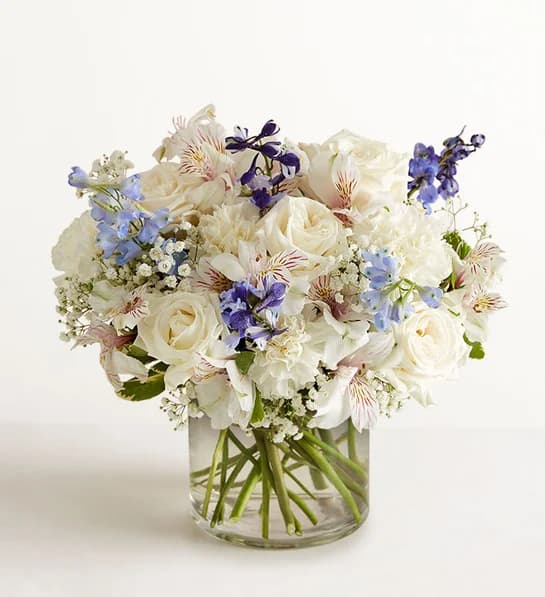
Domed and rounded. The classic gift shape: a full, even mound that looks generous from every angle. It suits tables and counters, photographs well, and reads as celebration.
Vertical and linear. Tall stems rising from a narrow base. Elegant and formal, and the right choice where height matters more than width.
Loose and garden-gathered. Stems at varied heights and angles, so the piece looks picked rather than built. Relaxed and personal.
Symbolic. A heart, cross or wreath, chosen when the outline itself is the message.
Compact and hand-tied. A smaller, portable bunch, often wrapped rather than set in a vase. Thoughtful and unfussy.
How Proportion Changes the Message
Two arrangements can share a silhouette and still say different things, because scale is relative to the space around it. A rounded bouquet that looks modest on a kitchen island can look sparse down the center of a long dining table. A guideline many designers use is to keep the arrangement no taller than roughly one and a half times the height of its container, so the flowers and the vase read as one object rather than two.
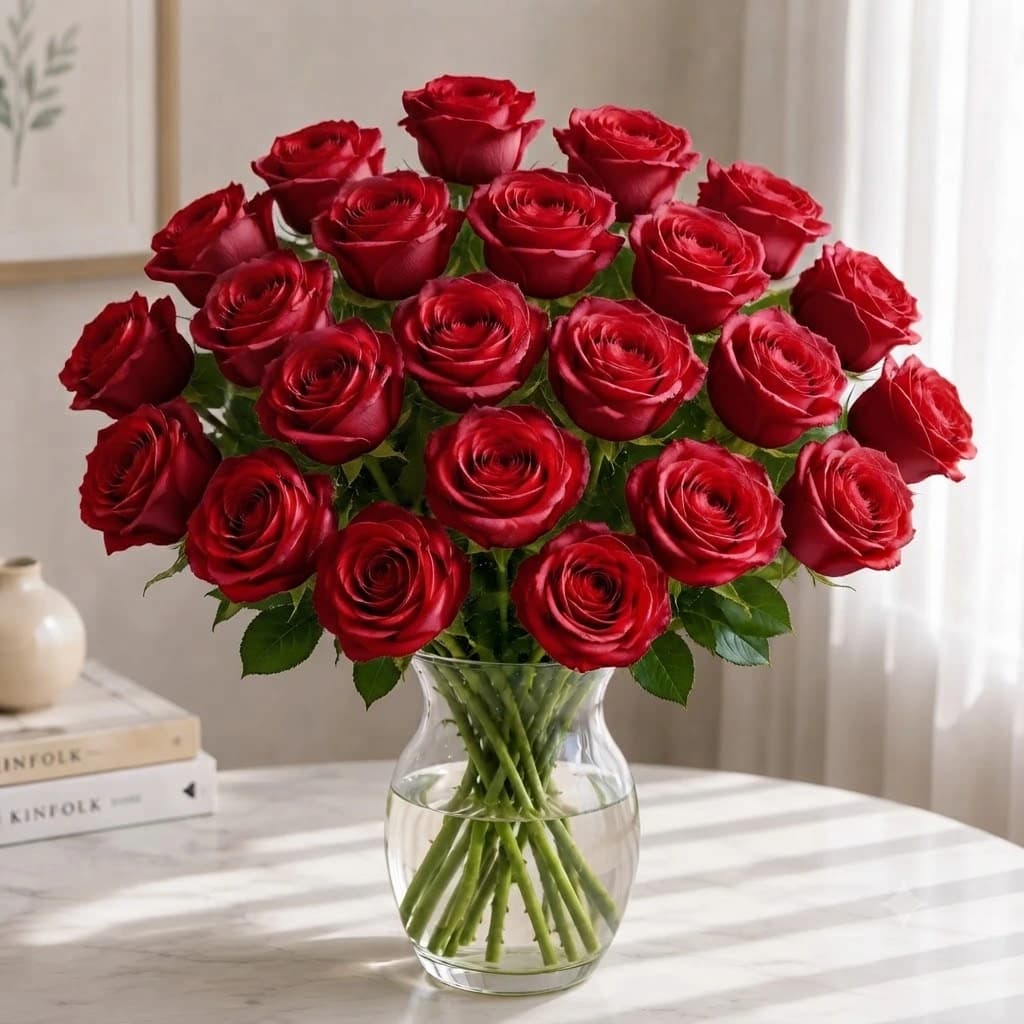
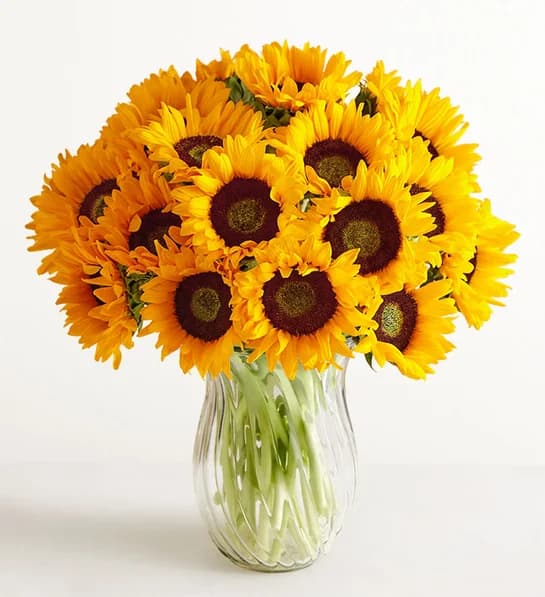
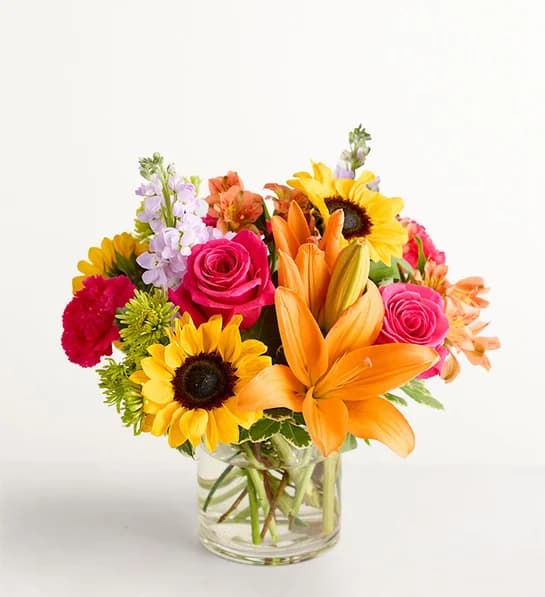
Mass matters as much as height. A dozen roses and a fuller design can be the same height and still feel entirely different. Two Dozen Red Roses, twenty-four red roses with fresh greenery in a clear glass vase, carries enough volume to anchor a large table or a milestone celebration. A smaller rounded piece such as the Sunflower Sunshine Bouquet, with fresh sunflowers in a clear glass vase, sits comfortably on a desk or bedside table, where a bigger arrangement would crowd the surface and block the view across it.
Matching Shape to the Room
Dining table: Low and wide, so guests can see each other across it. Height should stay well below eye level when seated.
Desk or bedside: Compact and rounded. Keep the footprint small enough that a laptop, a book or a glass of water still has room.
Entryway or mantel: Vertical and linear, where the height is seen from the hallway and the width barely matters.
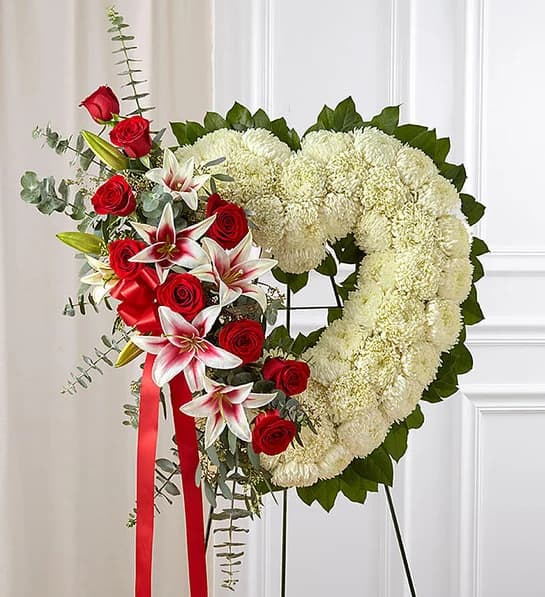
Memorial or service space: A symbolic silhouette, often floor-standing. A Floral Heart Tribute, with white chrysanthemums, red roses and lilies finished with cascading red ribbons, reads as remembrance before anything else.
Kitchen counter or coffee table: Medium-scale and rounded, easy to move when the surface is needed for something else.
Matching Shape to the Occasion and the Recipient
Romance and anniversaries tend to suit the domed and rounded silhouette, which reads as abundance. Birthdays and congratulations take almost any shape, so let the recipient's space decide. Sympathy calls for restraint: a symbolic or vertical piece in a calm palette, chosen for dignity rather than drama. Thank-you and everyday gestures work well as compact hand-tied bunches, which feel personal without overwhelming a small apartment.
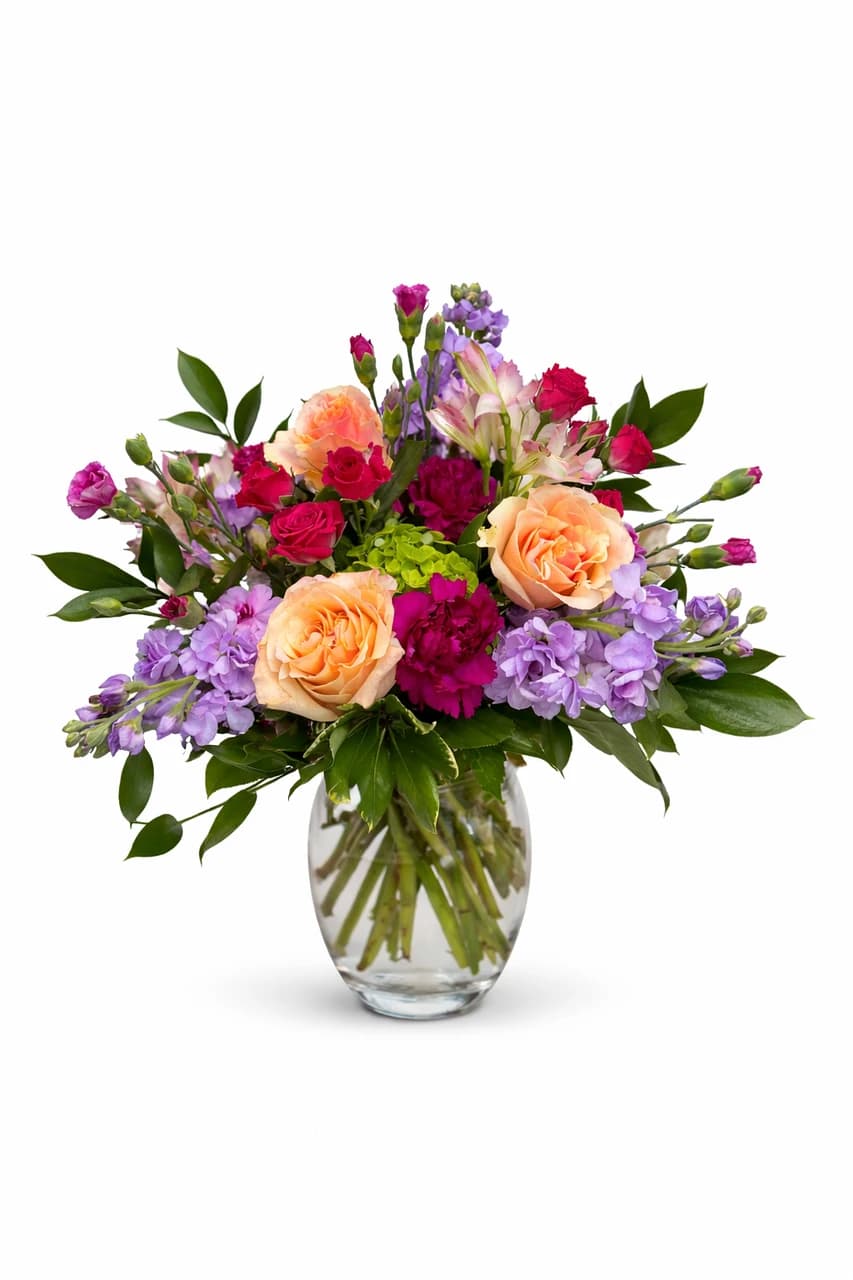
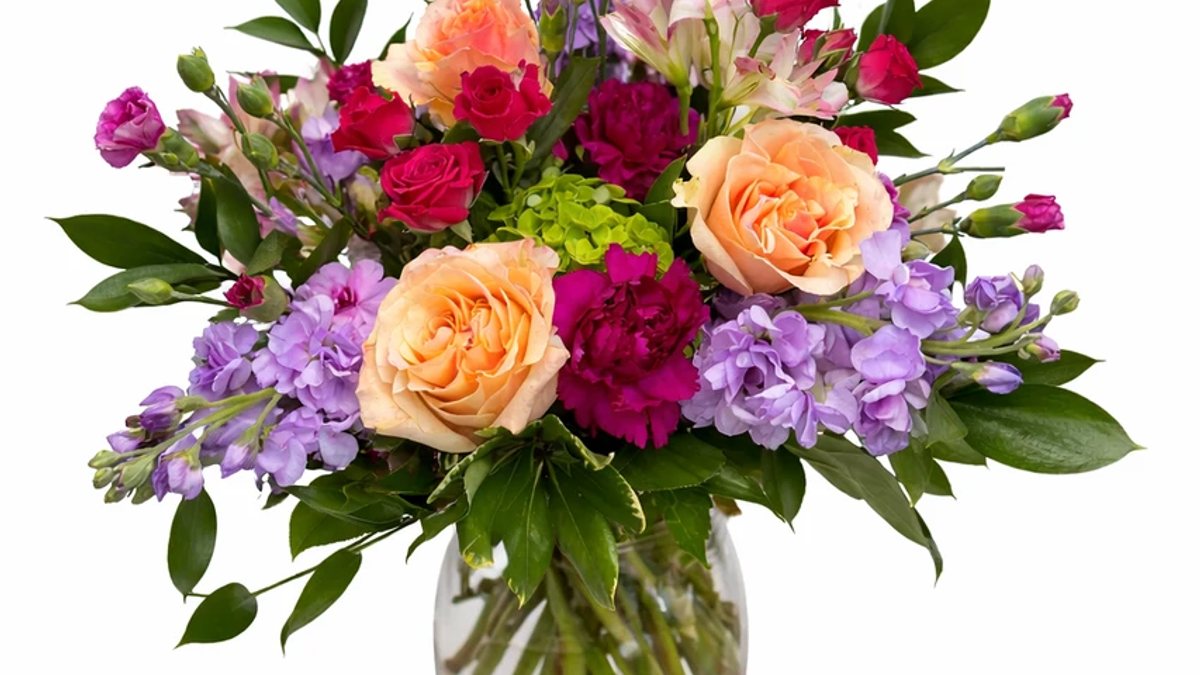
Keep the recipient's home in mind. A loose, garden-gathered design such as the Giverny Garden Bouquet, with peach roses, delicate lavenders and vibrant pinks in a loose, airy design, suits someone who likes things that look gathered rather than arranged. A sculpted dome suits someone who likes things neat.
Shape symbolism is a traditional association, not a universal rule. Hearts are widely linked with love and crosses with remembrance, and both can carry different meanings depending on culture, faith and context.
Shape and Color Work Together
Proportion sets the stage; color sets the temperature. A tall, narrow arrangement in soft tones reads as calm and refined, while the same shape in saturated color reads as bold. If you are unsure where to start, decide the shape first and then let color follow the occasion. Our guide to flower color and style walks through which palettes tend to suit which moments, and it pairs naturally with the silhouettes above.
Ready-Made or Built for Them
Ready-made arrangements are the faster decision. A florist has already solved the proportion problem, and what you see is close to what arrives. Build Your Bouquet is the better fit when the recipient's taste is specific and you want to choose the flowers, greenery and vase yourself. Neither is the more thoughtful option; the thought is in the fit. If you are short on time, go ready-made. If you know exactly what they love, build it.
Practical Checks Before You Order
Measure the surface and note the sightlines before you choose a size. Check whether a vase is included, since some bouquets arrive hand-tied and others in a glass vase. Think about who will receive and place the flowers: a floor-standing piece needs someone willing to set it up. And check timing early. Same-day delivery is available in many areas, but it is never guaranteed everywhere, so planning your flower delivery ahead of the date is the safer habit.
Common Questions About Shape and Proportion
How tall should a table bouquet be?
Low enough that seated guests can talk across it. As a practical check, hold your hand flat above the table; if the arrangement rises well past it, scale down or move it to a taller surface.
Does a bigger arrangement always look better?
No. In a small room a large piece can feel like furniture rather than a gift. It is better to match the scale of the space and let the shape stay clean.
Which shape is safest if I do not know the recipient's taste?
A medium-scale domed bouquet in a clear glass vase. It reads as a classic gift, works on most surfaces, and does not demand much from the person receiving it.
Shape decides how a bouquet feels; proportion decides where it belongs. Choose the silhouette first, then the scale, and the flowers will do the rest. Great Flowers