Flower Bouquet Size Myths and Facts: How to Judge Scale
Separates size and scale myths from facts, with practical advice on stem counts, vase proportions, and matching a bouquet to the table and room it will live in.
Most flower buyers get scale wrong the same way: they assume more stems automatically mean a more impressive gift. Presence actually comes from proportion, from how a bouquet's width, height, and bloom size relate to the surface beneath it and the room around it. A dozen well-placed roses can fill a small kitchen table better than two dozen crammed into a vase that is too narrow.
This guide separates the myths about bouquet size from the practical facts, so you can pick an arrangement that looks generous in the space it will actually live in.
Why Scale Gets Misread
Photos on a product page tell you almost nothing about scale. A bouquet shot against a plain backdrop, with no hand, no table edge, and no doorway behind it, could be eight inches tall or twenty. Shoppers fill in that gap with the one number they can see, the stem count, and that number is a poor proxy for how something will look in a real room.
Designers think in ratios instead. Height relative to the vase, width relative to the table, and the visual weight of the largest bloom all matter more than the total number of stems. Once you start noticing those ratios, it gets easier to picture a bouquet in your own space. For a deeper look at how shape and proportion work together, see our guide to choosing the right bouquet shape and proportion.
Myth: More Stems Mean a Grander Gift
It is reasonable to expect a larger count to look larger, and often it does. But stem count describes quantity, not arrangement. Twenty-four roses packed into a narrow cylinder can look dense and a little stiff, while the same stems spread through a wider vase read as lush.
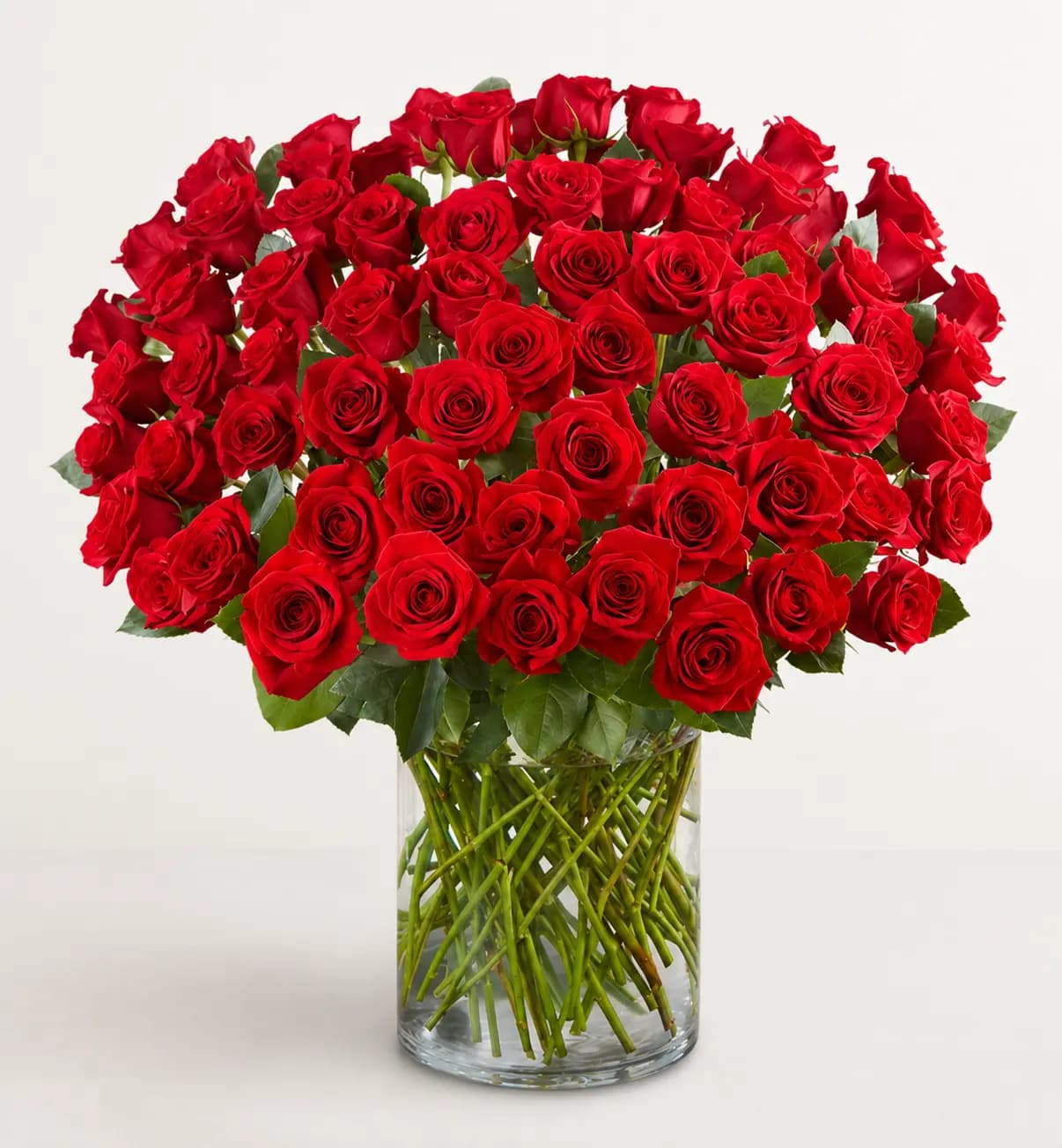
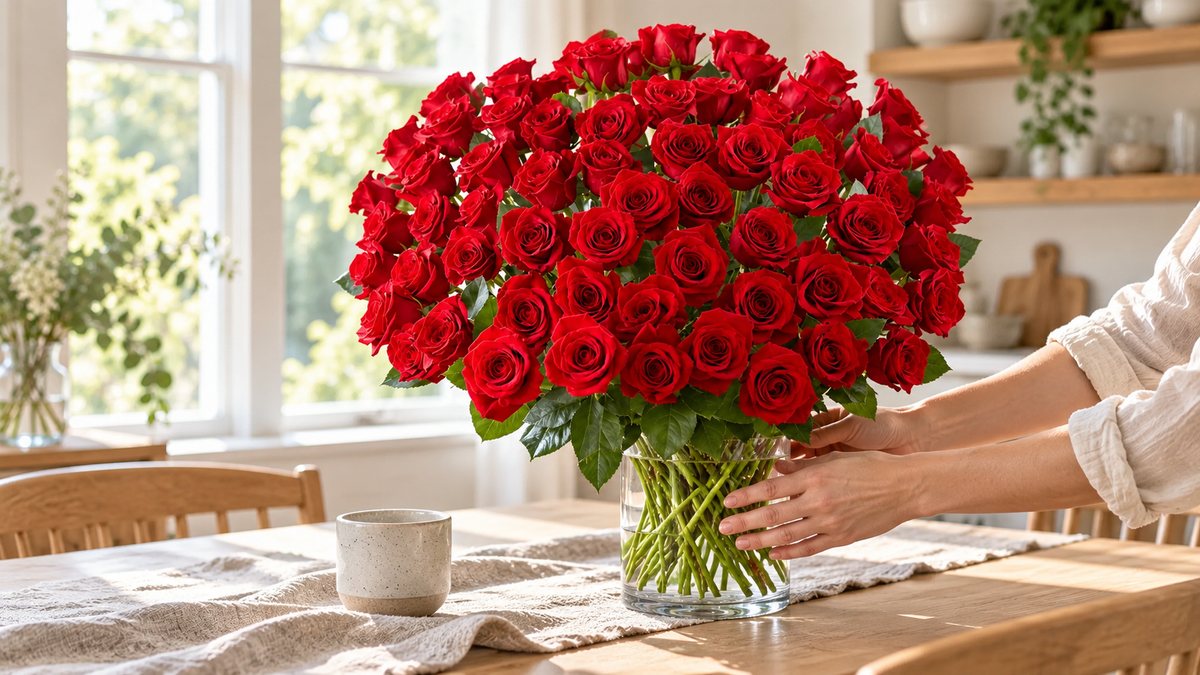
Size also has a ceiling. Past a certain point, extra stems add weight without adding presence, and very large arrangements can overwhelm a small table or a hospital room. If you want a genuinely grand gesture, 100 Long Stem Roses makes the scale unmistakable, with one hundred red roses in a lush, elegant presentation. For most everyday tables, though, a dozen or two dozen stems is already generous.
Myth: A Small Bouquet Always Looks Like an Afterthought
A compact arrangement is not automatically a cheap one. In a small space, a tight bouquet often looks intentional and elegant, while a large one crowds the room. Many florists deliberately design smaller pieces with premium blooms so they read as considered rather than minimal.
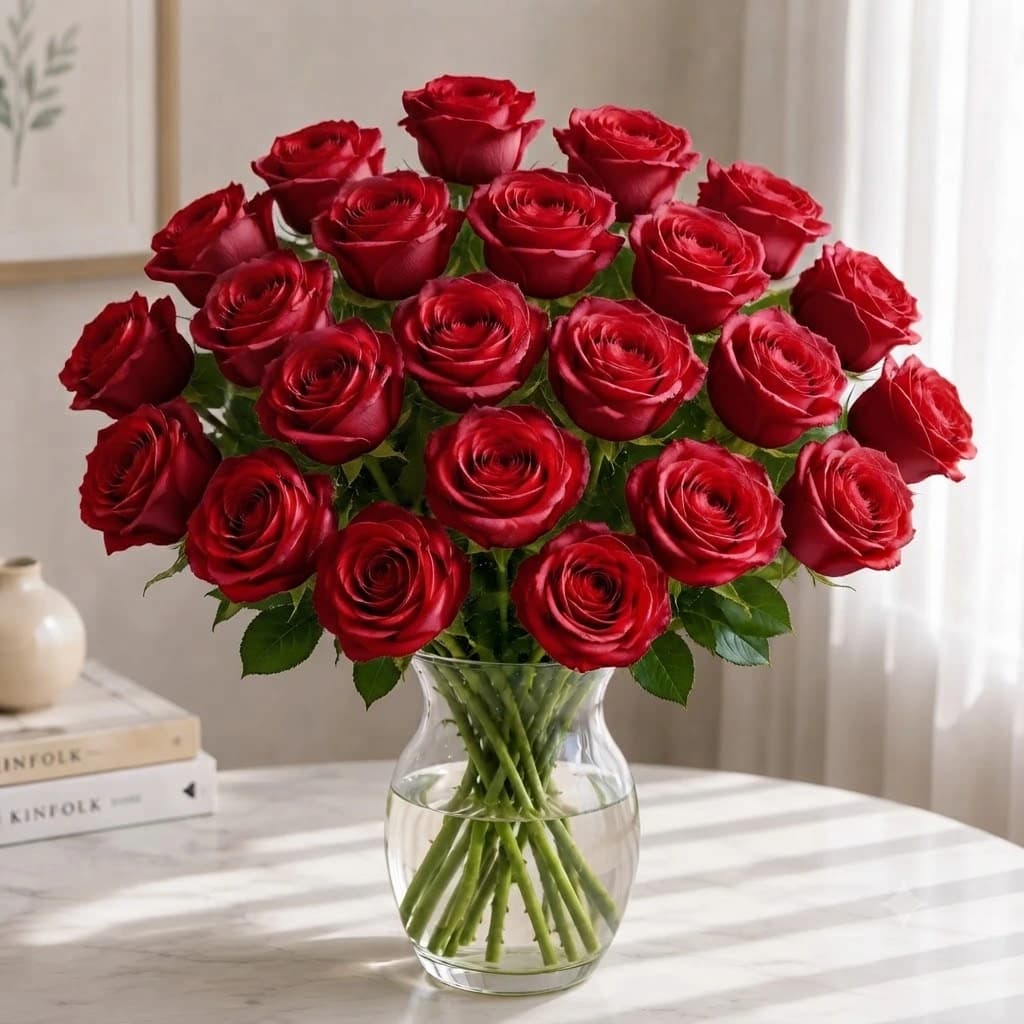
The trick is matching the piece to the surface. A modest arrangement looks right on a bedside table or desk; the same piece can disappear on a wide dining table. If you want a classic romantic gesture that stays proportional, the Two Dozen Red Roses offers twenty-four red roses with fresh greenery in a clear glass vase, filling a standard table without taking it over.
Myth: You Have to Buy the Vase to Get the Right Presence
Some arrangements ship in a vase, and some arrive hand-tied for you to place in your own. That difference says nothing about quality. A hand-tied wrap is simply a different presentation style, and it can be the better choice if the recipient already owns a vase they love.
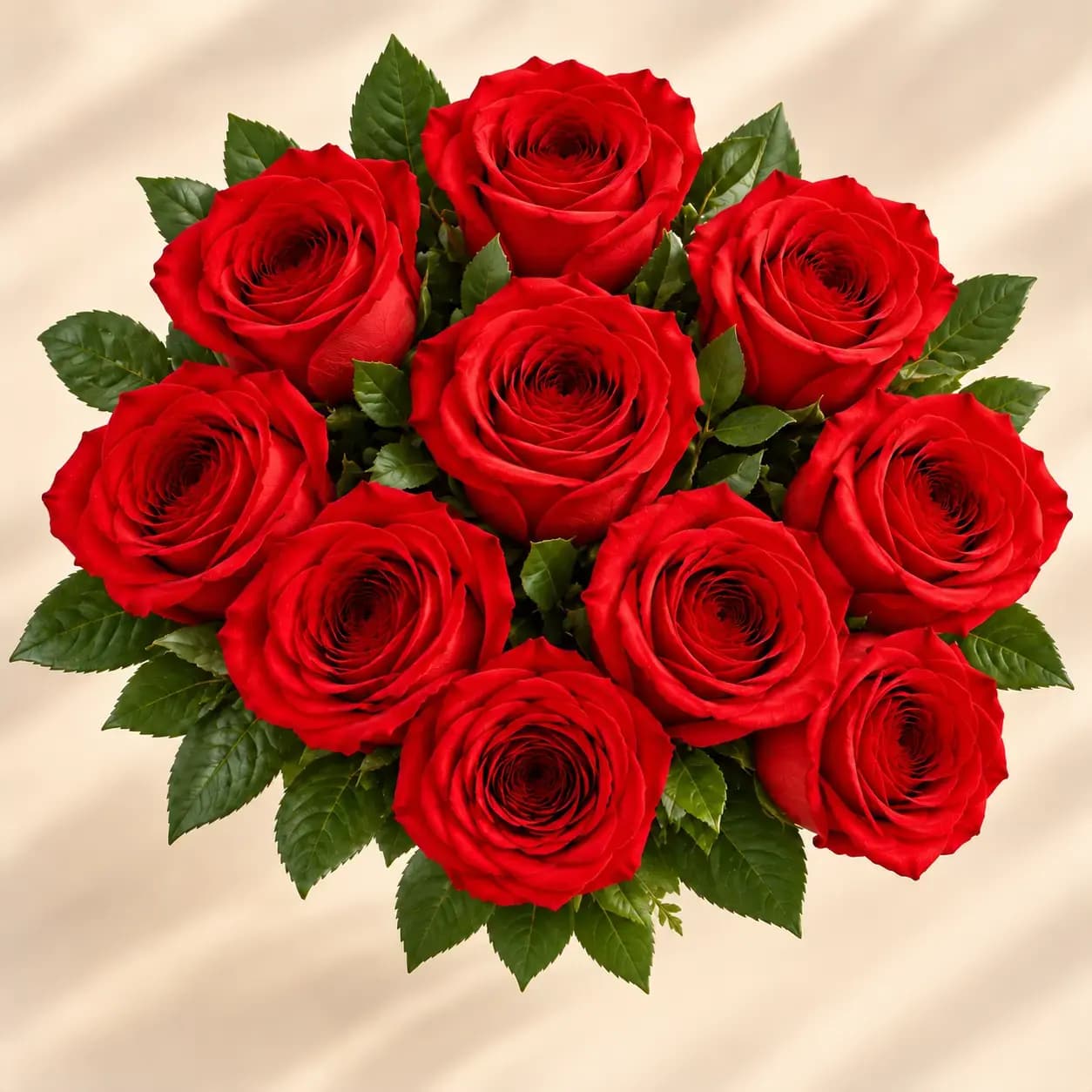
The 10 Red Roses Bouquet Style is hand-tied and wrapped with care, and the vase is not included. In your own vase, those ten red roses can look completely different, taller and looser in a wide vessel, compact and formal in a narrow one. Owning a vase you like gives you control over the final silhouette, which is a bigger lever on scale than stem count.
Myth: Taller Is Always More Impressive
Height is only one dimension of presence, and it is the one that causes the most trouble. A tall, narrow arrangement can dominate a low-ceilinged room, block sightlines across a dinner table, and look awkward under a cabinet or shelf. Width and fullness often read as more generous than height alone.
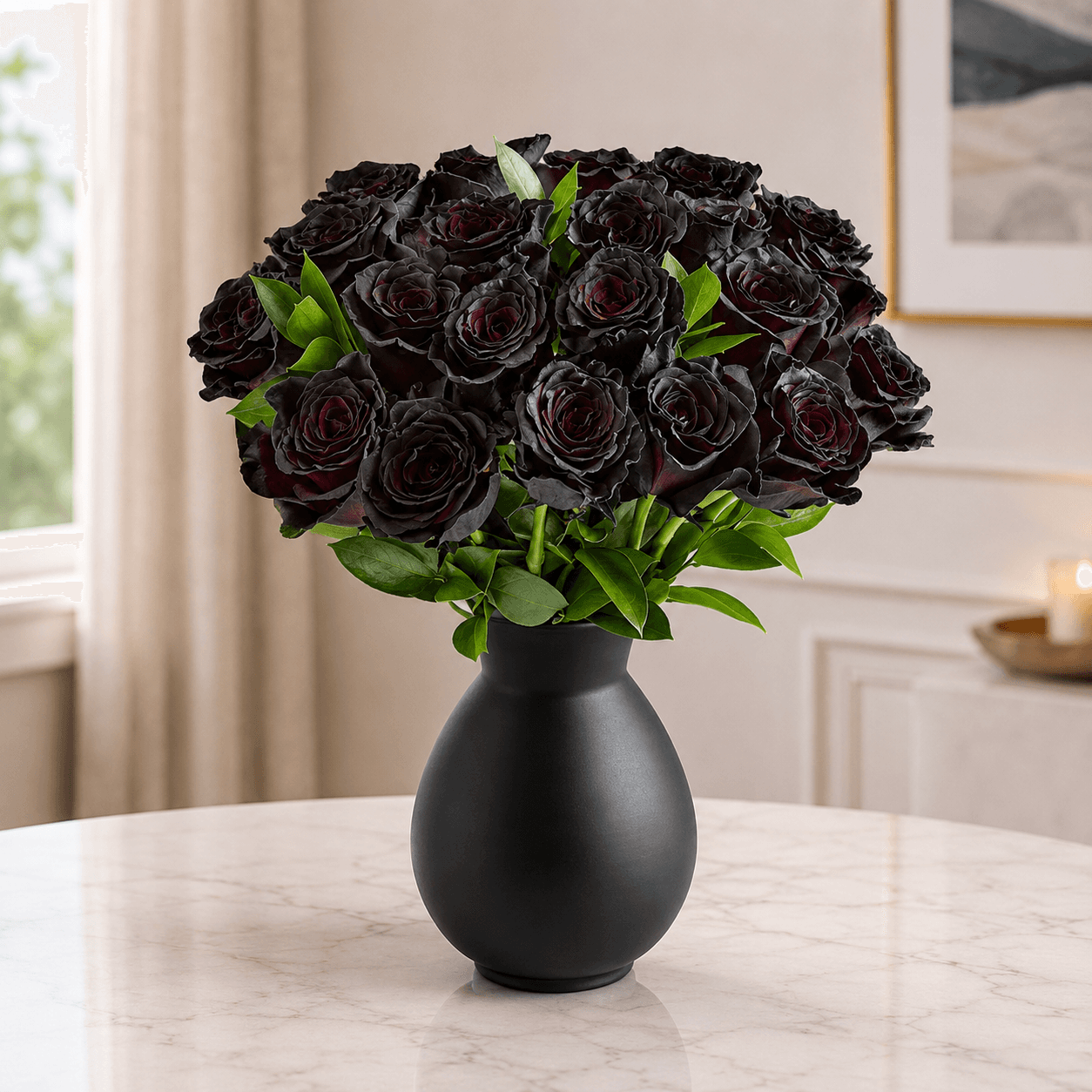
Scale should also respect the setting. Standing tributes and large sprays have their place, but a table centerpiece is usually better lower and wider. The Black Velvet Bouquet is a good example of presence without height: twelve premium black roses in a modern black ceramic vase with lush greenery, a statement built on bloom color and contrast rather than towering stems.
Fact: Measure the Space Before You Pick a Size
The most useful step is also the simplest: measure. Note the width of the table or shelf where the flowers will sit, and leave room for place settings, lamps, and anything else that shares the surface. As a starting point, a bouquet that is roughly a third to half the width of the table tends to look balanced rather than lost or crowded.
Think about sightlines too. If people will talk across it, keep the finished height below eye level when seated. If it is going on a mantel or entry console, a little more height works, because it will be seen from farther away and from below.
Fact: Bloom Size Changes the Math
Not all stems fill space equally. Large-headed blooms such as sunflowers, lilies, and many chrysanthemums cover more visual area per stem than spray roses or baby's breath. A bouquet built around a few big blooms can look just as full as one with twice as many small ones.
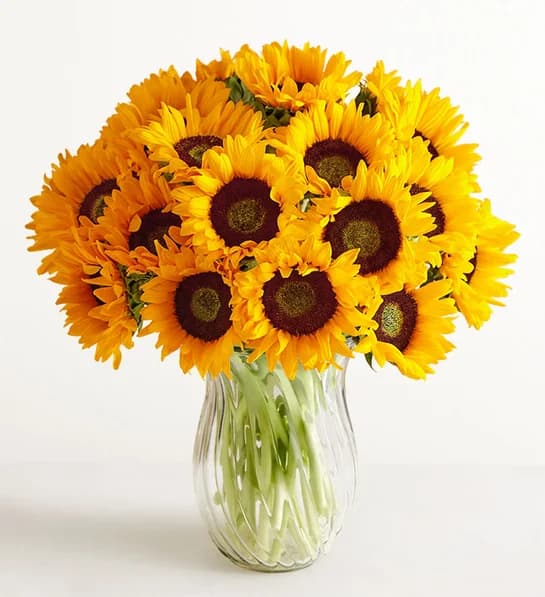
The Sunflower Sunshine Bouquet shows this clearly, with fresh, vibrant sunflowers arranged in a clear glass vase. Sunflowers carry a lot of visual weight on their own, so a smaller stem count still produces a bright, substantial arrangement. When you are comparing two bouquets, look at the biggest bloom in each, not just the total count.
Fact: Greenery and Vase Shape Stretch Visual Volume
Greenery is the quiet workhorse of scale. Foliage that extends beyond the blooms widens the silhouette without adding clutter, and it gives the arrangement a looser, more abundant feel. Vase shape does similar work: a wide, low vessel spreads a bouquet outward, while a tall cylinder pulls it upward.
If you already own your vase, you can change the whole look by changing how you trim and place the stems. Recutting the ends at an angle and removing foliage below the waterline helps the flowers drink and keeps the display tidy. For more on how color and style choices support the overall design, our beginner's guide to flower color and style is a useful companion read.
Fact: Match the Scale to the Occasion, Not the Budget
Anniversaries and milestone celebrations often call for a fuller arrangement because the moment deserves it. Everyday gestures, a thank-you, a thinking-of-you, a small get-well wish, usually land better at a modest size, because the gift is the thought rather than the spectacle.
Red roses are traditionally associated with love and romance, though those meanings vary by culture and context, so a rose arrangement says as much about your relationship as it does about the flower itself. Let the occasion set the scale, and let the space set the limit.
On timing, same-day delivery is available in many areas, though it is not guaranteed everywhere, and cutoff times vary by location and florist. Ordering earlier gives you more choice.
Putting Size in Perspective
Start with the room, not the stem count. A quick checklist helps:
- Measure the table or shelf, and leave room for everything else that lives there.
- Decide whether the arrangement will be seen up close or from across the room.
- Check the largest bloom, not just the number of stems.
- Choose a vase shape that matches the look you want, wide and low or tall and narrow.
- Match the scale to the occasion, and keep everyday gestures modest.
Is a bigger bouquet always a better gift?
No. A larger arrangement can overwhelm a small table or a quiet occasion, while a well-proportioned smaller piece often feels more thoughtful. Fit to the space usually beats sheer size.
How many roses should I order?
It depends on the vase and the table. A dozen red roses suits most small to medium surfaces, while two dozen fills a standard dining table. If the arrangement ships without a vase, the vessel shapes the final look as much as the count does.
Can I make a small bouquet look bigger?
Yes. A wider vase, greenery that extends past the blooms, and a spot where the arrangement is seen against open space all add visual volume without adding stems.
For help choosing, browse the full collection at Great Flowers.