Yarrow (Achillea millefolium)
A practical guide to yarrow: how to identify it, common forms and colors, seasonal availability, cut-flower care, design uses and gifting ideas.
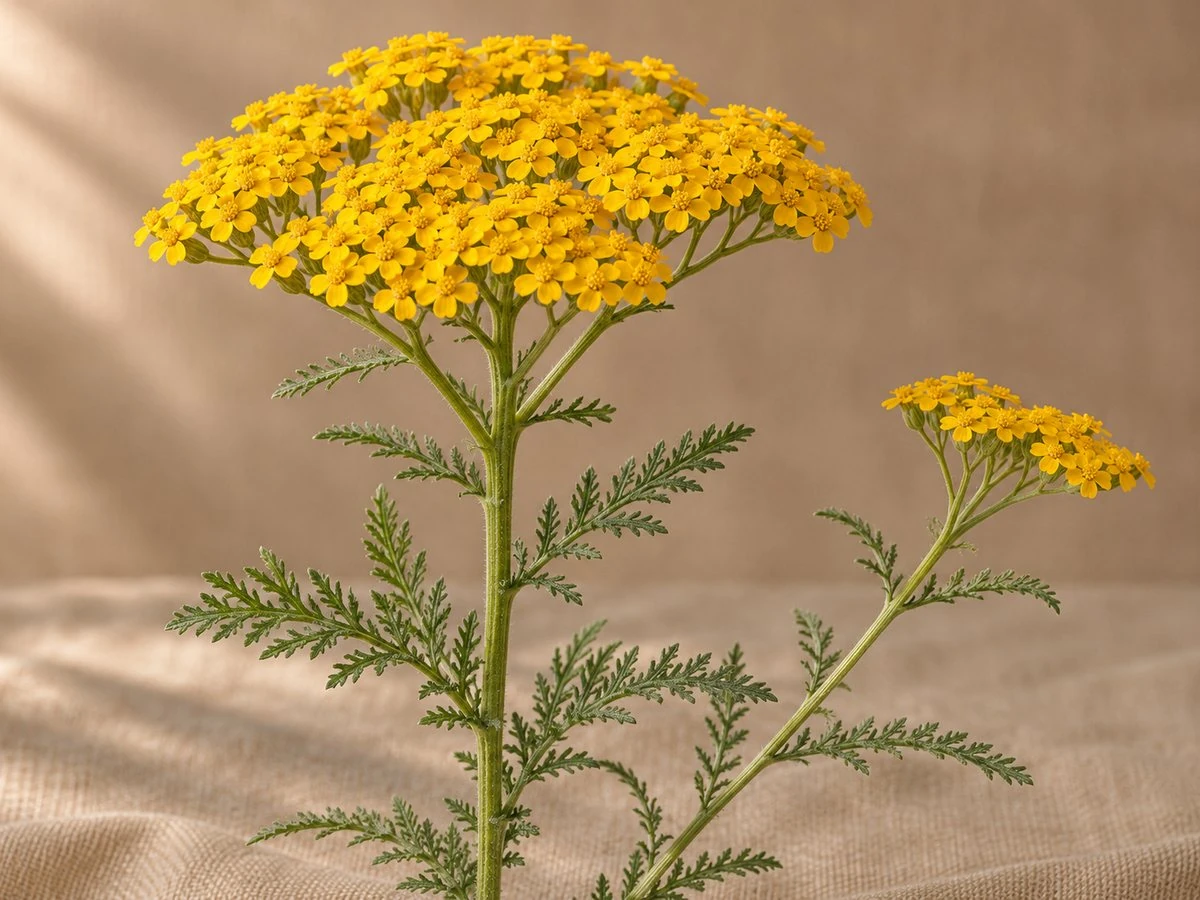
Yarrow is a hardy herbaceous perennial recognized by its flat-topped clusters of tiny flowers and its finely divided, feathery foliage. The plant most often grown and sold as a cut flower is Achillea millefolium, a species with a long presence in temperate gardens and meadows. Gardeners value it for holding its shape through heat, and florists value it for the airy texture it adds to mixed work.
Overview and identification
Yarrow sends up upright, slightly fuzzy stems that end in a broad, flat or gently rounded cluster of small florets. Each floret is only a few millimeters across, but a single head can measure several inches wide and carry dozens of blooms at slightly different stages of opening. The leaves are narrow, deeply cut and fernlike, and they usually stay on the lower half of the stem.
Cut stems sold for arranging are typically gathered at a stage when the florets are open but still tight, because fully mature heads loosen and shed as they dry. Yarrow is sometimes mistaken for other flat-headed flowers at a glance, but the combination of a low mound of feathery foliage and a stiff, upright flower stem is a reliable starting point for identification.
Common varieties and forms
Named cultivars of A. millefolium have been selected mainly for flower color, from white and soft pink through salmon, apricot and deep red into yellow and orange. Garden strains vary in height and in how tightly the cluster holds together. A few other Achillea species are also grown ornamentally and can appear in the cut trade, though the common name is used loosely in some markets.
In mixed bouquets, yarrow is most often the golden-toned form. It is usually treated as a filler or accent stem rather than a focal flower, and its role is to open up the silhouette of an arrangement rather than to dominate it.
Colors and traditionally associated meanings
Yarrow appears in a wide color range, and the tone you choose shifts the feel of a design. Whites and pale pinks read as soft and neutral, warm apricots and golds feel sunlit, and deeper reds add weight. These are design observations, not fixed rules.
Symbolically, yarrow is traditionally associated with protection, healing and steadiness in a number of European folk traditions, and it has also been linked to enduring affection and remembrance. Meanings vary by culture and context, and the same color can carry different associations from one region to another. Treat any single meaning as a traditional association rather than a universal fact.
Season and availability
In many growing regions, yarrow flowers from early summer into autumn, with the strongest flush in midsummer. Garden plants often bloom in repeated waves if spent stems are removed. As a cut flower it turns up most often in summer and early-fall mixed arrangements, though dried stems extend its presence well past the fresh season.
Availability through a given florist depends on the season and on local sourcing, so a specific stem is not guaranteed at every shop in every month. Mixed bouquets that include yarrow tend to appear when the flower is at its most abundant.
Cut-flower care
Give yarrow a clean start: strip leaves from the part of the stem that will sit below the water line, since submerged foliage clouds the water and shortens vase life. Cut the stem ends at an angle with a clean blade, then place them in fresh water mixed with the flower food supplied by the florist.
Refresh the water every day or two and re-cut the ends each time you do. Keep the vase out of direct sunlight and away from heat sources and ripening fruit, which releases ethylene that ages flowers faster. Yarrow holds up reasonably well once open; remove any heads that brown so they do not draw attention from the rest of the arrangement. If a stem wilts while the cluster still looks firm, the water is usually the first thing to check.
Arrangement and design uses
Because each head is made of many small florets, yarrow reads as a soft haze of color when seen from a distance and as a detailed texture up close. That makes it useful for filling the middle of a design, loosening a tight cluster of larger blooms, and drawing the eye along a line of movement.
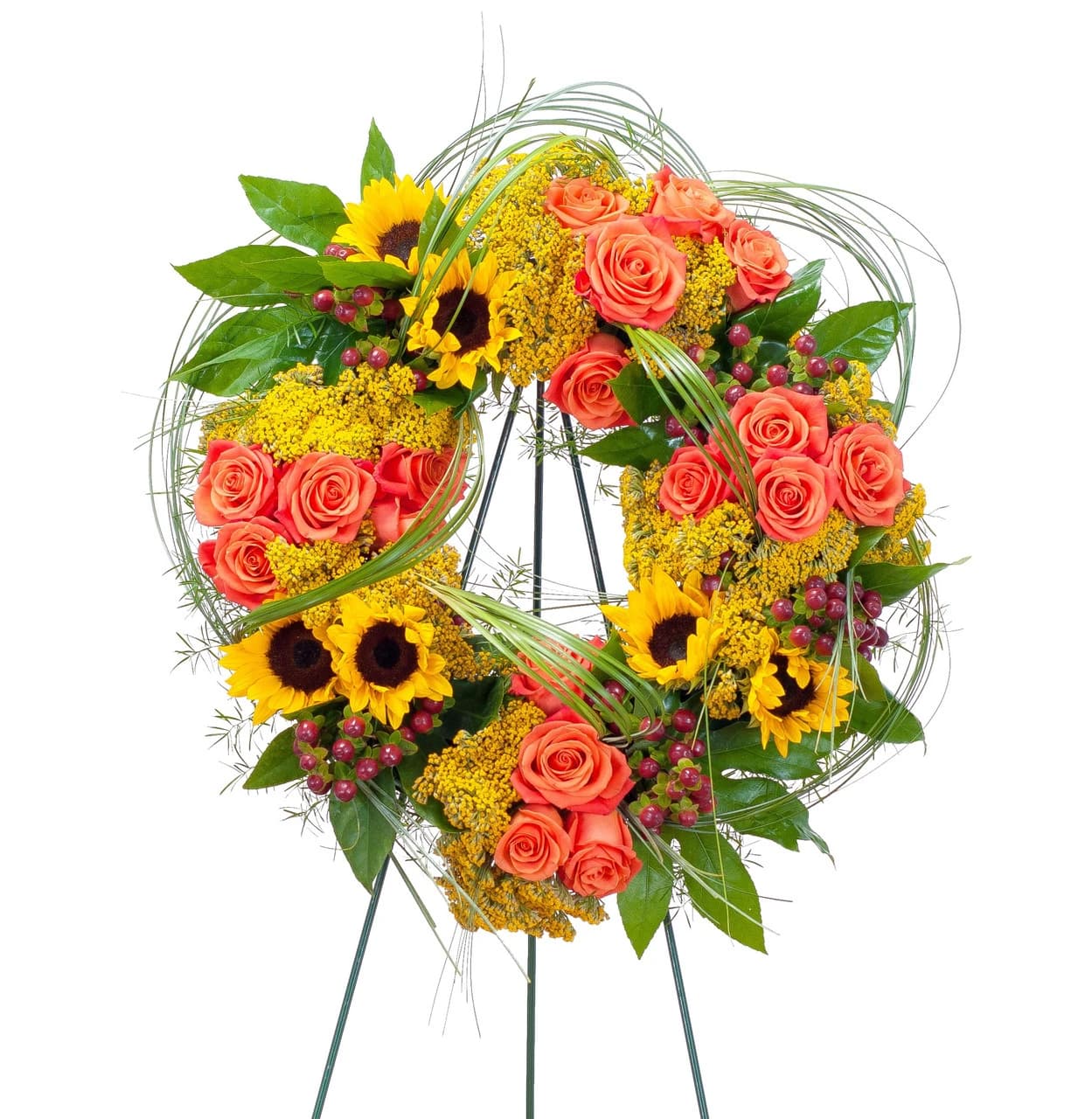
It pairs well with roses, daisies, hypericum berries and other textural stems. Golden yarrow appears in the Sunset Garden Tribute, a standing sympathy wreath that combines roses, sunflowers, golden yarrow and red hypericum berries, which shows how the flower works as a warm accent among stronger shapes. Yarrow also dries well; hang small bundles upside down in a cool, airy spot and the heads keep much of their color, so they can be reused in dried work later.
Gifting occasions
Yarrow suits arrangements that call for texture and a natural, gathered feel rather than formal symmetry. It fits summer and early-fall bouquets, casual table arrangements, and designs where a golden or apricot accent is wanted. It is also used in sympathy work, where its traditional associations with remembrance and steadiness make it a quiet supporting element.
When selecting yarrow for a gift, consider the overall palette of the arrangement rather than the meaning of a single stem. A mixed bouquet tells a broader story, and the recipient's own associations with the flower matter more than any fixed symbol.
Frequently asked questions
How can I tell yarrow apart from similar-looking filler flowers?
Look for the flat-topped cluster of tiny florets on a stiff, upright stem, paired with deeply cut, fernlike foliage low on the plant. Other filler flowers may share one of those traits, but the combination is distinctive.
How long does cut yarrow last in a vase?
With clean water, a fresh angled cut and regular water changes, yarrow generally performs well for around a week, though the exact span depends on room conditions and how open the heads were at purchase. Keeping the vase away from heat and direct sun helps.
Can yarrow be dried for later use?
Yes. Small bundles hung upside down in a cool, airy place dry well and keep much of their color. Dried stems are brittle, so handle them gently when arranging.
For more flower guides and seasonal arrangements, visit Great Flowers.