Waxflowers (Chamelaucium uncinatum)
Waxflower (Chamelaucium uncinatum) is an Australian native with small waxy blooms. Learn how to identify it, care for cut stems, and use it in arrangements.
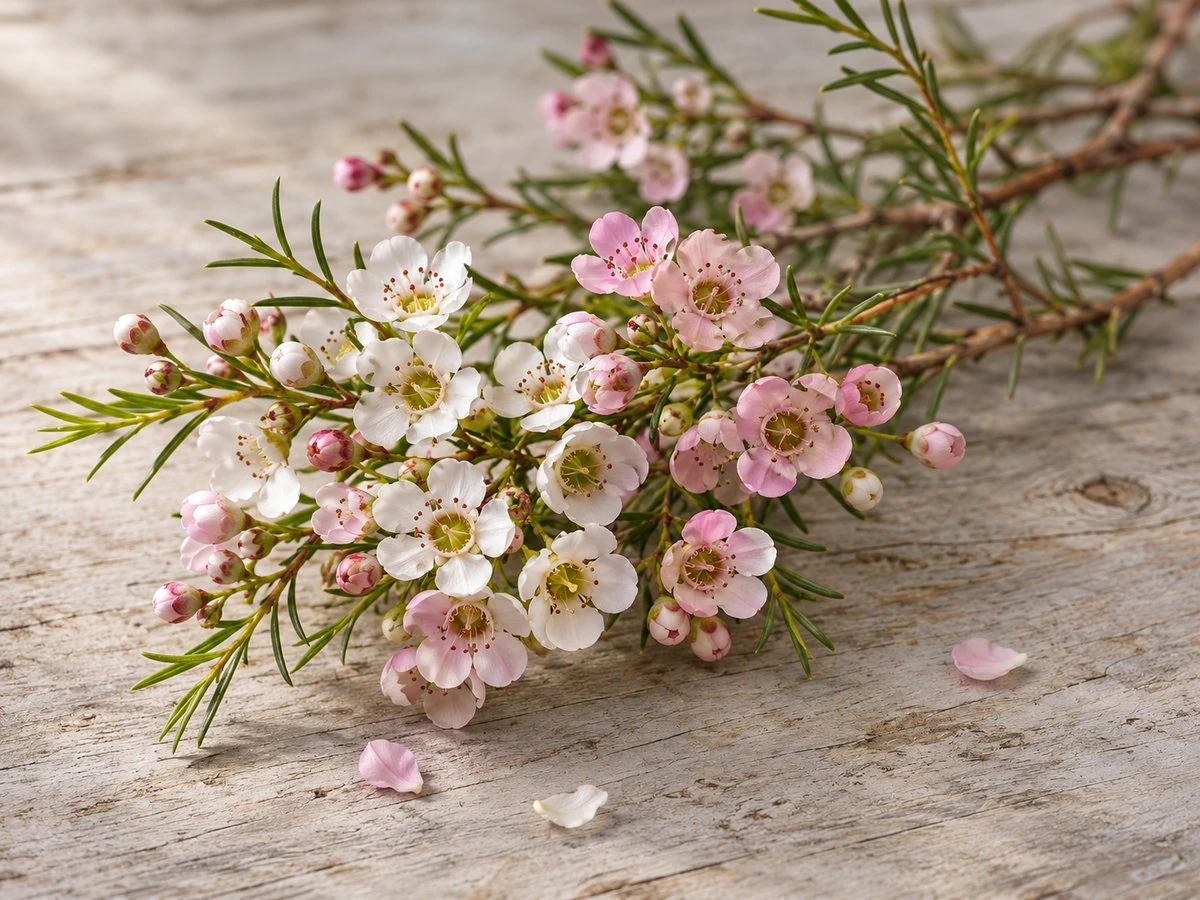
Waxflower, Chamelaucium uncinatum, is an Australian native shrub grown for its small, waxy, five-petaled blooms and slender, needle-like foliage. In floristry the name is often shortened to "wax flower," and the stems are valued as a filler that adds fine texture and a light, airy shape to arrangements. This entry covers how to recognize it, the forms and colors you are likely to see, what it traditionally signifies, how long cut stems last, and how to use it well.
Overview and identification
Waxflower is a woody evergreen shrub. Its leaves are narrow and pointed, arranged along branching stems, and its flowers are small and rounded with five petals and a slightly cupped center. The petals have a smooth, firm, almost glossy surface that holds up well after cutting, which is where the common name comes from. Individual blooms are modest in size, but each stem carries many buds and open flowers along its length, so a few stems read as a cloud of small color rather than a single focal bloom.
Several Chamelaucium species and hybrids are grown for the cut-flower trade, and they are often sold simply as waxflower. Chamelaucium uncinatum is the species most closely associated with the name. Plants that share the common name "waxflower" outside this genus are different plants, so it is worth checking the botanical name when you are buying or researching.
Common varieties and forms
Cut waxflower is usually sold by color rather than by a named cultivar, and growers have selected forms for larger blooms, longer stems, and a longer vase life. In the trade you will commonly see it in two roles: as bunches of mixed stems in a single color, and as a component mixed into bouquets and hand-tied designs with roses, alstroemeria, and other seasonal flowers.
The foliage matters as much as the bloom. Some forms are grown mainly for their fine, feathery greenery, which is sold on its own as a textural green. When you are choosing stems, look for a mix of tight buds and freshly opened flowers, since the buds will continue to open after cutting.
Colors and traditionally associated meanings
Cut waxflower is widely available in white and soft pink, with deeper pink, magenta, and purple forms also common in the trade. The color range is one reason it is so useful in mixed designs, because it can echo a palette without competing with the larger focal flowers.
Waxflower is traditionally associated with lasting sentiment and steady affection. Its small, durable blooms have made it a conventional choice for bouquets meant to convey endurance and thoughtful attention rather than grand romantic gestures. Those associations are traditional and cultural, not fixed. Meanings vary by culture, region, and personal context, and the same stem can carry very different messages depending on who gives it and why. Treat the symbolism as a starting point for your own meaning, not as a rule.
Season and availability
Waxflower is a warm-season crop in many growing regions, and in the Southern Hemisphere it is a significant commercial flower crop. Because it is grown in both hemispheres and in controlled greenhouse conditions, cut stems can appear in the market across much of the year rather than in one short window. Availability still shifts with the season, weather, and local supply, so the colors and stem lengths on offer vary from week to week.
If you are planning around a specific date, it is worth asking your florist about current availability rather than assuming a particular color will be in stock. A flexible palette gives a designer more room to work with what is fresh.
Cut-flower care
Waxflower is known as a long-lasting cut flower when it is handled well. Start by removing any foliage that would sit below the water line, then recut the stems at an angle with a clean, sharp tool. Place them in clean water with a flower food, and keep the container in a cool spot away from direct sunlight, drafts, and ripening fruit.
Change the water every day or two and recut the stems each time you do. Drooping or slimy lower leaves are a sign the water has been sitting too long. Because the stems are fine and branching, avoid crushing them under a heavy wrap, and give the bunches room so air can move around the foliage.
Arrangement and design uses
In arrangements, waxflower works as a filler and a line material. Its fine stems create a soft outline around larger blooms, fill gaps without visual weight, and add a delicate, naturalistic shape that suits loose, garden-style designs. It can also be used on its own in a small vase, where the branching stems form a light, airy spray.
When you are designing with it, pair it with flowers that have a different scale and texture, such as roses or alstroemeria, so the small blooms have something to sit against. A little goes a long way, and too many stems can make a design look busy. The greenery alone is often enough to give a bouquet a fresh, textured base.
Gifting occasions
Waxflower suits occasions that call for something thoughtful rather than extravagant. It is a fitting choice for thank-you gifts, birthday bouquets, sympathy arrangements, and quiet gestures of support, and it appears in many mixed bouquets sent for these moments. Because its traditional associations lean toward endurance and steady care, it can feel especially appropriate when you want to acknowledge someone over time rather than mark a single grand event.
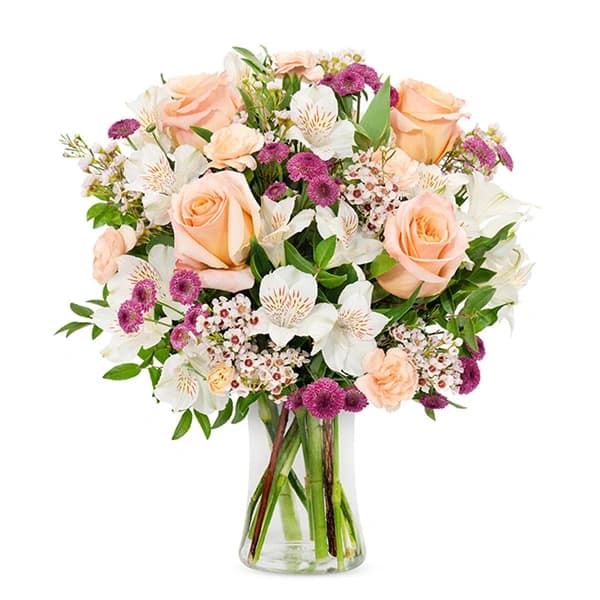
One example is Thinking of You – Field Study, a soft and romantic bouquet that includes delicate wax flower alongside peach roses, white alstroemeria, and purple button poms in a clear gathering vase. For more options, browse Great Flowers.
Frequently asked questions
How long does waxflower last in a vase?
Cut stems are known for lasting well, often a week or more, when the water is kept clean and the stems are recut regularly. Exact vase life depends on the condition of the stems when you receive them, the room temperature, and how consistently the water is changed.
Is waxflower a good filler flower?
Yes. Its fine, branching stems and small blooms make it a classic filler that adds texture and a soft outline around focal flowers. It also works well on its own in small arrangements, where its airy shape can be the whole design.
What colors does waxflower come in?
White and soft pink are the most widely available, with deeper pink, magenta, and purple forms also found in the trade. Color availability shifts with the season and the grower, so the exact range on offer varies by week and by region.