Tulips (Tulipa)
A complete guide to tulips: identification, common varieties, color meanings, seasonal availability, cut-flower care, design uses, and gifting occasions for the spring-blooming Tulipa.
Overview and Identification
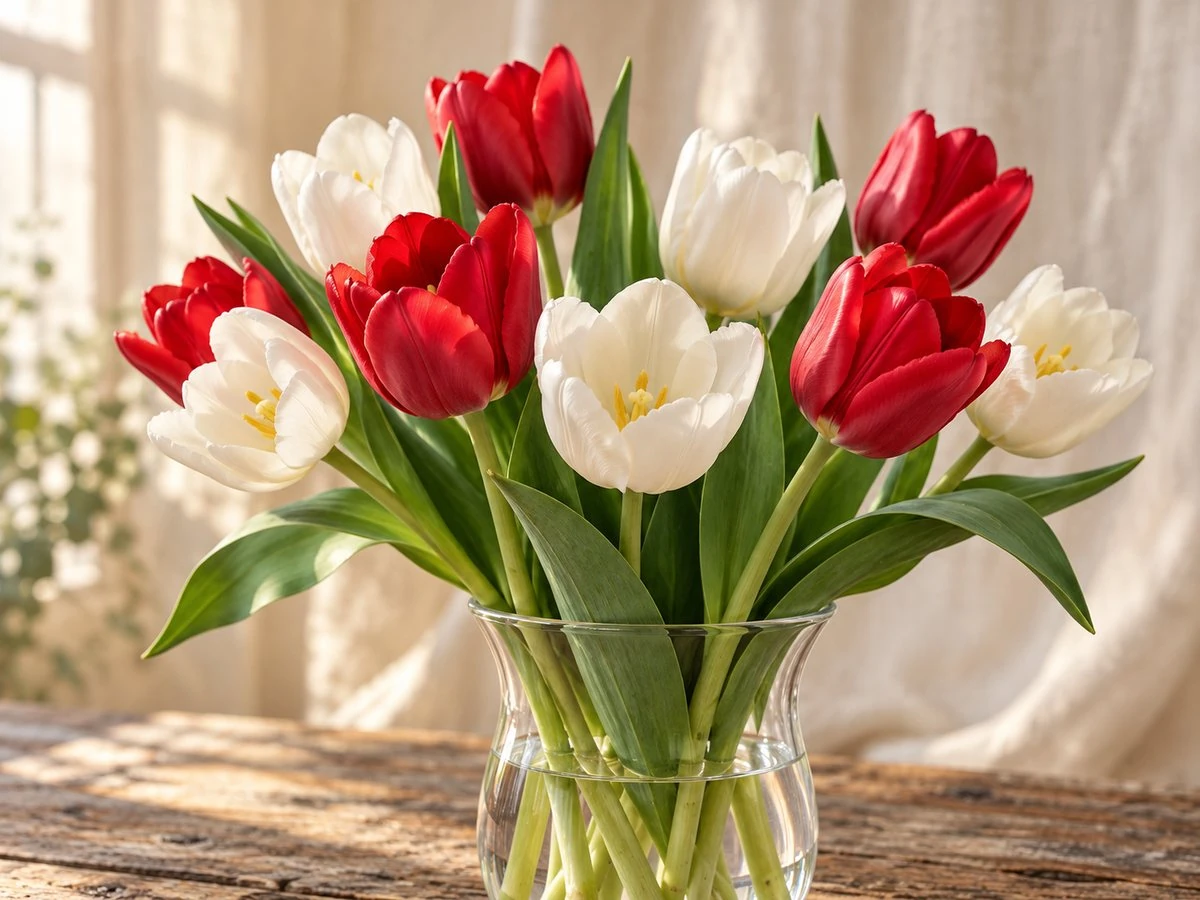
Tulips are among the most recognizable spring flowers, known for their smooth, cup-shaped blooms and slender, upright stems. They belong to the genus Tulipa, which includes a wide range of cultivated varieties. In gardens and floral arrangements, tulips are appreciated for their clean lines, fresh appearance, and the simple symmetry of their petals. A single tulip stem often carries one bloom, though some varieties produce multiple flowers per stem. The leaves are typically broad, strap-shaped, and slightly waxy in texture, forming a green base that supports the colorful flower head.
Common Varieties and Forms
Cultivated tulips come in many shapes and sizes, and horticulturists generally group them into several categories based on flower form and bloom time. Single early tulips open with a classic cup shape, while double early tulips carry layered petals that resemble peonies. Darwin hybrid tulips are tall, sturdy plants with large, rounded blooms often seen in gardens. Parrot tulips have ruffled, feathered petals and a more exotic appearance. Lily-flowered tulips feature pointed, reflexed petals that flare outward. Fringed tulips display finely serrated petal edges. With so many forms available, tulips can suit a wide range of tastes and design preferences.
Colors and Traditionally Associated Meanings
Tulips appear in nearly every color imaginable, including white, cream, yellow, pink, red, purple, orange, and many bicolored combinations. In the language of flowers, tulips are traditionally associated with love and affection, though the specific meaning often depends on color and cultural context. Red tulips are commonly linked to deep love and romance. Yellow tulips have been associated with cheerful thoughts and friendship. Pink tulips are often tied to caring and well-wishes. White tulips are traditionally associated with respect and forgiveness. These associations vary across cultures and historical periods, so it is best to treat them as traditional symbolism rather than universal fact.
Season and Availability
In many growing regions, tulips are spring-blooming bulbs that emerge after the last frost and flower for several weeks. The peak season for garden tulips typically runs from early to mid-spring, though exact timing depends on climate and location. In the floral trade, cut tulips are often available for much of the year thanks to greenhouse cultivation and international sourcing. This means that tulips can frequently be found in flower shops and online arrangements even when they are not blooming outdoors. For the freshest selection, look for stems with firm buds that have just begun to show color.
Cut-Flower Care
Cut tulips can last a week or more in a vase with proper care. Trim about half an inch from the bottom of each stem at an angle, and remove any leaves that would sit below the waterline. Use a clean vase and fresh, cool water, and change the water every two days. Tulips continue to grow after being cut, sometimes stretching several inches, so a taller vase can help support their stems. Keep them away from direct heat sources and ripening fruit, which can shorten vase life. Drooping stems are normal for tulips and can be supported by wrapping the upper portion of the stems in paper or placing them in a narrower-necked vase. Adding a floral preservative to the water can also help keep the stems fresh and the blooms firm for several extra days.
Arrangement and Design Uses
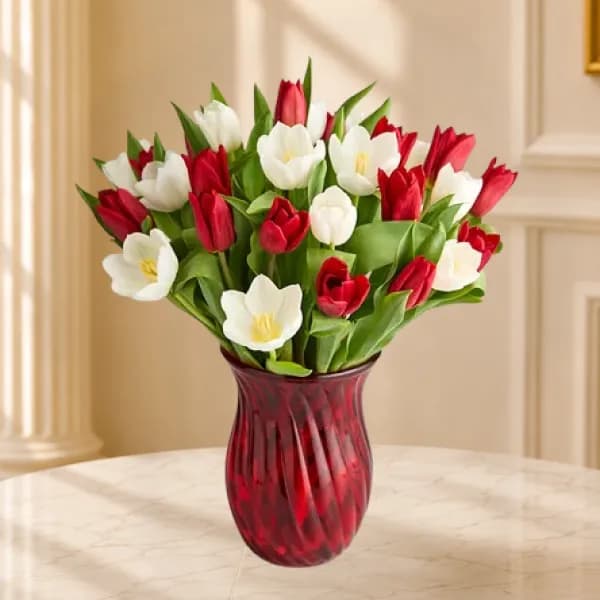
Tulips are versatile in floral design. Their clean shapes and wide color range work well in simple, modern arrangements as well as in more traditional mixed bouquets. They pair naturally with other spring flowers such as daffodils, hyacinths, and ranunculus, and they combine well with greenery like eucalyptus and ruscus. In hand-tied bouquets, tulips add height and structure. In low centerpieces, they bring color and freshness. For a striking option, consider the Mix Tulip Bouquet, which features red and white tulips presented in a red glass vase for a bold, classic display. The smooth, uncluttered look of tulips also makes them a popular choice for minimalist and monochromatic designs.
Gifting Occasions
Tulips make a thoughtful gift for many occasions. Their association with spring and renewal makes them suitable for birthdays, thank-you gestures, and get-well wishes. They are often given to express affection, celebrate new beginnings, or simply brighten someone's day. Because tulips come in such a broad range of colors, they can be matched to the recipient's preferences or to the tone of the occasion. For a heartfelt tribute, tulips can also appear in sympathy arrangements such as Peaceful White Farewell, a half casket spray featuring white lilies, roses, tulips, carnations, and fresh greenery. Their elegant simplicity allows them to convey warmth and sincerity without overwhelming the message.
Frequently Asked Questions
How long do cut tulips last in a vase?
With fresh water and regular trimming, cut tulips typically last five to ten days. Keeping them in a cool location and away from direct heat helps extend their vase life.
Why do tulip stems bend or droop in a vase?
Tulips continue to grow after being cut, and their stems can elongate and curve toward light. This is normal behavior. Using a tall, narrow vase and keeping them out of strong direct light can help reduce drooping.
Are tulips available year-round as cut flowers?
Thanks to greenhouse cultivation and international sourcing, cut tulips are often available in floral shops throughout the year, though they are most abundant and least expensive during their natural spring season.
To explore tulip arrangements and other floral options, visit Great Flowers.