Stock Flowers (Matthiola incana)
A practical guide to stock flowers (Matthiola incana): how to identify them, the colors and traditional meanings, seasonal availability, cut-flower care, and ways to use them in arrangements and gifts.
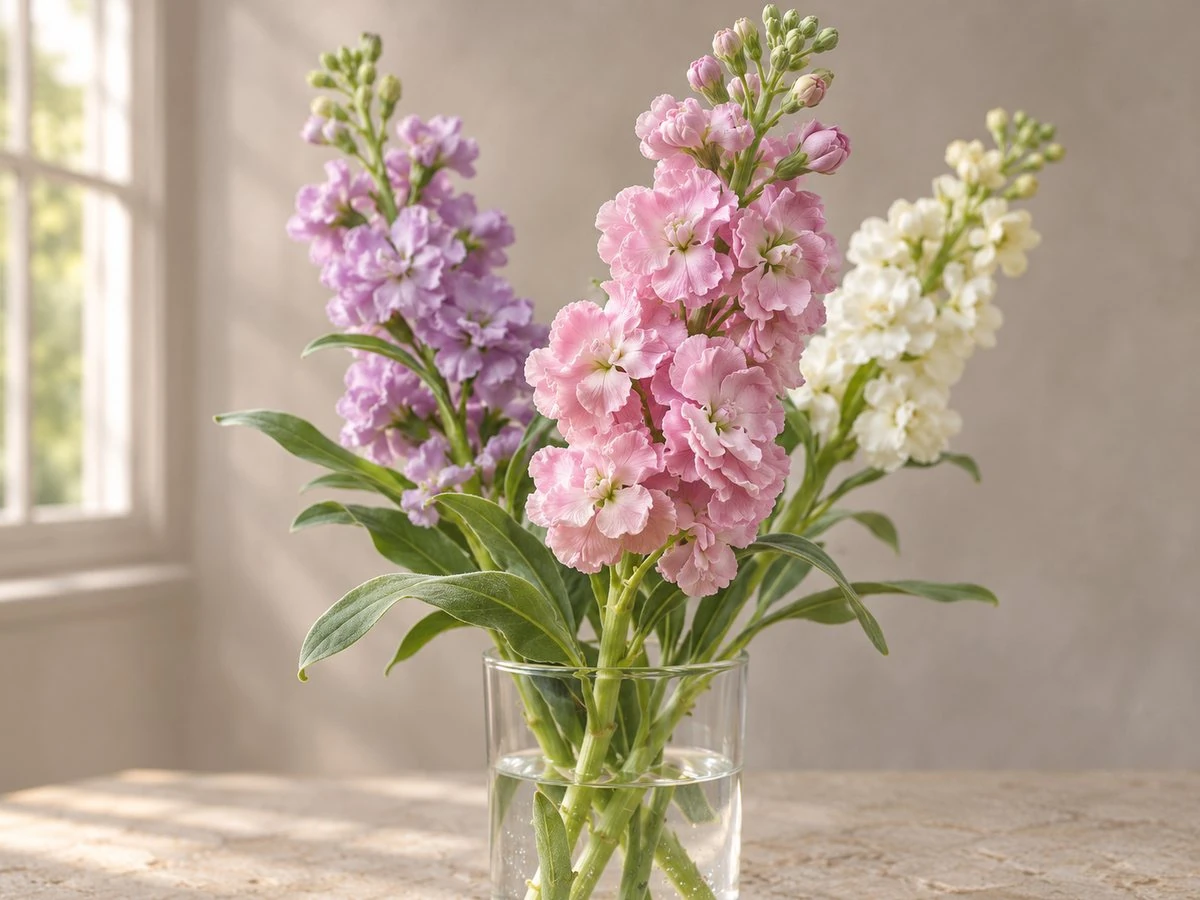
Stock flowers are a long-standing favorite for their dense spikes of small, softly ruffled blooms and their old-fashioned charm. Gardeners know the plant by its botanical name, Matthiola incana, while florists usually just call it stock. The cut stems carry many florets packed along a single upright spike, which gives arrangements a strong vertical line that is hard to duplicate with round, open flowers.
What Stock Flowers Look Like
Each stem rises from a base of narrow, gray-green leaves and finishes in a tight cluster of four-petaled flowers. The petals feel slightly velvety and overlap enough to give the spike a full, almost cone-shaped profile. Bloom size on a stem is modest, but the florets open from the bottom upward, so a well-grown stem shows buds at the tip and open flowers below.
Stock is often sold in the cut-flower trade as single stems or in bundles, and it is sometimes grouped by height. Taller greenhouse-grown stems are the ones most often seen in florist coolers, while shorter field-grown stems appear in seasonal buckets. The flower is also grown as a garden annual or biennial in many regions, where it is valued for the same dense bloom spikes.
Common Varieties and Forms
Nurseries and breeders offer stock in several forms, and the names change from one catalog to the next. Column or spike types produce one dominant upright stem with closely set florets and are the standard choice for formal arrangements. Brocade and ten-week types are generally shorter and bushier, with several flowering stems per plant, and they are often used in beds and containers.
Some lines are selected for a strong, sweet scent, while others are bred mainly for uniform color and steady vase performance. Because the trade names vary widely, it is more reliable to ask for stock by stem length and color than by a specific cultivar name.
Colors and Traditionally Associated Meanings
Stock appears in white, cream, ivory, pink, rose, lavender, purple, and soft yellow, with deeper crimson and burgundy shades available in some seasons. The lighter tones read as calm and gentle, while the deeper shades look richer and more dramatic.
In the language of flowers that grew up around European garden plants, stock is traditionally associated with lasting affection, contentment, and a life of happiness. White stock in particular is often linked with devotion and remembrance. These meanings are traditional associations, not facts, and they shift with culture, region, and personal context. A meaning that feels right in one setting may carry no weight in another.
Season and Availability
Stock is a cool-season flower. In many growing regions it performs best when temperatures stay mild, and it tends to struggle in sustained summer heat. Greenhouse production extends the season, so cut stock can appear in florist coolers outside the outdoor growing window, though the supply is often heaviest in spring and again in the cooler months.
Because growing conditions vary so much, it is hard to give a single reliable calendar. A local florist will know what is in season in a given week, and availability can differ sharply from one region to another.
Cut-Flower Care
Stock lasts longest when it is handled gently from the moment it arrives. Remove any foliage that would sit below the water line, recut the stems at an angle with a clean, sharp blade, and place them in a clean vase filled with fresh water and flower food. Change the water every day or two, and give the stems a fresh cut each time.
Stock prefers a cool spot out of direct sun and away from heat sources, ripening fruit, and drafts. The lower florets sometimes wilt before the upper ones open; removing spent blooms keeps the spike looking tidy and lets the remaining buds open. If a stem is drooping, a deep drink of cool water and a fresh cut often revive it.
Arrangement and Design Uses
Few flowers give an arrangement height and structure as cleanly as stock. Its spikes draw the eye upward, so designers often place them near the center or back of a design and let them rise above softer, rounder blooms. In a mixed bouquet, stock works well as a vertical accent beside flowers with more open faces.
On its own, stock makes a simple, fragrant table arrangement in a narrow-neck vase. It also holds up well in sympathy designs, where its traditional association with remembrance fits the occasion. Because the spikes are dense, a few stems go a long way, and they pair easily with greenery that has a finer texture.
Gifting Occasions
Stock suits moments that call for warmth without showiness. It is a thoughtful choice for a thank-you, a get-well wish, a housewarming, or a quiet note of support. Its link with lasting affection makes it a natural fit for anniversaries and expressions of regard, while the white and cream shades are often chosen for memorial and sympathy settings.
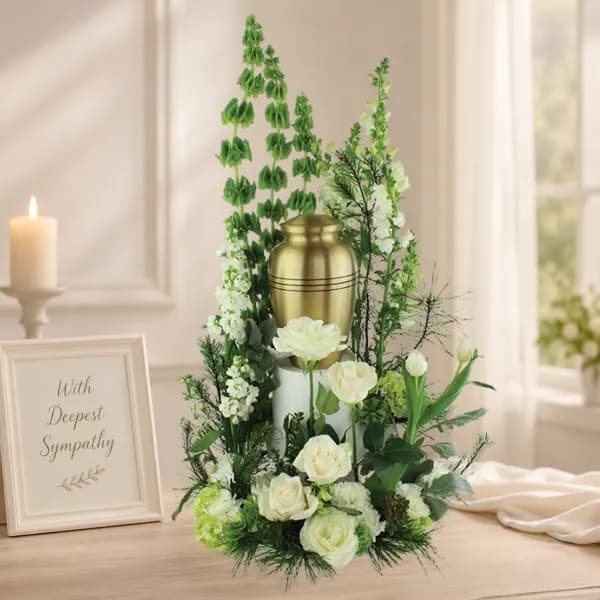
One example is the Peaceful Memories Urn Tribute, which brings together white roses, snapdragons, stock, and lush greenery in a design meant to surround a cremation urn. It shows how stock can carry the quieter part of a tribute, adding height and softness alongside more prominent blooms.
Frequently Asked Questions
How long do cut stock flowers last in a vase?
With clean water, flower food, and a cool spot, cut stock commonly holds for about a week, and sometimes longer. The exact life depends on how mature the stems were at harvest and how warm the room is. Changing the water and recutting the stems every day or two gives the best result.
Does stock have a scent?
Many stock varieties are noticeably fragrant, with a sweet, clove-like scent that is strongest in a warm room. Not every stem is strongly scented, and some breeding lines are selected for color and form rather than fragrance. If scent matters, ask a florist which stock is in the cooler that week.
Can stock be used in a mixed bouquet?
Yes. Stock adds height and a dense, ruffled texture that contrasts well with open, rounded flowers. It works best when it is given room to stand above the other stems, so the spikes are not crushed or bent. A florist can balance the arrangement so the stock reads as structure rather than filler.
For more flower profiles, care notes, and arrangement ideas, visit Great Flowers.