Statice (Limonium sinuatum)
Statice (Limonium sinuatum) is a papery, long-lasting cut flower grown in purple, lavender, blue, pink, white and yellow. Learn how to recognize it, care for fresh and dried stems, and use it in arrangements and gifts.
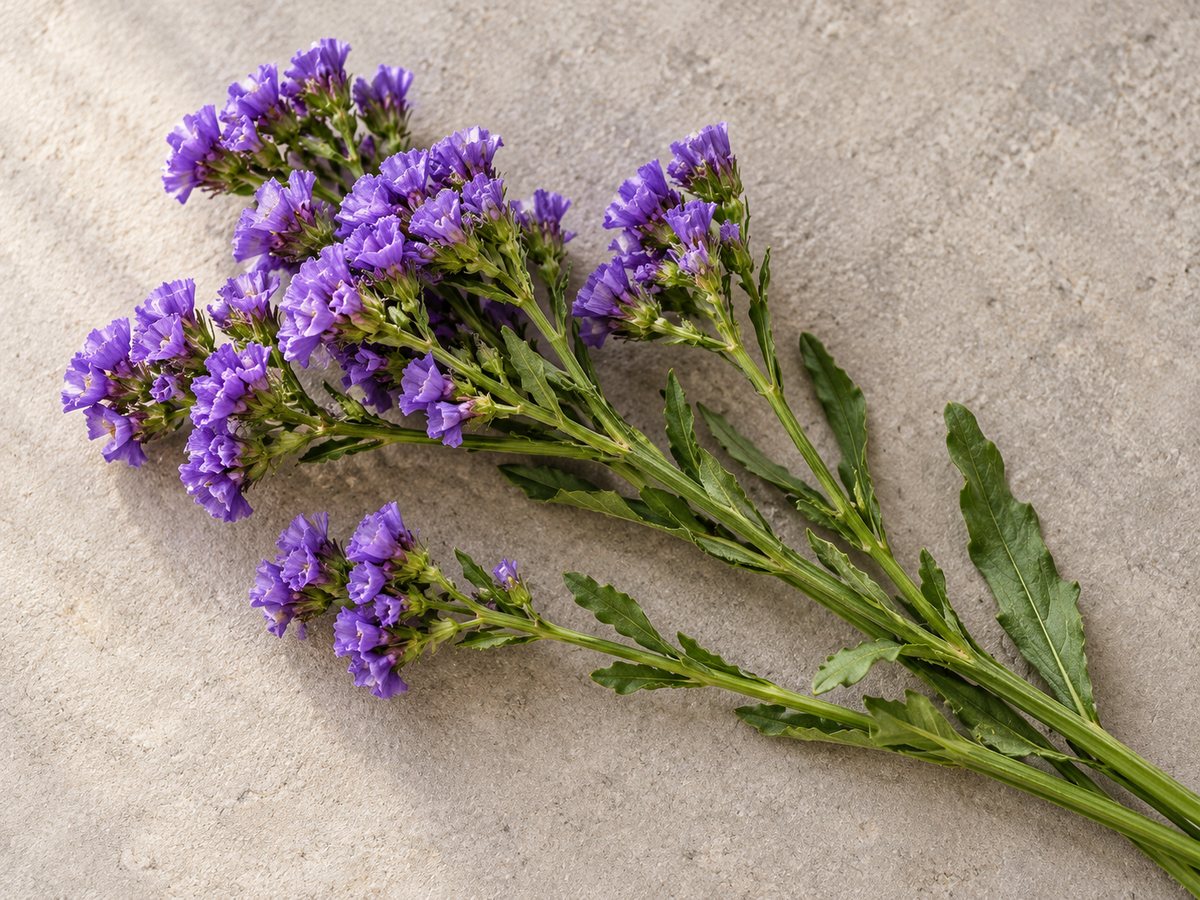
Statice is the common name most people use for Limonium sinuatum, a flowering plant valued for its small, papery blooms and its unusually long vase life. The stems are stiff and slightly angular, the flowers sit in dense clusters near the top, and the color you see is held in a thin, dry-textured calyx rather than in soft petals. That papery quality is why statice looks nearly the same on day one and day ten.
This entry covers how to recognize statice, the forms and colors you are likely to find, what it has traditionally been associated with, when it is available, how to care for it, and how to use or give it.
How to Recognize Statice
Fresh Limonium sinuatum stems branch near the top into a spray of small flower clusters. Each cluster is made up of tiny individual blooms, and the showy color comes from the calyx, which is thin and dry to the touch. The true petals inside are small and modest by comparison.
The leaves are usually clustered at the base of the plant and are lobed rather than smooth-edged. On the flowering stems you can often see narrow ridges or wings running along the stem, one of the features that separates Limonium sinuatum from some of its relatives.
Forms and Related Plants Sold as Statice
Several different plants are sold under the statice name, so the botanical label is worth reading when it matters to you.
- Limonium sinuatum is the classic cut-flower statice, sometimes called winged sea lavender for its ridged stems.
- Other Limonium species also appear in florist buckets and gardens, and their flower heads and foliage can look noticeably different.
- German statice is a trade name that refers to a different plant.
- Fresh and dried statice are the same plant handled two ways: sold in water, or sold already air-dried for longer display.
Sea lavender is another familiar name for members of this group. It is a naming habit rather than a botanical category, so two bunches labeled sea lavender may not be the same species.
Colors and Traditional Associations
Statice is grown in a wide range of colors, including purple, lavender, blue, pink, rose, white, yellow, and soft apricot tones. Purple and lavender are the shades most often seen in mixed bouquets.
Flower symbolism varies by culture, region, and personal meaning, so it is best read as tradition rather than fixed fact. With that in mind, statice has traditionally been associated with remembrance, lasting affection, and steady support. Purple and blue statice are often chosen when a bouquet is meant to carry a quiet, reflective tone, while yellow and warm tones are more often associated with cheer and encouragement.
None of these associations are rules. A flower tends to mean what the giver and the recipient agree it means.
Season and Availability
In many markets statice is available year-round, supported by imported stems and greenhouse production. Where it is grown outdoors, the cutting season generally falls in the warmer months and often continues into early fall. Dried statice is available in every season, which is part of why it appears so often in fall and winter work.
Specific colors are less predictable than the flower itself. Purple and lavender are usually the easiest to find, white and yellow are common, and less familiar shades may come and go.
Cut-Flower Care
Statice is one of the more forgiving cut flowers, but a few habits make a real difference.
- Re-cut the stems at an angle with a clean, sharp tool before placing them in water.
- Strip any foliage that would sit below the water line.
- Start with a clean vase and fresh, cool water. A floral preservative can help.
- Keep the arrangement out of direct sun and away from heat sources and ripening fruit.
- Refresh the water every couple of days and re-trim the stems if the ends soften.
Because the colorful parts are papery, statice holds up longer than many soft-petaled flowers. To dry it, bundle a few stems with a rubber band, hang them upside down in a dark, dry, well-ventilated spot, and leave them until the stems feel firm. Dried stems can be displayed out of water for a long time.
Arrangement and Design Uses
Statice earns its place in designs as a textural element. Its small clusters read as a soft haze of color, which makes it useful for filling the space between larger blooms without crowding them, and its firm stems make it easy to place at mid-height or as an airy top note.
It suits meadow, garden-gathered, and wildflower-inspired styles, where its slightly untamed look fits naturally, and it works in tighter, more structured arrangements when the goal is to add color without adding weight. In dried work it is a standard choice for wreaths, wall pieces, and long-lasting table arrangements.
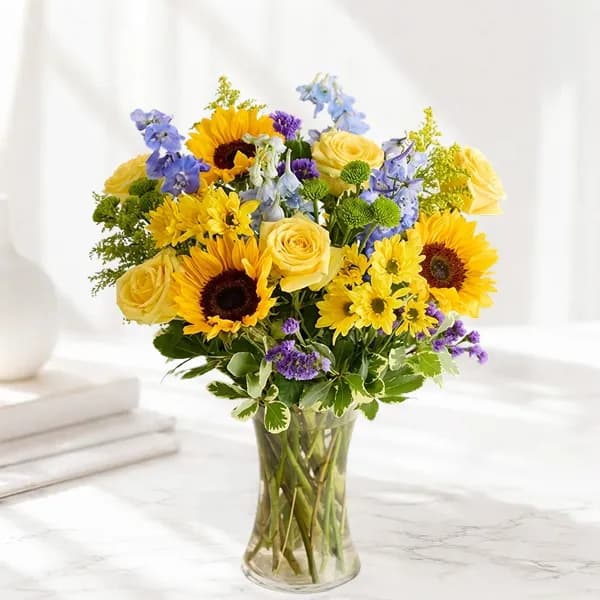
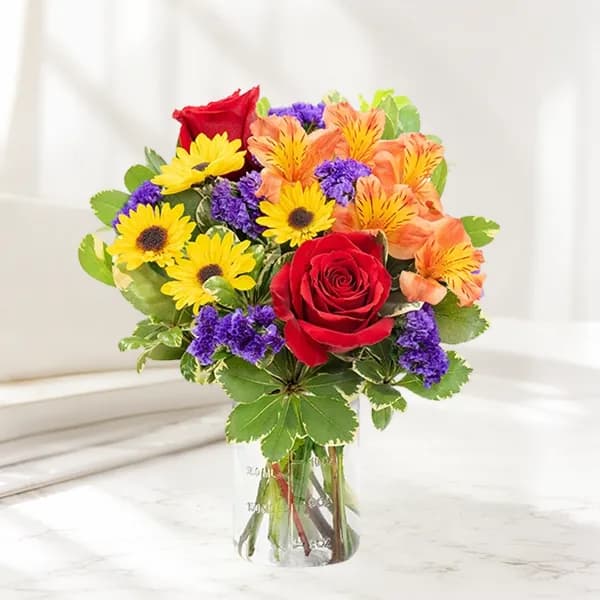
In the European Meadow arrangement, purple statice appears with sunflowers, yellow roses, and blue delphinium in a clear glass vase, a combination that leans on the countryside-meadow look. A fall example is Hearth Happiness, a bouquet of red roses, orange alstroemeria, yellow poms, and purple statice presented in a rustic clear canning jar.
Gifting Occasions
Statice is a practical gift because it keeps looking presentable long after many other flowers have faded. It is often chosen for sympathy and remembrance, where its traditionally reflective associations and long life feel appropriate, and it also works well for thank-you gestures, get-well wishes, housewarmings, and everyday thinking-of-you moments.
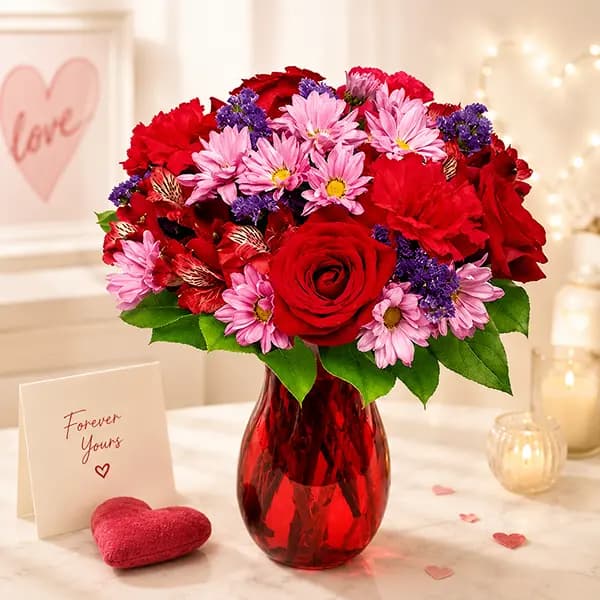
Because statice mixes easily with both bold and pastel flowers, it fits a wide range of occasions. Red Rose Jordan pairs it with red roses, alstroemeria, and lavender daisies in a striking vase for a romantic or anniversary-style gift, while Smiley Blooms puts it alongside hot pink gerberas, orange roses, and green athos in a cheerful planter for birthdays and celebrations.
Frequently Asked Questions
Is statice usually sold fresh or dried?
Both. Fresh statice arrives in water and holds well in a vase. Dried statice has already been air-dried, needs no water, and is meant for long-term display. Fresh stems can also be dried at home.
Does statice have a scent?
Statice is grown for color and texture rather than fragrance. Most stems have little or no noticeable scent.
How long does statice last?
Fresh stems commonly outlast many soft-petaled flowers, and dried stems last much longer still. Exact timing depends on how the stems were handled, the water, and the conditions in the room.
If you are looking for statice in a mixed design, Great Flowers offers arrangements that use it as part of a larger seasonal bouquet.