Snapdragons (Antirrhinum majus)
Learn about snapdragons (Antirrhinum majus): how to identify them, common varieties, colors and traditional meanings, season, cut-flower care, design uses and gifting occasions.
What Snapdragons Are and How to Identify Them
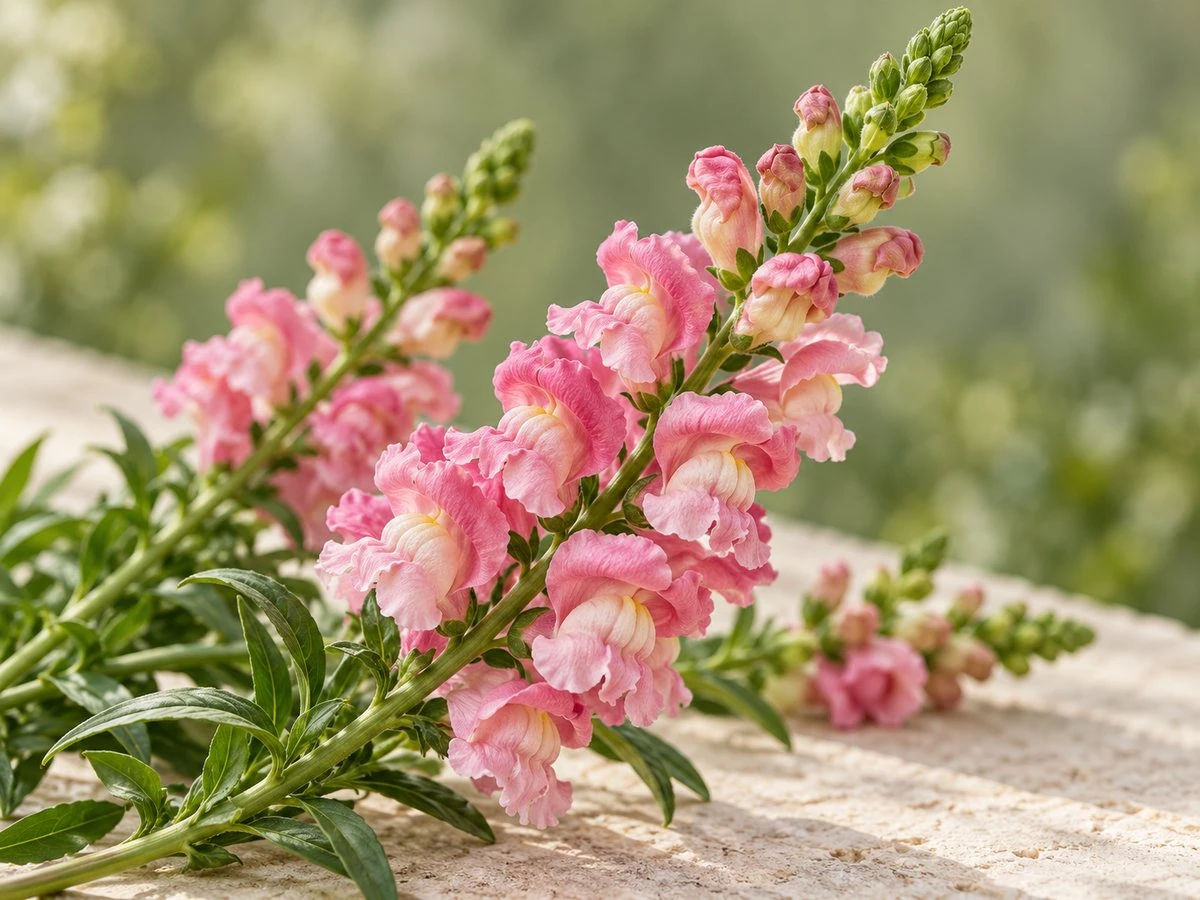
Snapdragons are tall, upright flowering plants grown as cut flowers and garden bedding plants. The botanical name for the common garden snapdragon is Antirrhinum majus, a species in the plantain family, Plantaginaceae. The common name comes from the shape of the bloom: each flower has a hinged lower lip that can be squeezed so the "mouth" opens and closes, resembling a dragon's jaw.
The flowers grow along a single upright spike. Each spike carries many individual florets, and each floret is two-lipped and somewhat tubular. The blooms open from the base of the spike upward, so one stem can show buds at the top and open flowers below at the same time. The foliage is narrow, lance-shaped, and usually a medium to deep green. Most cut-flower stems sold by florists stand tall and straight, which makes them useful as line flowers in arrangements.
Common Varieties and Forms
Garden snapdragons are usually grouped by plant height rather than by a single named variety. Dwarf and medium types stay compact and are often used as border or container plants. Tall types produce long, strong stems and are the ones most often sold as cut flowers. Some varieties are described as open-pollinated, while others are sold as hybrids selected for even stem length and bloom size. Florists may also use the terms "rocket" or "spike" snapdragons when describing the taller cut-flower forms. Because growers release new selections regularly, the exact variety names you see can differ from one season to the next.
Colors and Traditionally Associated Meanings
Snapdragons come in a wide range of colors, including white, cream, yellow, pink, rose, peach, orange, red, and purple. Some varieties carry two tones on the same spike. Traditionally, snapdragons have been associated with grace, strength, and graciousness. In some flower-language traditions they have also been linked to presumption or deception, so the meaning depends on culture and context. These are traditional associations rather than fixed facts, and they vary by region and by personal experience.
Season and Availability
Snapdragons are cool-season flowers in many growing regions. They tend to perform best in mild temperatures and often slow down or stop flowering during sustained heat. In the cut-flower trade they are commonly available in spring and autumn, with supply shifting by region and by the weather of a given year. Because availability moves with the season, the exact color mix in a bouquet can change from week to week. If a specific color matters to you, it is worth confirming what is in season when you order.
Cut-Flower Care
Snapdragons are generally long-lasting cut flowers when given basic care. Start by removing any foliage that would sit below the water line, then recut the stems at an angle with clean scissors or a knife. Place the stems in a clean vase filled with fresh water and the flower food provided by the florist. Keep the arrangement away from direct sunlight, heating vents, and ripening fruit, all of which can shorten vase life. Change the water every day or two and recut the stems each time. Remove spent florets at the base of the spike so the remaining blooms can keep opening. If the lower florets on a spike begin to drop, the upper buds will usually continue to develop, so the stem still has useful life left in it.
Arrangement and Design Uses
Because they grow on tall, straight spikes, snapdragons are often used as line flowers that give height and structure to an arrangement. They work well as a backdrop behind rounded blooms such as roses, carnations, and lilies, and their narrow silhouette fills vertical space in a vase without adding bulk. In a mixed bouquet, snapdragons can soften the outline of a design or add a lighter, airier feel. They also look good on their own in a single-variety vase, where the repeating shape of the spikes creates a clean, modern look.
Gifting Occasions
Snapdragons suit a range of occasions. Their tall, upright form reads as celebratory and polished, which makes them a fit for birthdays, congratulations, thank-you gifts, and anniversaries. They are also a familiar presence in sympathy and memorial arrangements, where their quiet, graceful shape sits well alongside white roses and lilies. Because the flower carries more than one traditional association, the message you intend is best confirmed by the occasion and the color you choose rather than by the flower alone.
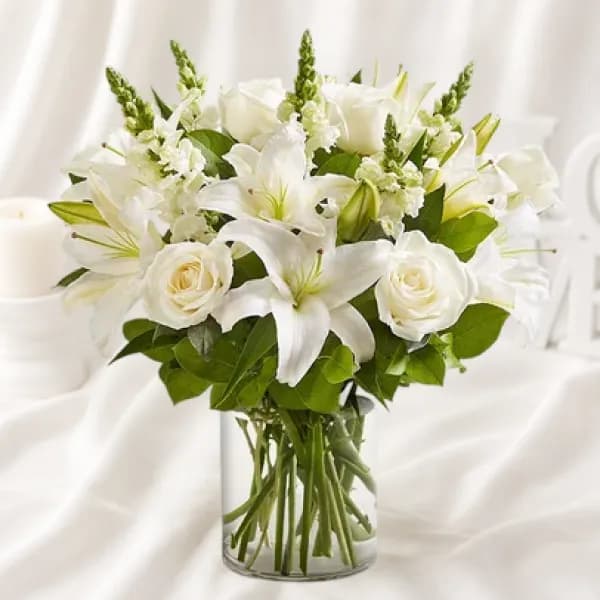
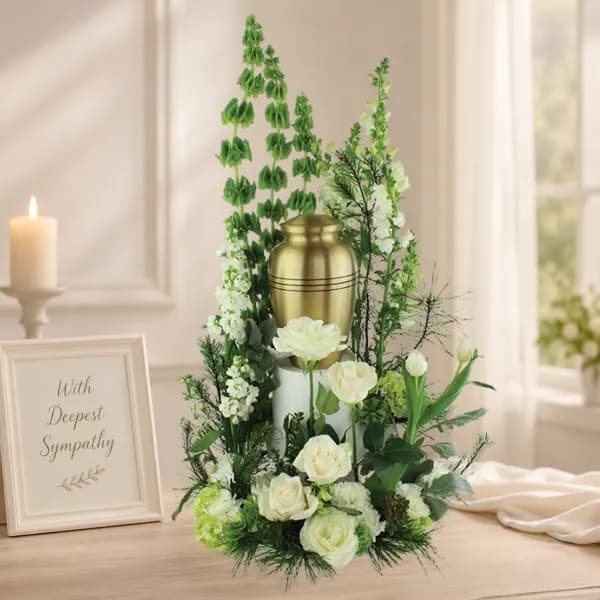
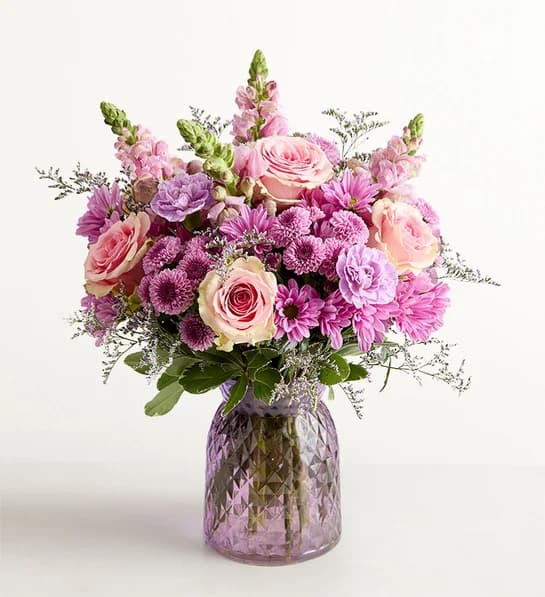
The Lavender Dreams bouquet pairs lavender snapdragons with pink roses, lavender carnations, and daisy blooms, which makes it a comfortable choice for a birthday or an anniversary. Pure Elegance combines white roses and white asiatic lilies with fresh snapdragons for an all-white display. Peaceful Memories Urn Tribute uses snapdragons alongside white roses, stock, and greenery in a tribute designed to surround a cremation urn.
Frequently Asked Questions
How long do snapdragons last in a vase?
With fresh water, flower food, and regular stem recuts, snapdragon stems often stay attractive for about a week or more. Vase life varies with temperature and water quality.
Do snapdragons have a scent?
Most cut snapdragons have little to no fragrance. Their appeal comes mainly from their shape and color rather than scent.
Are snapdragons related to other "dragon" flowers?
No. The name snapdragon refers specifically to Antirrhinum species. Other plants may share similar common names, so it is worth checking the botanical name when you buy.
Whether you are choosing snapdragons for a vase at home or for a gift, the Great Flowers team can help you find the right arrangement at Great Flowers.