Roses (Rosa)
A practical guide to roses: how to identify them, common forms and colors with their traditional meanings, seasonal availability, cut-flower care, design uses, and gifting occasions.
Roses are among the most widely grown and gifted cut flowers in the United States. This guide covers how to recognize them, the forms and colors you are likely to meet at a florist, how to keep cut stems looking fresh, and how to choose an arrangement for a given occasion.
Overview and Identification
Roses belong to the genus Rosa, a large group of shrubs and climbing plants grown across many temperate regions. Garden types range from compact bush forms to tall climbers, and the flowers vary from small single blooms to large, many-petaled heads.
On a cut stem, look for a rounded bud that opens into layered petals, a green calyx at the base of the flower, and leaves arranged along a woody stem. Most cut roses sold for arrangements are hybrid tea or garden rose types chosen for bloom size, stem length, and how long the flower holds after cutting.
Common Varieties and Forms
- Standard roses carry one bloom per stem and are the classic single-flower form.
- Spray roses carry several smaller blooms branching from one stem, which gives a softer, garden-style look.
- Long-stem roses have longer, thicker stems and larger heads, and are often used for a more dramatic presentation.
- Preserved roses are blooms treated to hold their appearance for an extended period.
Names used in catalogs and at the florist often describe a color or a style rather than a botanical variety, so two arrangements with different names can be built from similar stems.
Colors and Traditionally Associated Meanings
Color carries most of the meaning people attach to roses, but those meanings are traditional associations rather than fixed rules. They vary by culture, region, and personal history, and the same color can read differently from one setting to the next.
Red is traditionally associated with love and romance. Pink is often linked with admiration and gratitude. White is commonly tied to purity and remembrance. Yellow is traditionally connected with friendship and joy. Orange suggests warmth and enthusiasm, while lavender and purple tones are often read as admiration or enchantment.
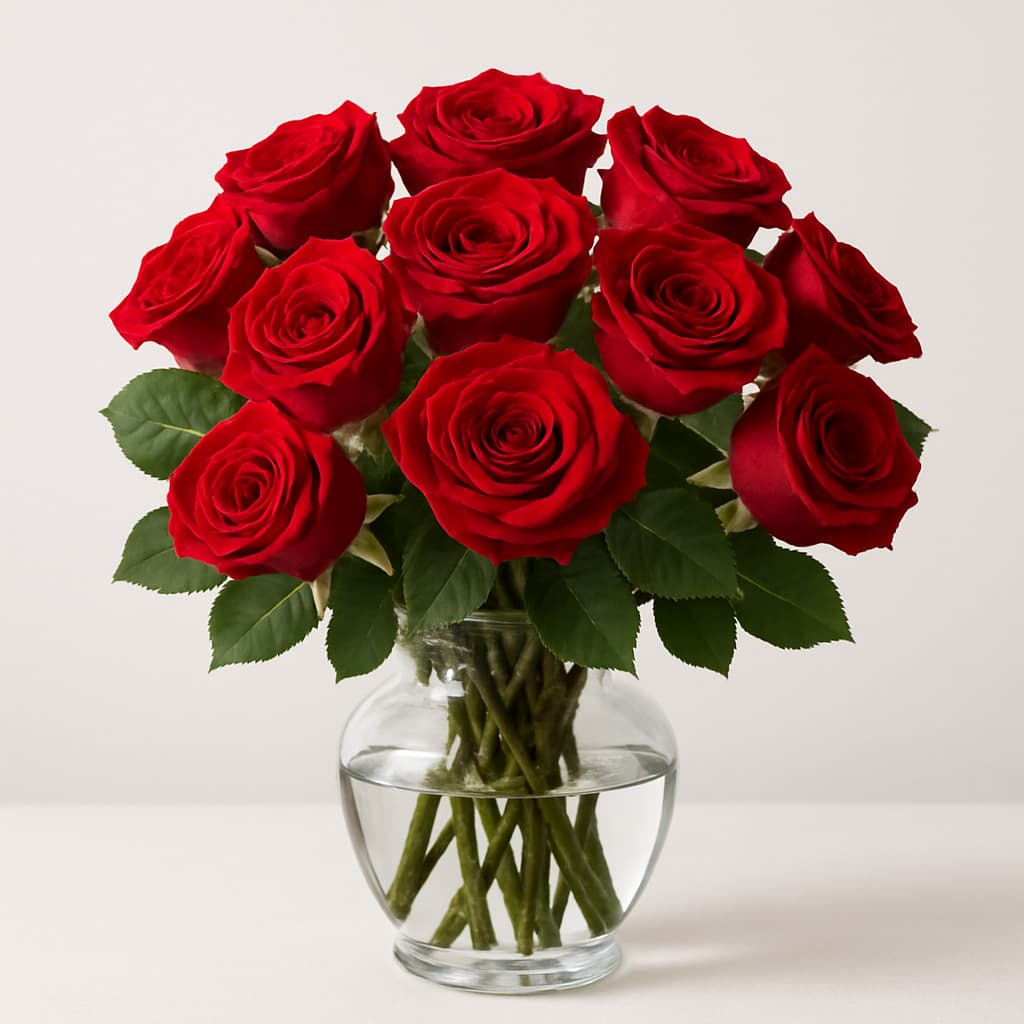
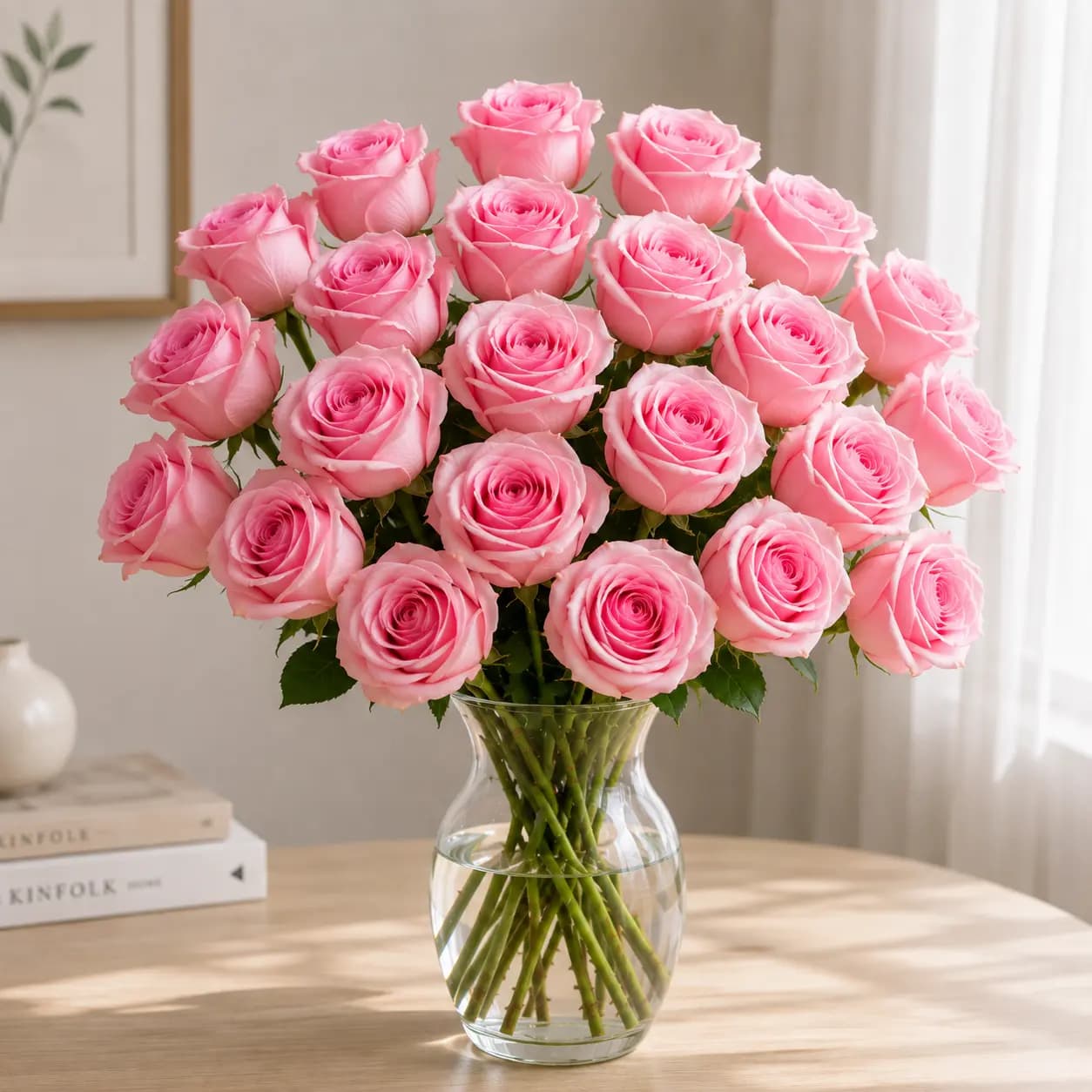
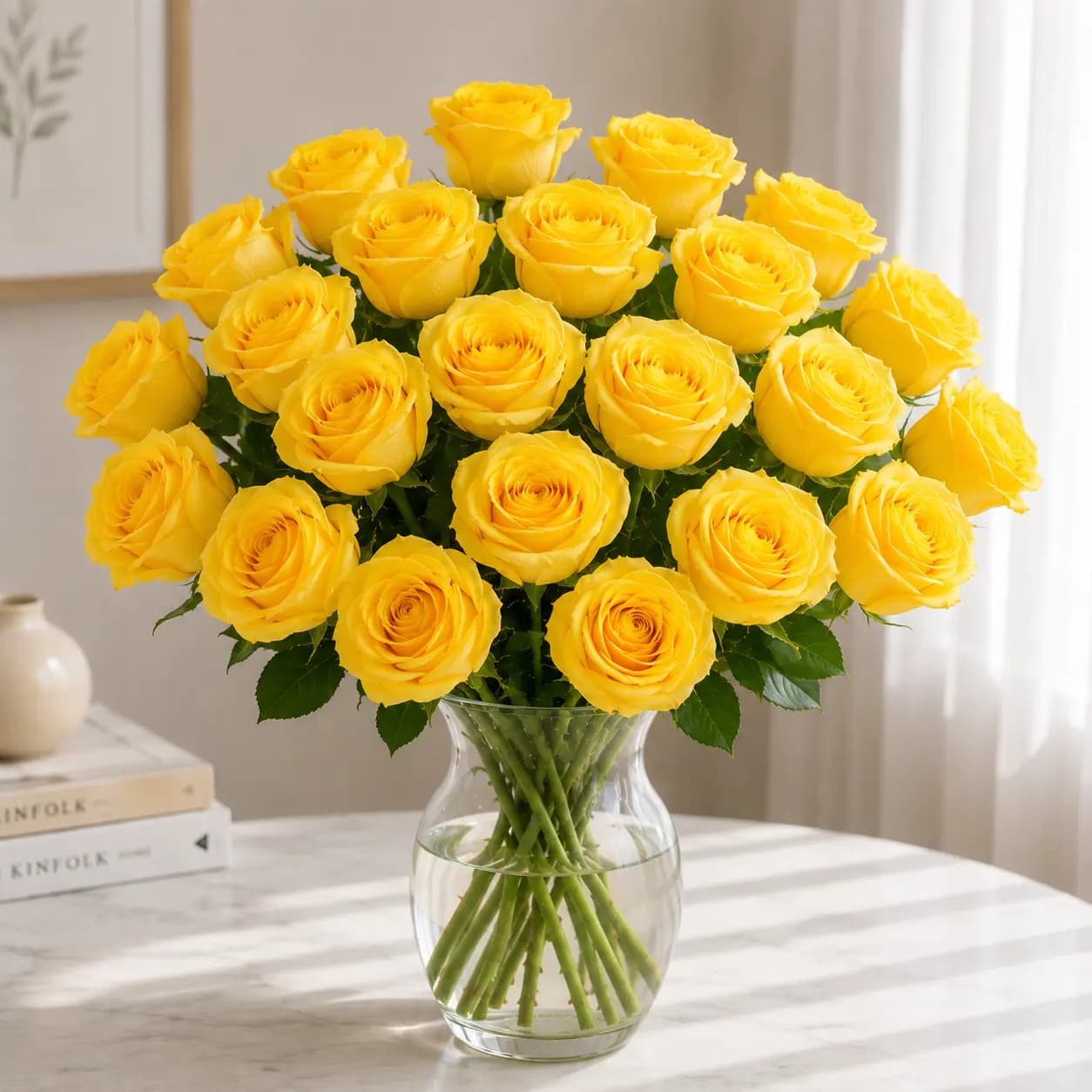
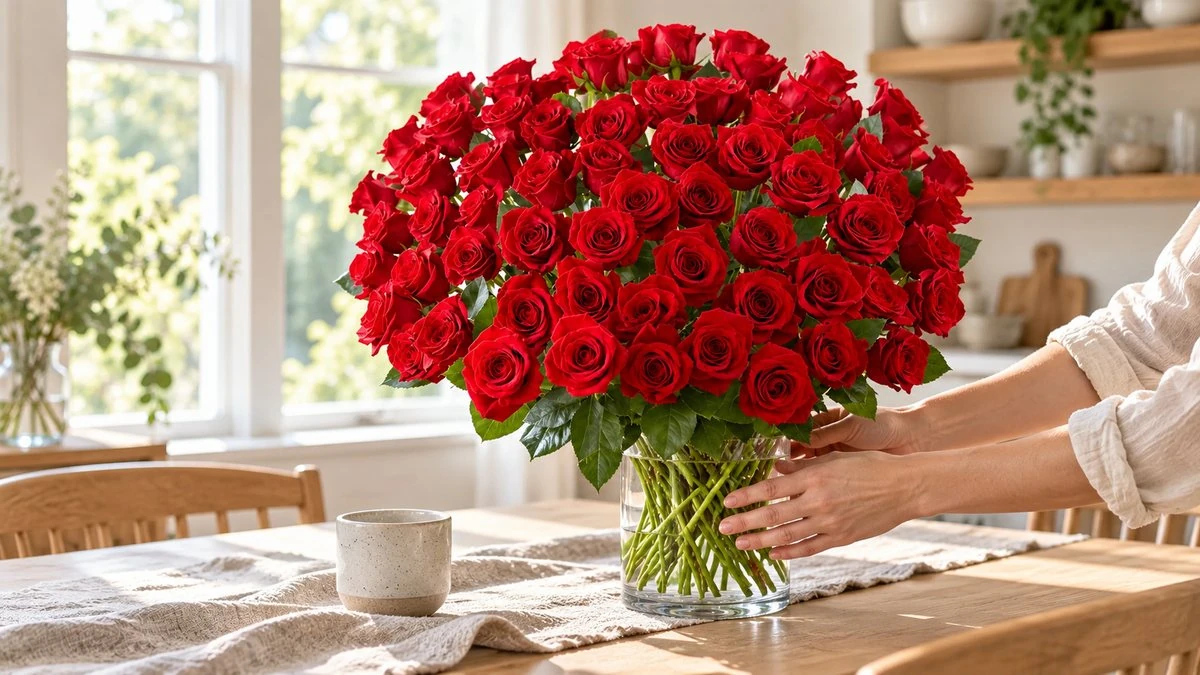
A few examples from the current catalog show how these colors appear in finished work. One Dozen Red Roses is a classic single-color statement, Pink Rose Bouquet presents a soft pink arrangement in a clear glass vase, and Yellow Rose Bouquet is described as symbolizing friendship, joy, happiness, and new beginnings.
Season and Availability
Roses are grown in many regions and are widely available as cut flowers through most of the year in the United States. Greenhouse growing and imported supply keep stems in the market even in colder months, though specific colors and stem lengths can vary with the season and with what a local florist has on hand.
Demand rises around Valentine's Day and Mother's Day, and popular colors can sell out earlier inside those windows. Ordering ahead, or asking about alternatives in the same color family, is a practical habit during peak periods.
Cut-Flower Care
Cut roses last longest when they are handled simply and consistently. On arrival, remove any foliage that would sit below the water line, because leaves in water cloud it quickly and encourage bacterial growth.
- Trim stems at an angle with a clean cut, then place them in fresh water right away.
- Use a clean container and replace the water every day or two.
- Keep the arrangement out of direct sun, away from heating vents, and away from ripening fruit, which releases a gas that ages flowers.
- Remove blooms as they finish opening so the remaining buds continue to develop.
Many arrangements arrive with a packet of flower food. Mixing it as directed helps keep the water balanced and the stems drinking.
Arrangement and Design Uses
Roses are versatile in design because they read clearly at a distance and hold their shape in a vase. A tight cluster of one color gives a formal look, while mixing rose colors with filler flowers and greenery loosens the composition.
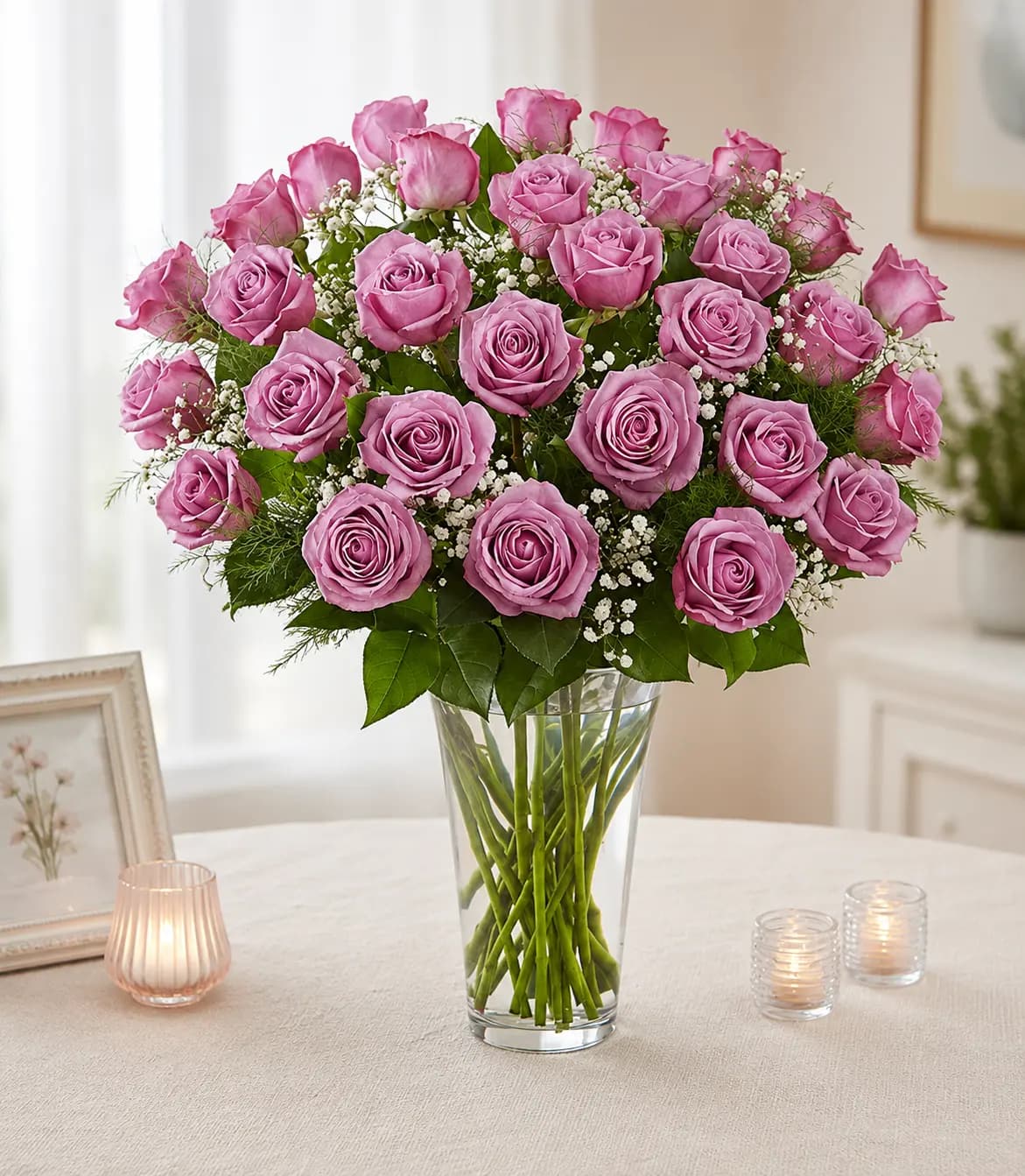
Spray roses and smaller heads work well in low, rounded arrangements where a large head would overwhelm the design. Longer stems suit taller containers and standing pieces. Lavender Rose Elegance shows a single-color rose arrangement softened with baby's breath and greenery in a clear glass vase.
Gifting Occasions
Roses suit a broad range of moments. Red and pink stems are common for anniversaries and romantic occasions, and white roses appear in sympathy and memorial work. Mixed and soft-color arrangements are often chosen for birthdays, thank-you gifts, congratulations, and everyday gestures.
When the recipient has a known favorite color, choosing that color is a simple way to make the gift feel considered. A short written message, included with the order, usually carries as much weight as the flowers themselves.
Choosing and Condition Checks
A few practical checks help you order with confidence. Look for buds that are colored and firm rather than fully open, since tightly closed heads still have much of their opening ahead of them.
Ask what is included in the arrangement, such as the container or vase, rather than assuming it. Stem counts and colors are stated in each product description, so reading it closely tells you what you are sending.
Frequently Asked Questions
How long do cut roses usually last?
With fresh water, regular trimming, and a cool spot, cut roses commonly hold for about a week. The exact span depends on the variety, the conditions in the room, and how far open the buds were on arrival.
Are roses suitable for sympathy occasions?
White and soft pink roses are frequently used in sympathy and memorial arrangements, and many florists carry dedicated pieces for those occasions. Color choice is a personal one, and a florist can suggest options that fit the family's preferences.
Do all rose arrangements come in a vase?
No. Some are presented in a vase and some are wrapped without one, so the product description is the reliable place to check. If a container matters to you, confirm it before ordering.
For more flowers and plants to explore, visit Great Flowers.