Peonies (Paeonia)
A practical guide to peonies: how to identify them, common forms and colors, traditional meanings, season and availability, cut-flower care, arrangement ideas, and gifting occasions.
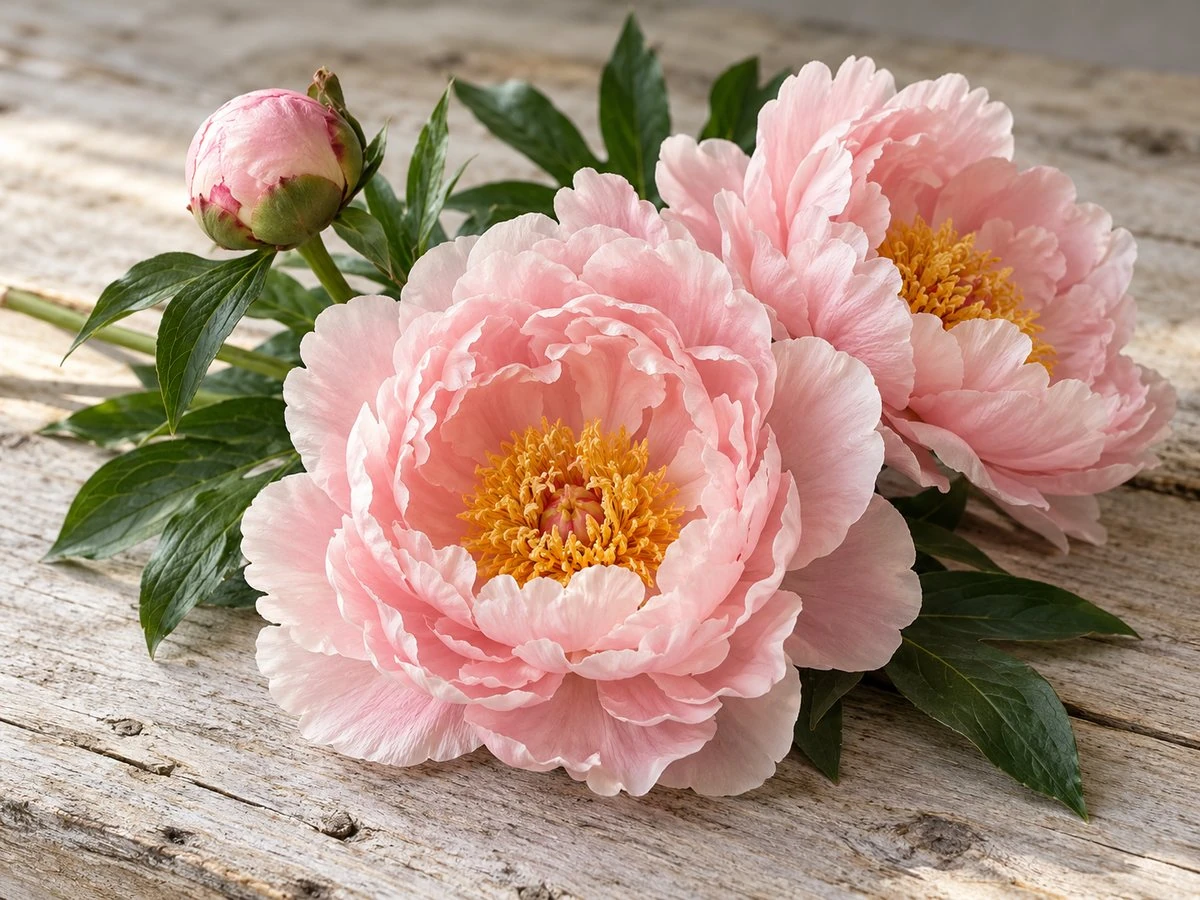
Peonies are among the most recognizable cut flowers in the florist trade, valued for their large, layered blooms and soft, full shapes. Plants in the genus Paeonia grow as herbaceous perennials and as woody shrubs, and the garden varieties most often sold as cut flowers come from a handful of widely cultivated groups. Their season is short and highly anticipated each year, which is why they appear in spring and early-summer bouquets more often than at other times.
What a peony looks like
Garden peonies carry large, many-petaled blooms on long, sturdy stems with divided green foliage. Flower forms are usually grouped as single, semi-double, double, Japanese, and anemone. Single and Japanese forms show a prominent ring of golden stamens at the center, while double forms hold their petals in dense layers that hide the center. Shrub peonies grow on woody stems and return year after year; herbaceous types die back to the ground each winter and re-emerge in spring. Tree peonies are a separate woody group and are not the same plant as the common herbaceous peony.
Common varieties and forms
Florists generally work with a few dependable types. Herbaceous double peonies are the classic round, full bloom. Japanese and anemone forms are prized for their open centers and the contrast between petals and stamens. Itoh peonies, a hybrid group, combine the large flowers of tree peonies with the growth habit of herbaceous ones. Each type has its own look, and the flower form often matters more than the variety name when choosing stems for an arrangement.
Colors and traditionally associated meanings
Peonies appear in white, cream, blush, pink, coral, and deep red, with many shades in between. Traditionally, pink peonies are associated with romance, good fortune, and a happy marriage, while white peonies are linked with honor and remembrance. These are traditional associations rather than fixed rules. Flower meanings vary by culture, region, and personal context, and the same color can carry different meanings depending on the occasion and the relationship between the giver and the recipient.
Season and availability
Peonies have a naturally short field season in many growing regions, concentrated in late spring and early summer. Grown in both hemispheres, the market stretches that window across much of the year, though supply and quality still shift week to week. The exact timing varies by source, so availability at any given moment is best confirmed with the florist rather than assumed from the calendar.
Choosing and preparing peonies
Cut peonies are usually harvested while the buds are still soft and rounded, with color showing but the bloom not yet open. Look for firm buds and stems that stand upright without bending. Once received, trim the stem ends at an angle, remove any foliage that would sit below the water line, and place the stems in a clean vase of fresh water. Refill or replace the water regularly and keep the vase away from direct heat, strong sunlight, and ripening fruit, which can shorten the time the blooms hold.
Helping buds open
Buds that arrive tightly closed can take several days to open. Gentle room temperatures and steady water help them progress. Peonies naturally open from the outer petals inward, and once a bloom is fully open it will not last as long as one that opened more gradually. If a bud looks stuck, recutting the stem and giving it fresh water is a reasonable first step before assuming anything is wrong with the stem.
Arrangement and design uses
Peonies work as a focal flower in mixed bouquets and also hold their own in a simple all-peony bunch. Their rounded, full heads sit comfortably beside softer, airier flowers and textured greenery. In a compact arrangement, a few open blooms can fill a lot of visual space, so they often set the proportion for the whole design. A large, open head can also serve as a centerpiece on its own in a low bowl.
Gifting occasions
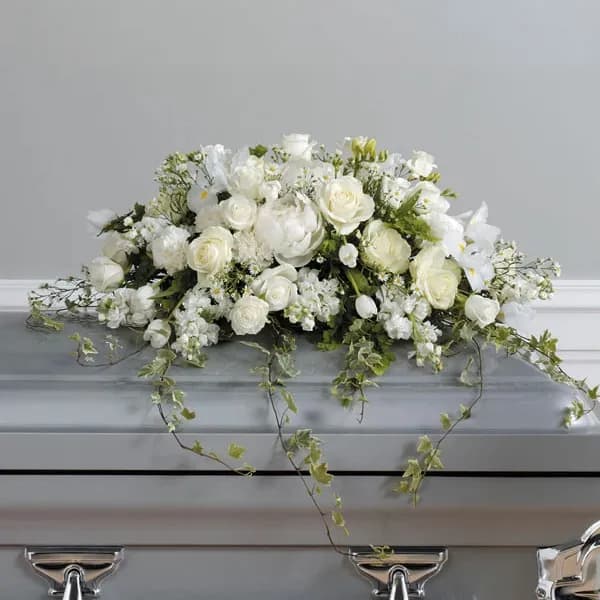
Peonies are a common choice for weddings, anniversaries, birthdays, and expressions of gratitude. Their traditional link with good fortune and a happy marriage makes them a frequent pick for anniversary and wedding arrangements, and their soft color range suits many palettes. They also appear in sympathy work, where white and blush blooms are traditionally associated with honor and remembrance. A graceful white casket spray such as Peaceful Remembrance pairs white roses, peonies, and lisianthus with cascading greenery for that setting.
Frequently asked questions
How long do cut peonies last in a vase?
Cut peonies commonly hold for about a week in a vase, though the exact time depends on how far along the buds were at harvest and the conditions they are kept in. Keeping the water clean and the vase out of direct heat gives the blooms their best chance of opening fully and holding.
Why do peony buds sometimes stay closed?
Buds harvested early need time and steady water to open, and some open more slowly than others. Recutting the stems, refreshing the water, and keeping the vase at a comfortable room temperature are the practical steps that help. A bud that has been fully closed for many days may simply not open, and that is a normal variation rather than a sign of poor handling.
Are peonies the same as plants called peony in another context?
Plants in the genus Paeonia are the peonies used as cut flowers and garden perennials. Other plants may carry the word peony in a common name without being closely related, so the botanical name is the most reliable way to confirm what you are actually buying or growing.
Whether you are choosing stems for an arrangement or sending a bouquet, understanding how peonies grow and how they behave in a vase makes them easier to plan around. Explore more flower and plant profiles at Great Flowers.