Matsumoto Asters (Callistephus chinensis)
Learn how to identify, care for, and give Matsumoto asters, including their colors, traditional meanings, seasonal availability, and cut-flower vase life.
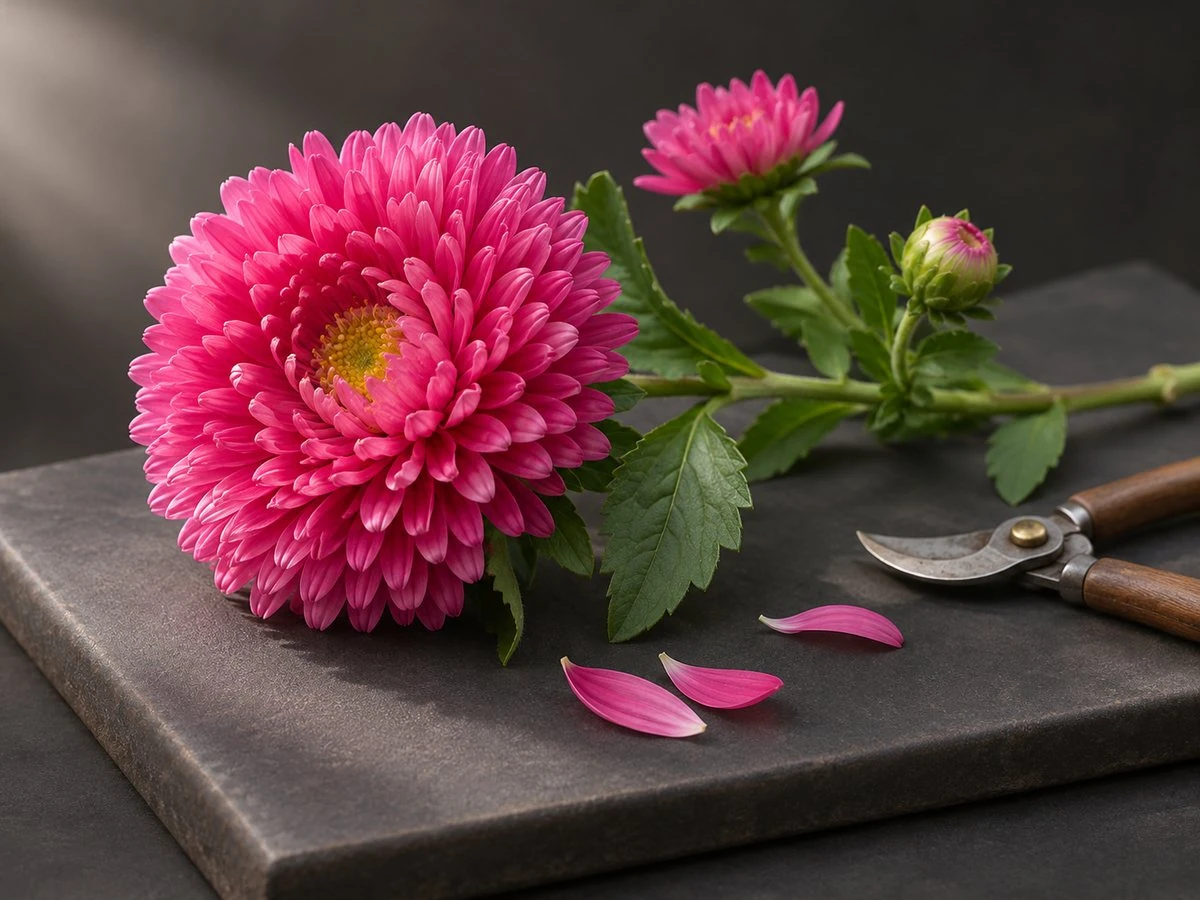
Matsumoto asters are a garden and cut-flower form of Callistephus chinensis, the China aster, an annual grown for its dense, layered flower heads. The name refers to a widely grown series of these asters, prized in floral work for its tight, rounded blooms and sturdy, upright stems.
Each bloom is a composite head, like other members of the aster family. Many narrow ray florets wrap a central disk, and the full, cushion-like shape reads almost like a small chrysanthemum. The foliage is green and slightly toothed, and the plant completes its life cycle in a single season.
The flower is sometimes confused with other plants called aster. True asters in the genus Aster are mostly perennial, while Callistephus chinensis is an annual. Matsumoto asters are the annual China aster, not a perennial border plant.
Common Varieties and Forms
Matsumoto asters are usually sold as a series rather than a single named cultivar. Within the series you will find single-flowered forms with a clearly visible center as well as fuller, double-flowered forms where the disk is hidden beneath extra layers of petals.
Growers also select for stem length and bloom size, so stems sold for arrangements tend to carry larger, more uniform heads than plants grown for garden bedding. When buying cut stems, look for the classic cushion shape and tight, even petal layers.
Because the series is grown for cut-flower production, most of the stems you encounter come from greenhouse or field programs rather than from the garden center. That makes the blooms fairly consistent from season to season, though exact sizes vary with the grower and the time of year.
Colors and Traditionally Associated Meanings
Matsumoto asters appear in a wide range of pink shades, along with white, lavender, purple, and softer blends. Hot pink and mid-pink are among the most recognizable, and the deeper tones hold up well in mixed designs.
Asters have long carried symbolic meaning in flower lore. They are traditionally associated with love, patience, and charm, and in some traditions with elegance and a quiet, lasting affection. In other contexts the same flower reads as cheerful and unpretentious.
These meanings are traditional associations, not fixed rules. Color and context change the message, and different cultures attach different ideas to the same bloom. Treat the symbolism as background rather than as a guarantee of what a gift will say.
Season and Availability
In many growing regions, Callistephus chinensis is a warm-season annual that blooms from mid- to late summer and often continues into early fall. Matsumoto cut stems are most plentiful during that same window, though greenhouse production and imported stems extend the season in many markets.
As a garden plant it is usually started from seed in spring after the last frost, or set out as a young transplant. It prefers full sun and steady moisture. Exact timing and performance vary with local climate, so treat any specific planting date as a rough guide.
Because it is an annual, the plant will not return the following year from the same roots. Gardeners who want it again next season sow fresh seed or buy new young plants.
Cut-Flower Care
On arrival, cut about an inch from the base of each stem at an angle with a clean, sharp blade. Remove any leaves that would sit below the water line, since foliage left in the vase shortens the life of the water.
Place the stems in a clean vase with fresh water and the flower food supplied with most bouquets. Refresh the water every day or two, and give the stems a fresh trim each time you change it. Keep the vase out of direct sun and away from ripening fruit, which gives off ethylene gas that ages cut flowers.
With this routine, Matsumoto asters usually hold their shape well and can last about a week, though the exact vase life depends on room temperature and how mature the blooms were when cut. Remove spent stems as they fade so the remaining flowers stay tidy.
Arrangement and Design Uses
Matsumoto asters are a florist's accent flower. Their compact, rounded heads sit neatly between larger blooms and add texture without taking over a design.
They work well in mixed bouquets, where the tight pink heads contrast with open roses, daisies, and spiky elements. A few stems can also carry a small vase on their own, especially in a low ceramic or glass container that shows off the upright stems.
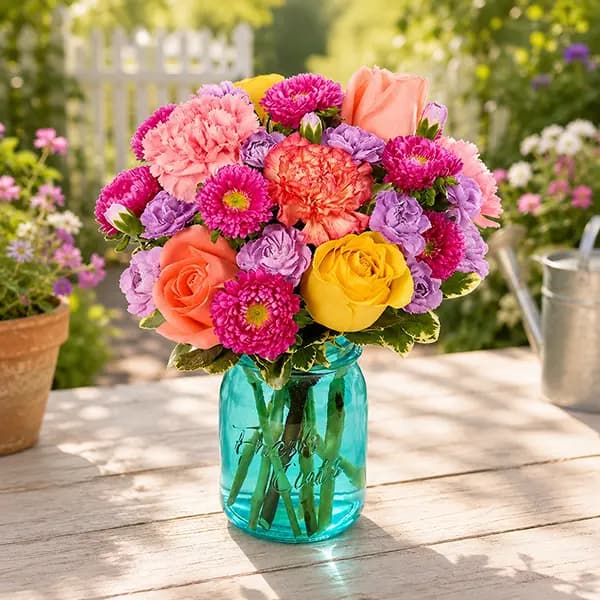
The hot pink form is particularly useful when a design needs a saturated accent. In a cheerful mixed arrangement such as Colorful Charm, the matsumoto stems contribute bright pink notes alongside yellow, orange, and pink roses, lavender mini carnations, and a blue mason jar.
Gifting Occasions
Matsumoto asters suit relaxed, appreciative gifts. They are a natural choice for birthdays, thank-you bouquets, get-well wishes, and small everyday surprises.
Their cheerful appearance and modest size make them easy to send to a friend, a coworker, or a neighbor without the formality of a large romantic arrangement. They also appear in sympathy and memorial designs in some traditions, where the flower's softer meanings fit a thoughtful gesture.
Because the color range runs from pale to vivid, the same flower can read as gentle or bold depending on the mix around it. If you want the gift to feel warm rather than formal, choose a mixed bouquet where the asters share the stage with other blooms.
Frequently Asked Questions
Are Matsumoto asters the same as perennial asters?
No. Matsumoto asters are a form of Callistephus chinensis, the annual China aster. Perennial asters belong to a different genus and return from the same roots each year.
How long do Matsumoto asters last in a vase?
Usually about a week with fresh water, regular trims, and flower food. Cooler rooms and freshly cut blooms tend to hold longer.
Can I grow Matsumoto asters in my garden?
Yes, in many growing regions. They are warm-season annuals grown from seed or young transplants and bloom in summer and early fall. Local climate and frost dates determine the right timing.
For more flower guides and seasonal arrangements, visit Great Flowers.