Lisianthus (Eustoma grandiflorum)
Understand lisianthus (Eustoma grandiflorum), its varieties, colors and traditional meanings, seasonal availability, cut-flower care, design uses, gifting etiquette, and practical FAQs for choosing and enjoying this elegant bloom.
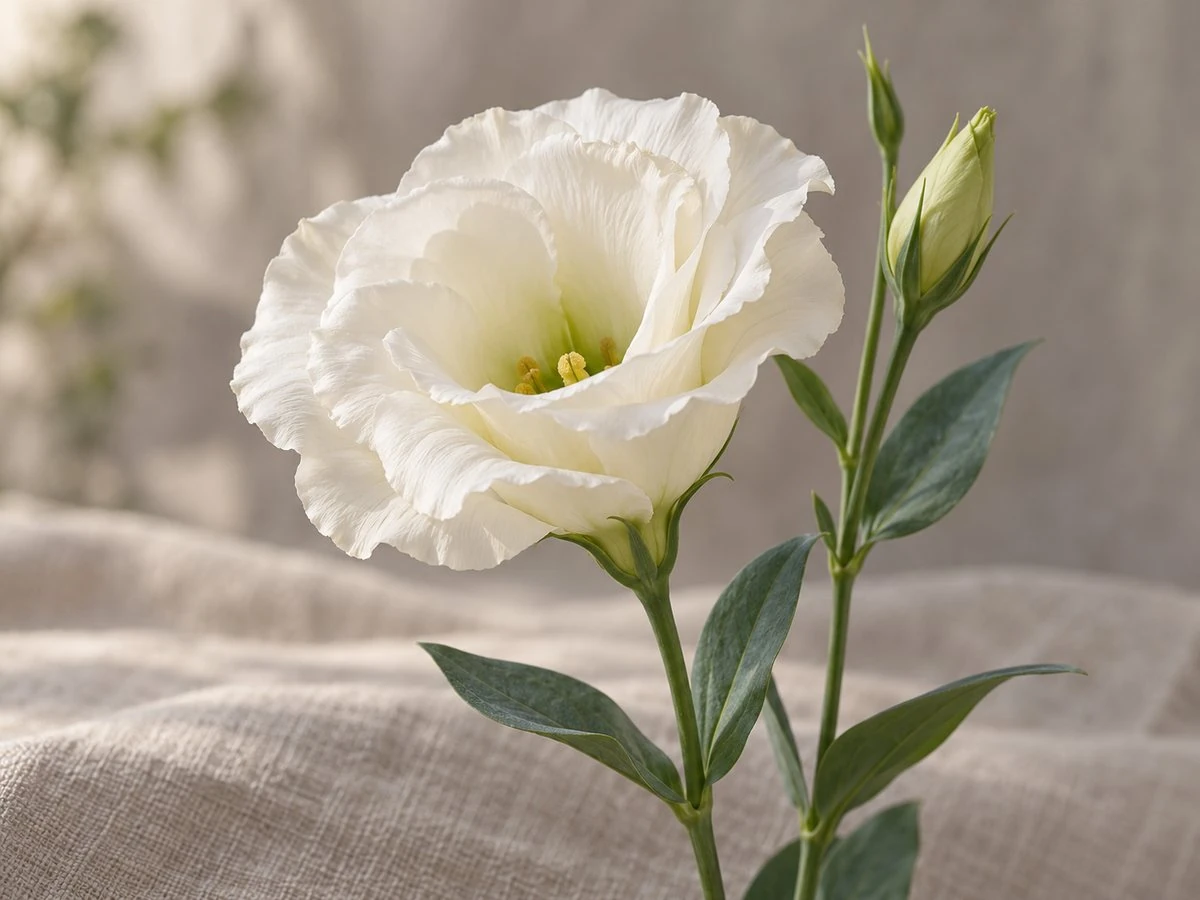
Lisianthus is a herbaceous plant grown for its elegant, rose-like flowers. Its botanical name, Eustoma grandiflorum, reflects the large, showy blooms that give the plant its garden and cut-flower appeal. Stems are slender and typically branch near the top, carrying one or more flowers each. The calyx is funnel-shaped, and the petals open in a soft, rounded form that many people find similar to roses or peonies, though the plant is not closely related to either. Leaves are smooth, opposite, and slightly fleshy, forming a neat stem structure that remains attractive even when the plant is not in bloom. In gardens, lisianthus often reaches a moderate height, making it suitable for borders and containers. Florists value it for its long vase life and the way its petals hold their shape and color in arrangements.
Common Varieties and Forms
Modern lisianthus cultivars are usually grouped by flower form and plant habit. The most common form is the single-flowered type, with five petals arranged around a pale center. Double-flowered cultivars are also popular; they produce fuller blooms with many layered petals, which can resemble small roses. In terms of growth habit, some varieties are more compact and bushy, while others produce longer stems favored by commercial growers. Color breeding has expanded the palette beyond whites and soft blues, but all forms share the same basic botanical structure. When selecting lisianthus for a garden or arrangement, look for healthy green stems and buds that are just beginning to show color, as fully open flowers may have a shorter remaining life.
Colors and Traditionally Associated Meanings
Lisianthus appears most often in white, pink, blue, lavender, and burgundy, though bicolors and deeper purple tones also occur. White lisianthus is traditionally associated with purity and calm, making it a common choice for formal and commemorative arrangements. Pink forms are often linked to affection and gratitude, while blue and lavender varieties carry associations of serenity and elegance. Burgundy lisianthus is traditionally connected to strength and dignity. These associations are cultural and situational; a flower’s meaning can vary by region, tradition, and personal context. It is best to think of color symbolism as a gentle guide rather than a fixed rule.
Season and Availability
Lisianthus is typically grown as a cool-season crop. In many regions, it performs best during spring and fall, when temperatures are moderate. Commercial greenhouse production extends its availability through much of the year in some markets, but peak seasons often bring the widest selection and the strongest stems. Because availability depends on growing conditions, local harvest times can differ. Florists and growers often describe lisianthus as seasonal rather than year-round, so it may be easier to find at certain times. When planning an event or a gift, check with your local florist for current stock.
Cut-Flower Care
Fresh-cut lisianthus can last a week or longer with basic attention. Start by removing any foliage that would sit below the water line in a vase, as submerged leaves promote bacterial growth. Cut the stems at an angle under running water or with sharp shears to improve water uptake. Use a clean vase with fresh, lukewarm water and a floral preservative if one is available. Replace the water every two days and trim the stems slightly each time. Keep arrangements away from direct sunlight, drafts, and ripening fruit, which releases ethylene gas that can shorten bloom life. If buds are still closed when arranged, they often open within a day or two in a warm room. Handling the blooms gently helps prevent bruising of the delicate petals.
Arrangement and Design Uses
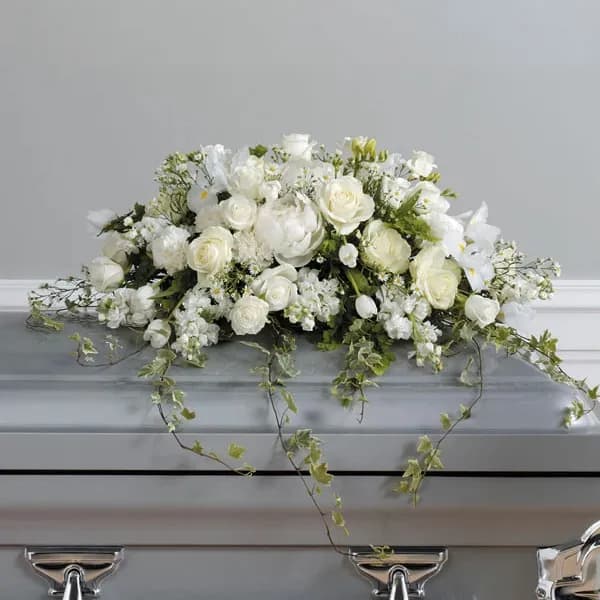
Lisianthus works well in both loose garden-style arrangements and more structured designs. Its soft, rounded form balances well with linear elements such as snapdragons or gladiolus, while its neutral colors make it a useful filler in mixed bouquets. Florists often use it in wedding bouquets, centerpieces, and sympathy tributes because it blends with roses, peonies, and hydrangeas without overwhelming them. In sympathy arrangements, it can provide a quiet, graceful presence; for example, Peaceful Remembrance includes lisianthus alongside white roses and peonies in a casket spray. Because the stems are sturdy and the flowers hold their form, lisianthus also travels well for special events. When designing with lisianthus, consider pairing it with fine-textured greens or airy flowers to maintain a light, elegant feel.
Gifting Occasions
Lisianthus suits many occasions because its appearance is refined without being extravagant. It appears often in sympathy arrangements, where its gentle form offers a restrained expression of care. It is also used in wedding bouquets, bridesmaids’ bouquets, and table centerpieces, especially in spring and summer. For birthdays, anniversaries, or expressions of gratitude, a bouquet that includes lisianthus can feel thoughtful and understated. Because meanings vary by culture and context, it is helpful to consider the recipient’s preferences and traditions when selecting flowers for a particular milestone.
Frequently Asked Questions
Are lisianthus and roses related?
No. Lisianthus belongs to the Gentianaceae family. Roses are members of the Rosaceae family. Their similar appearance is a matter of convergent form rather than close botanical relationship.
Can lisianthus be grown at home?
Yes, many home gardeners grow lisianthus from seed or purchased seedlings. It prefers cool temperatures and well-drained soil. Because it needs a relatively long growing period and consistent care, it is often started indoors before the growing season.
How can I keep cut lisianthus fresh longer?
Use a clean vase with fresh water, add preservative if available, and place the arrangement away from heat and direct sun. Changing the water every two days and retrimming the stems helps maintain vase life.
Explore more flower care and gifting ideas at Great Flowers.