Lilies (Lilium)
Lilies are a beloved genus of flowering plants, admired for their large, showy blooms and wide range of colors. This guide covers their identification, varieties, meanings, and essential care tips.
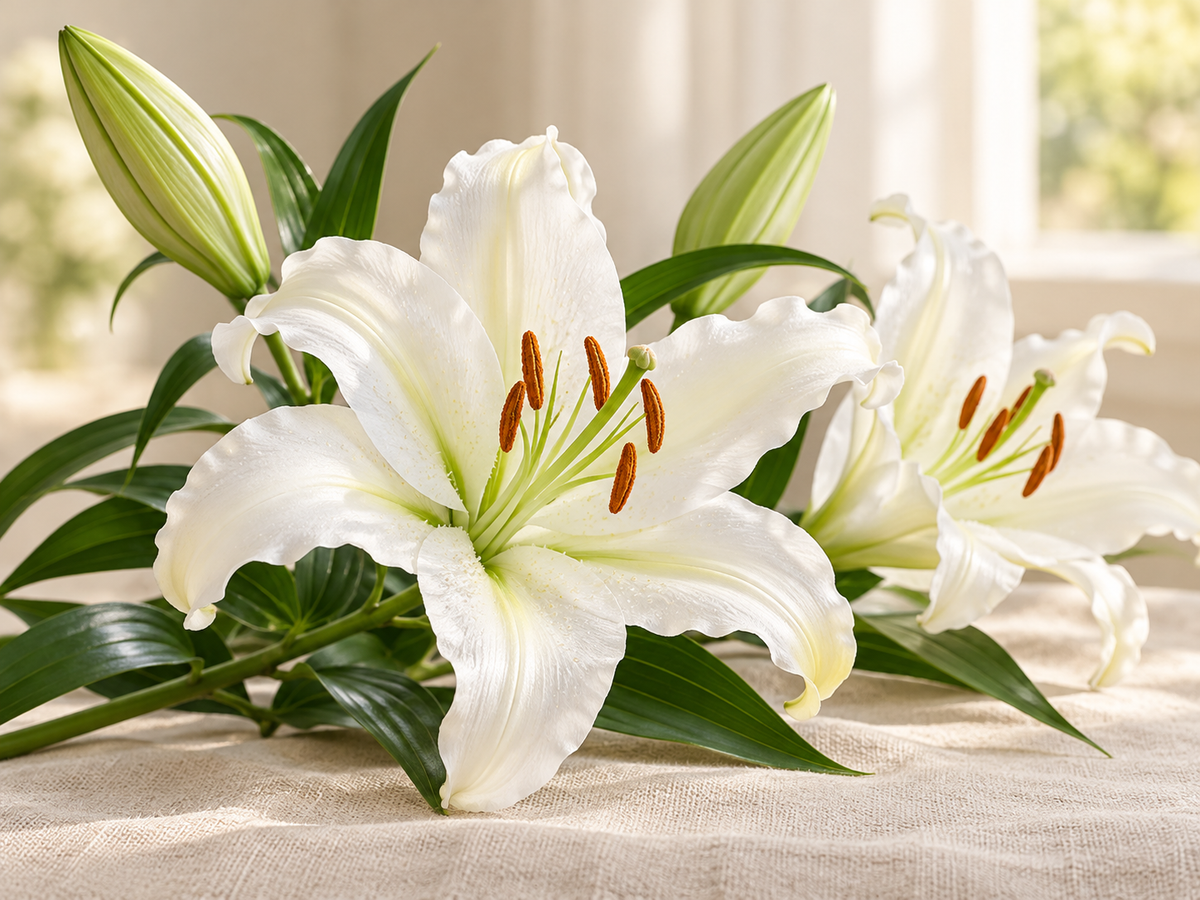
Lilies are among the most recognizable and beloved cut flowers in the world, valued for their dramatic blooms, wide color range, and versatility in arrangements. Whether you are selecting a bouquet, designing a floral display, or simply learning to care for these elegant flowers, this guide covers the essential information you need.
Overview and Identification
Lilies are bulbous perennial plants belonging to the genus Lilium, part of the Liliaceae family. They are known for their large, trumpet-shaped or bowl-shaped flowers that grow on tall, slender stems. Each bloom typically features six petal-like tepals, prominent stamens with large anthers, and a central pistil. The flowers can be single or double, and some varieties produce multiple blooms per stem. Lilies are widely cultivated as ornamental plants for gardens and as cut flowers for floral arrangements.
It is important to note that while many plants carry "lily" in their common name — such as daylilies, peace lilies, and calla lilies — they are not true lilies. True lilies belong exclusively to the genus Lilium and have distinct botanical characteristics that set them apart from these unrelated plants.
Common Varieties and Forms
Horticulturists classify lilies into several major groups based on their parentage and flower form. Among the most widely available are Asiatic lilies, which are known for their bright colors, upward-facing blooms, and lack of fragrance. They are often among the earliest to bloom in the season and are popular for bouquets because of their vivid appearance and long vase life.
Oriental lilies, by contrast, are prized for their intense fragrance, large flowers, and elegant, often outward-facing or downward-facing blooms. Varieties in this group tend to have richer, deeper colors and a more dramatic presence. The well-known Stargazer lily, with its pink-and-white petals and strong scent, belongs to this group.
Other groups include trumpet lilies, which feature long, trumpet-shaped flowers and a sweet fragrance, and Martagon lilies, which display turk's-cap blooms with recurved petals. Longiflorum lilies, often called Easter lilies, are known for their pure white, trumpet-shaped flowers and are strongly associated with spring and religious observances.
Colors and Traditional Meanings
Lilies appear in a broad spectrum of colors, each carrying its own traditional associations. White lilies are commonly associated with purity, innocence, and sympathy, making them a frequent choice for weddings and memorial services. Pink lilies are traditionally linked to prosperity, abundance, and romance. Orange lilies convey enthusiasm, confidence, and passion. Yellow lilies are associated with joy, gratitude, and friendship. Red lilies are traditionally connected to love and desire.
It is important to understand that these meanings vary significantly by culture and context. In some traditions, white lilies symbolize rebirth and motherhood, while in others they are associated with mourning. What a lily communicates in one setting may differ in another, and personal relationships and intentions often matter more than any fixed symbolism.
Season and Availability
Asiatic lilies typically bloom in early to midsummer, while Oriental lilies tend to flower in mid to late summer. However, thanks to commercial cultivation and global supply chains, cut lilies are available year-round in many markets. Different varieties peak at different times, so the selection of colors and types may shift with the seasons.
When purchasing cut lilies, look for buds that are just beginning to open, with visible color but still partially closed. This ensures the longest vase life. Fully open flowers in the store may already be partway through their bloom cycle and will not last as long once arranged at home.
Cut-Flower Care
Proper care can significantly extend the vase life of cut lilies. Upon receiving or purchasing lilies, trim the stems at an angle under running water to prevent air bubbles from blocking water uptake. Remove any leaves that would fall below the waterline, as submerged foliage can promote bacterial growth. Use a clean vase and fresh, cool water, and change the water every two to three days.
- Trim stems at an angle under running water.
- Remove leaves below the waterline.
- Change water every two to three days.
- Keep away from direct sunlight and heat sources.
Keep lilies away from ripening fruit, which emits ethylene gas that can shorten flower life. As the blooms open, you may choose to gently remove the pollen-bearing anthers to prevent staining of petals and clothing. If pollen does stain, allow it to dry and then brush it off gently rather than rubbing it with water, which can set the stain.
Arrangement and Design Uses
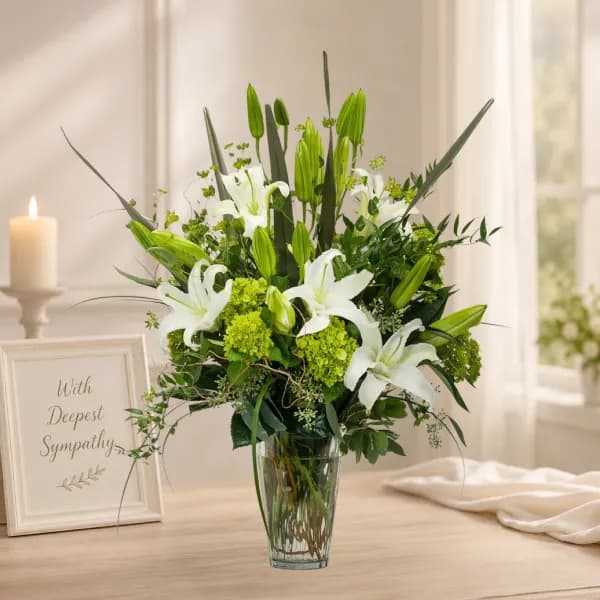
Lilies are versatile flowers that work well as focal points in a wide range of arrangements. Their tall stems and large blooms make them natural centerpieces for formal bouquets, sympathy designs, and celebratory displays. The Naturally Elegant arrangement showcases white Oriental lilies paired with green hydrangeas, demonstrating how lilies can anchor a clean, contemporary design.
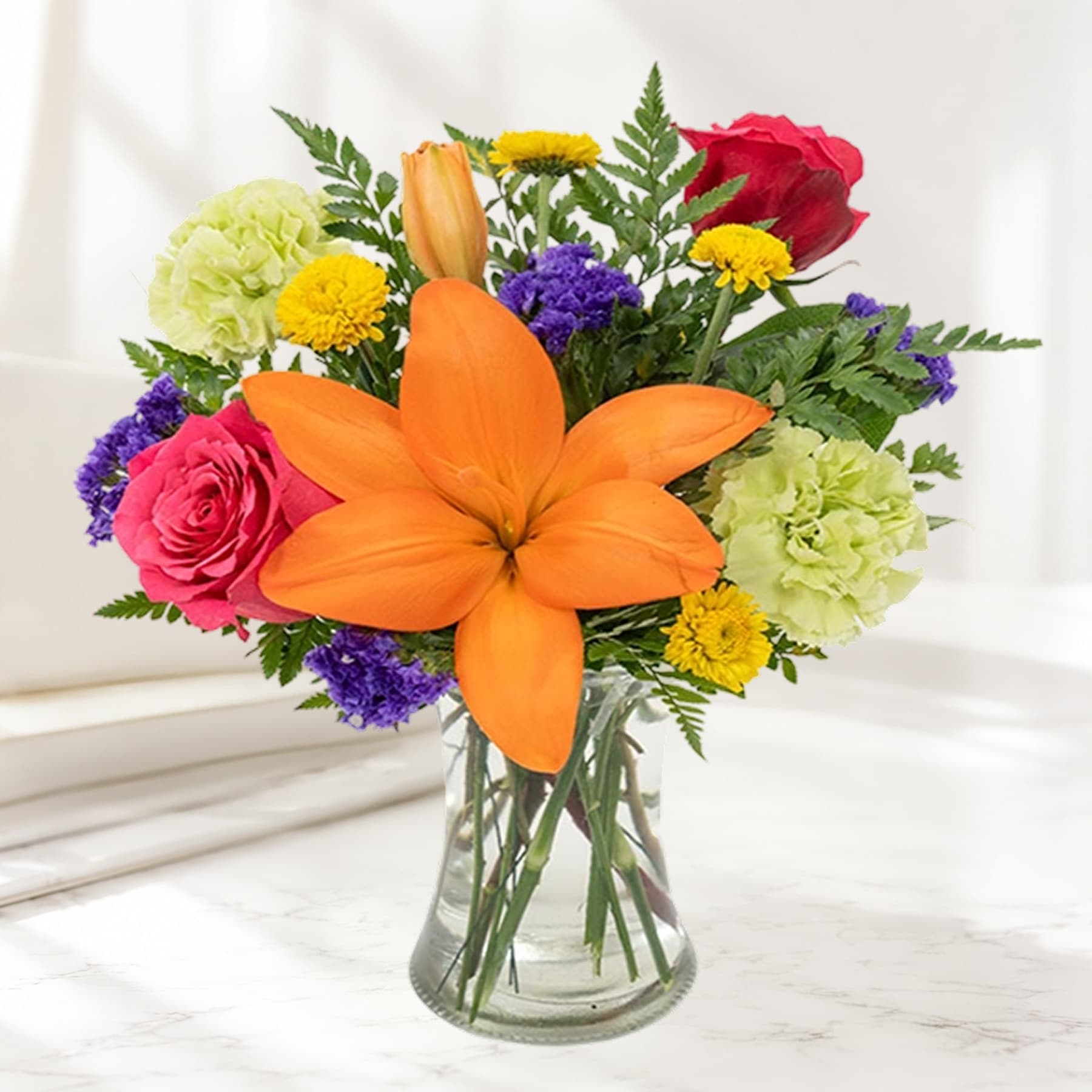
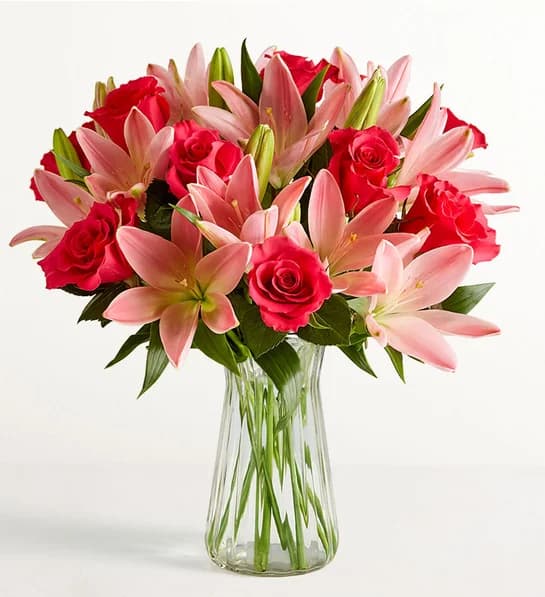
For more colorful presentations, the Lily Arbor features bold orange Asiatic lilies alongside raspberry roses and seasonal blooms, creating a warm, vibrant gathering arrangement. In romantic designs, lilies pair beautifully with roses, as seen in the Blushing Lily & Rose Bouquet, which combines pink lilies and pink roses for a soft, elegant look.
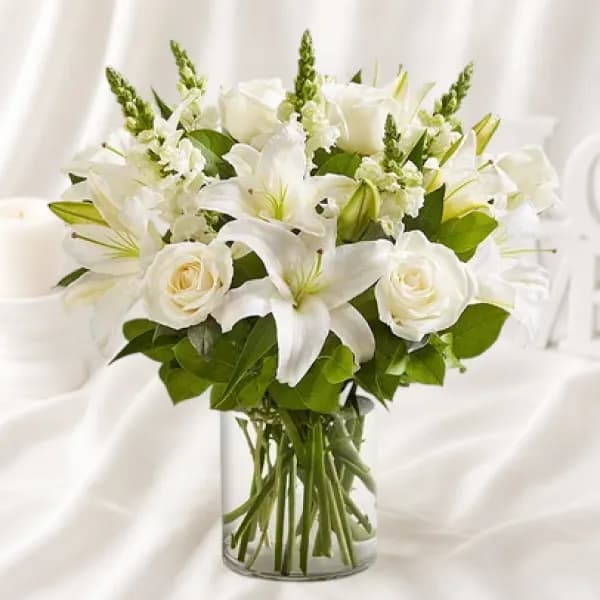
Lilies are also well-suited to sympathy and memorial arrangements, where their traditional association with peace and remembrance makes them a meaningful choice. For all-white designs, the Pure Elegance bouquet presents white Asiatic lilies alongside white roses and snapdragons for a refined, monochromatic display.
Gifting Occasions
Lilies are appropriate for many occasions, from joyful celebrations to expressions of sympathy. They are a popular choice for birthdays, anniversaries, and housewarmings, particularly when given in bright, cheerful colors. White and soft pink lilies are frequently chosen for weddings, where they complement bridal bouquets and reception centerpieces.
Lilies also carry a long-standing association with sympathy and memorial services, where white varieties in particular are used to convey respect and remembrance. They are a common choice for funerals, standing sprays, and tribute arrangements. When selecting lilies for a gift, consider the recipient's preferences and the occasion's tone — vibrant Asiatic lilies suit celebrations, while fragrant Orientals or pure white designs may be better suited to more formal or reflective moments.
Frequently Asked Questions
How long do cut lilies typically last?
With proper care, cut lilies can last one to two weeks in a vase. Keeping the water clean, trimming the stems regularly, and placing the arrangement in a cool location all help maximize longevity.
Do all lilies have a fragrance?
No, fragrance varies widely among lily groups. Oriental lilies are known for their strong scent, while Asiatic lilies are generally fragrance-free. Trumpet lilies typically have a sweet, moderate fragrance.
Can I plant cut lilies in my garden?
Cut flowers that have been commercially harvested are not suitable for replanting. If you wish to grow lilies in your garden, purchase dormant bulbs from a reputable nursery and plant them at the appropriate time for your region.
Explore more floral guides at Great Flowers.