Hypericum Berries (Hypericum)
A factual guide to hypericum berries in cut-flower work: how to identify them, common varieties and colors, traditional meanings, seasonality, vase care, and design uses.
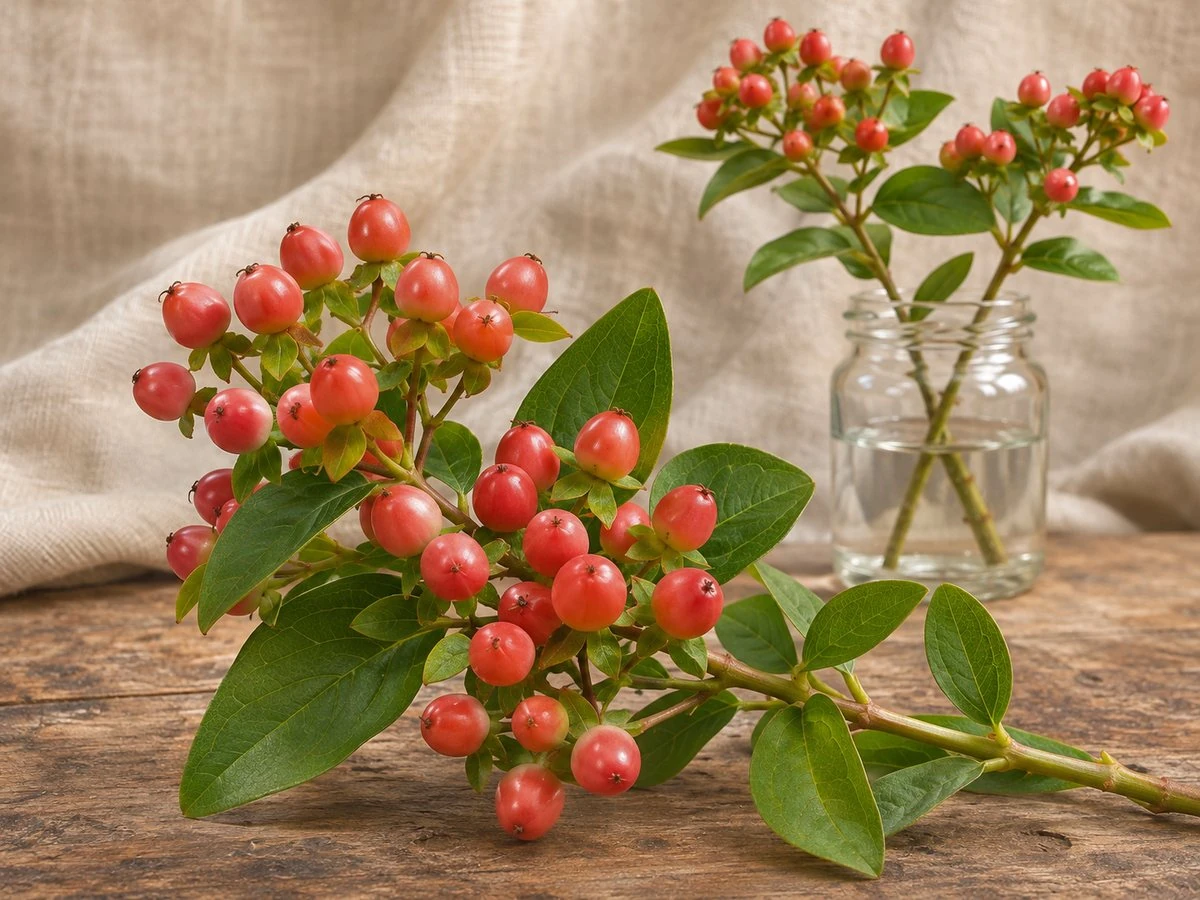
Hypericum berries are the small, rounded seed heads that follow the yellow flowers on many shrubby Hypericum plants. Florists value them for their firm texture, their clustered shape, and the way the fruits shift from green to cream, pink, coral, red, or deep burgundy as they ripen. Unlike the large, showy blooms that dominate summer bouquets, hypericum works as a supporting element. It adds density, a slightly waxy surface, and a clean dotted line of color that holds a design together.
What Hypericum Berries Are
Hypericum is a large genus that includes shrubs, small trees, and herbaceous perennials. The berries used in floral design come mainly from shrubby varieties, which produce branching stems topped with clusters of small, round seed heads. Narrow green leaves run along the stem, and the fruits sit at the ends of short side shoots, so one stem often carries several distinct clusters.
Botanically the fruit is a small capsule, and the floral trade uses "berry" as the common name for it. Cut stems are usually harvested as the fruits begin to color, which allows them to keep developing after they leave the field.
Because the genus is large, the word "hypericum" on a label does not guarantee a specific species. If the exact variety matters to you, ask your florist what is currently in the cooler.
Common Varieties and Forms
Hypericum reaches the trade in a few recognizable forms rather than one uniform stem.
- Green and cream berries read fresh and neutral, and they blend easily into spring and summer work.
- Coral, pink, and bright red berries carry the warm end of the palette and are common in autumn designs.
- Burgundy and near-black berries add depth and a slightly quieter note.
Some varieties produce one large, tight cluster per stem, while others branch into several smaller clusters along a longer stem. The branched forms are useful for spreading color through an arrangement, and the single-cluster forms read as a stronger focal accent.
Color and Traditionally Associated Meanings
In floral tradition, hypericum is often associated with protection, encouragement, and remembrance. In some European floral customs, the plant is also linked to light and to turning away hardship, which is one reason the berries appear in remembrance work. These meanings are customary rather than universal, and they vary by culture, region, and personal history.
Color adds a second layer of association. Green berries tend to read as fresh and hopeful, red and coral as warm and vital, and deep burgundy as quiet and reflective. A recipient may read any of these differently, so choose the color that fits the message you want to send.
Season and Availability
In many growing regions, hypericum fruits from mid or late summer into autumn. Production in several climates extends the season, so cut stems are often available through much of the year. Supply and color still shift week to week, and a florist's current stock is the most reliable guide to what is in season near you.
Cut-Flower Care
Hypericum is one of the more durable textural stems in the cooler, and a little routine care keeps it looking firm.
- Remove leaves that would sit below the water line.
- Recut stems at an angle with clean shears before arranging.
- Use fresh water and change it every day or two.
- Keep the arrangement out of direct sun and away from heating vents and radiators.
- Trim the stems again and refresh the water if they begin to look tired.
Berries that were cut while still partly green often continue to color in the vase. Stems that arrive fully colored hold their shade well, and the fruits usually keep their shape longer than many soft-petaled blooms. Exact vase life depends on the variety and the conditions in your home.
Arrangement and Design Uses
Hypericum is a workhorse for adding mass and texture without adding height. Tuck a few stems into the middle of a bouquet to fill gaps between larger blooms, or let a single branched stem extend past the edge of an arrangement for a loose, natural line.
The berries also suit structured work. They sit neatly in wreaths, garlands, and centerpieces, and their firm surface holds up better than delicate petals when a design has to travel or sit out for part of an event. Pair them with roses, sunflowers, yarrow, and other autumn flowers for a warm palette, or with white and green blooms for a cleaner look.
Scale matters. A few stems read as a subtle accent, while a generous bunch becomes a dominant texture. Start with fewer stems than you think you need and add more once the larger flowers are in place.
Gifting Occasions
Because hypericum is traditionally linked to encouragement and remembrance, it fits get-well and thinking-of-you bouquets as well as sympathy and memorial pieces. It also works for housewarmings and autumn host gifts, where its warm colors feel seasonal without being tied to a single holiday.
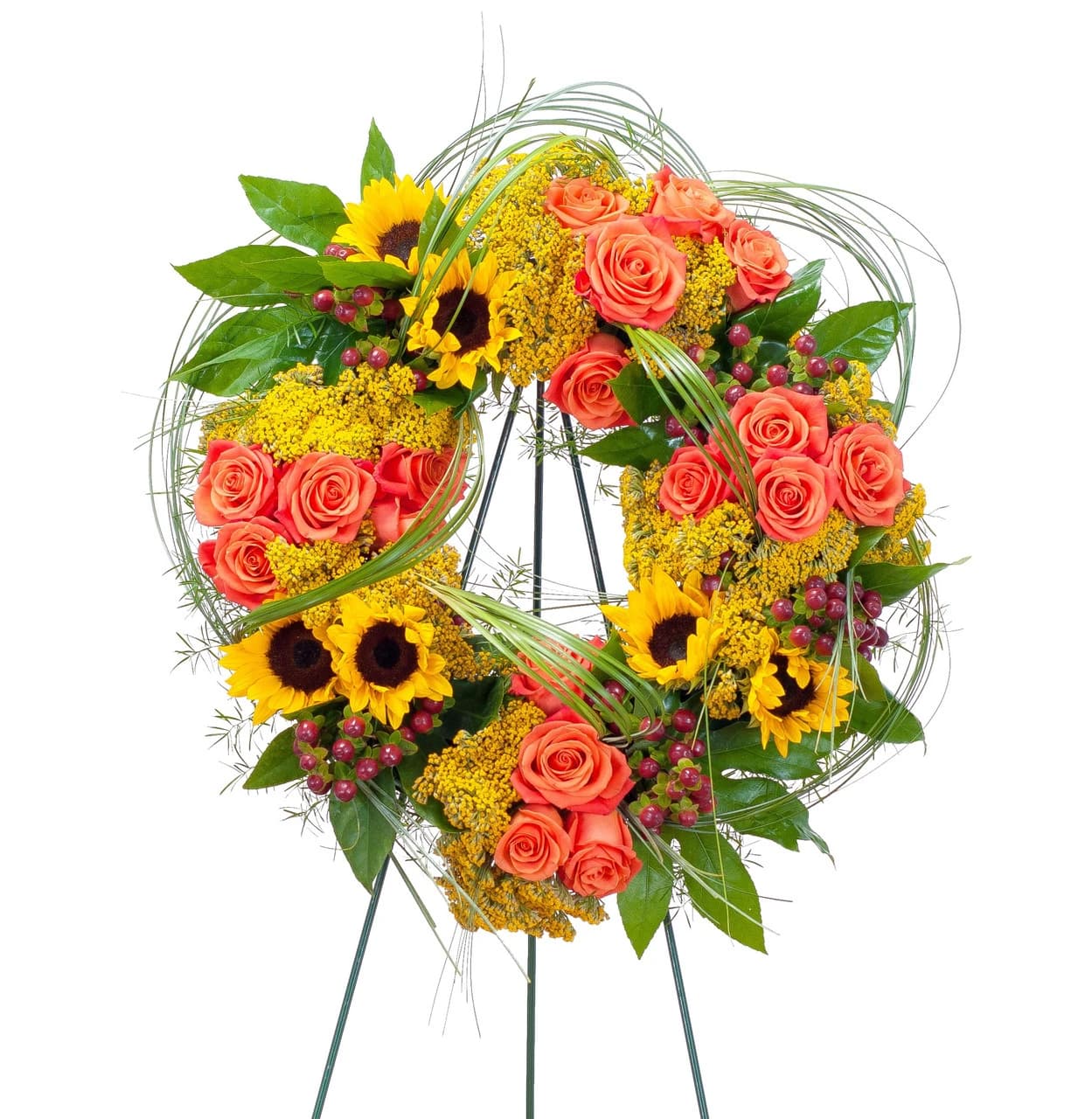
Sunset Garden Tribute is a handcrafted standing wreath that combines rich red hypericum berries with orange roses, sunflowers, and golden yarrow, made as a sympathy and remembrance tribute.
When you choose a design that includes hypericum, consider the color of the berries as part of the message. Red and coral feel warm and supportive, while green and cream feel quieter and more hopeful.
Frequently Asked Questions
Are hypericum berries real berries?
In everyday language, yes. Botanically the fruit is a small capsule, and "berry" is the common name used in the floral trade and in this entry.
How long do hypericum stems last in a vase?
They are among the longer-lasting textural stems and often hold well for a week or more with fresh water and regular trimming. Vase life varies with the variety, the stage at harvest, and the room.
Can hypericum be used in dried arrangements?
Yes. Stems can be hung or left in a dry container, and many keep their shape and much of their color. Results vary by variety and by how humid the storage space is, so test a few stems before committing a large bunch.
For more flower and plant guides, visit Great Flowers.