Gerbera Daisies (Gerbera jamesonii)
Gerbera daisies: how to identify them, the forms and colors available, their traditional meanings, cut-flower care, and simple ways to use them in arrangements and gifts.
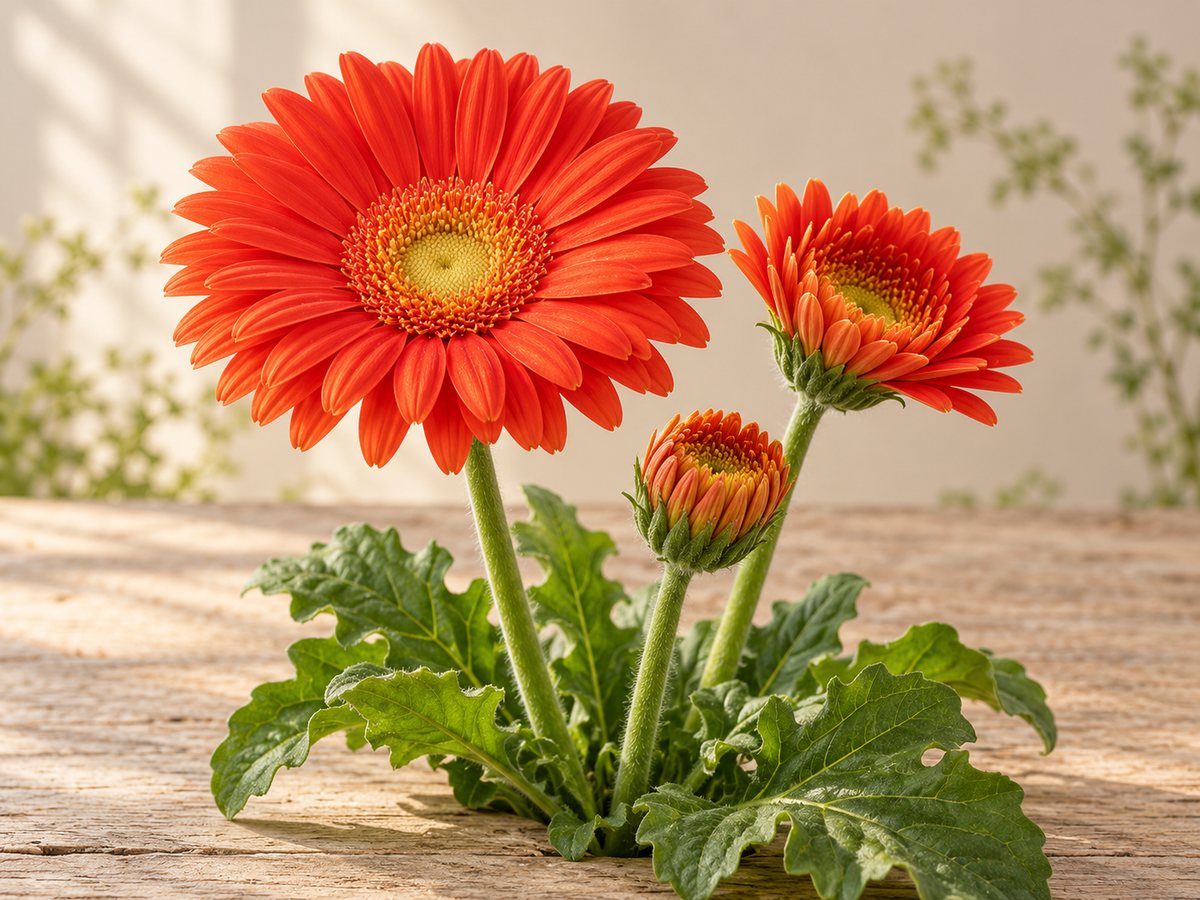
Gerbera daisies are among the most recognizable cut flowers in a florist's cooler. The name covers the cultivated forms of Gerbera jamesonii and the hybrids that were developed from it, which are the gerberas you are most likely to find in bouquets and mixed arrangements. This guide covers how to identify them, the forms and colors you will meet, what they have traditionally been associated with, and how to keep them looking good in a vase.
What a Gerbera Daisy Looks Like
Look for a single large bloom carried on a long, leafless, slightly fuzzy stem. The flower is a composite head, which means what appears to be one flower is actually a dense cluster of many small florets. The outer ring of slender "petals" are ray florets. The center is a tightly packed disc of much smaller florets, and its color often differs from the rays. That contrast, plus the clean circular outline, is the easiest way to tell a gerbera from a chrysanthemum, which can look similar from a distance.
Stems are hollow, which matters in practice: a bent gerbera stem stays bent, and the bloom may droop over the rim of the vase. Heads range widely in size, with the larger cultivated forms producing noticeably broader faces. Foliage, when present on a potted plant, forms a low rosette of lobed, softly hairy leaves close to the soil.
Common Forms and Varieties
Gerberas are grouped by flower structure rather than by strict botanical variety names.
- Single: one clear ring of ray florets around a visible central disc.
- Semi-double: several layers of rays, with the center still partly open.
- Double and crested: dense rows of florets that largely cover the disc for a fuller face.
- Spider and spoon types: narrow, twisted, or flattened ray florets that give a spiky silhouette.
Size also varies. The large standard forms are the ones most often used as focal flowers in mixed bouquets, while smaller spray-type stems carry several heads per stem and suit compact designs. In commerce the whole group is usually labeled simply as "gerberas," and the precise form is set by what the grower is offering that week.
Colors and Traditionally Associated Meanings
Gerberas are grown in orange, red, pink, coral, yellow, cream, white, and bi-colored forms, often with a green, yellow, dark, or near-black central disc. Because the disc color can shift as a bloom matures, a head picked at one stage may read differently once it opens fully.
Gerberas are traditionally associated with cheerfulness, warmth, and simple, uncomplicated goodwill. They are often treated as a flower of encouragement and lighthearted appreciation. These are traditional associations rather than fixed rules. Meaning varies by culture, by region, and by the person receiving the flowers, and a color that reads as festive in one setting may read differently in another. If a specific meaning matters to you, say it in your own words on the card rather than relying on the flowers to carry it.
Season and Availability
Gerberas are greenhouse-grown in many regions and are widely available through most of the year in the United States, rather than being tied to a single outdoor season. Supply and the specific colors on offer can still shift with the season and with local grower schedules, so the palette in a florist's case on any given week may be narrower or wider than usual.
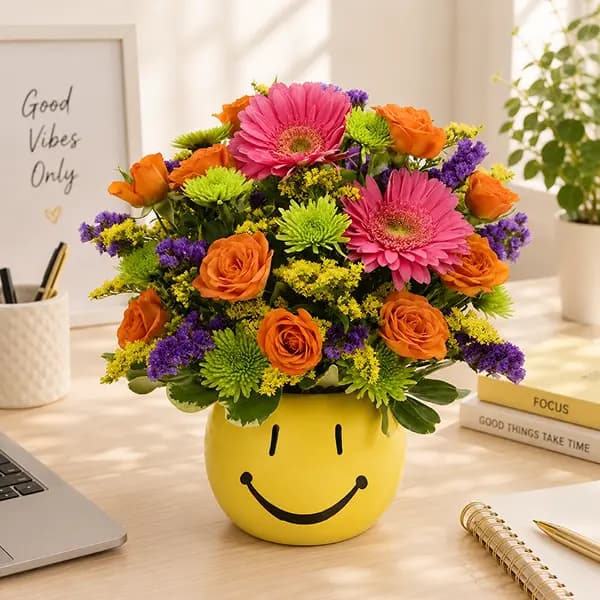
In mixed arrangements they are often used as a focal flower. For example, Smiley Blooms pairs hot pink gerberas with orange roses, green athos, and purple statice in a cheerful yellow smiley face planter.
Cut-Flower Care
Gerberas are long-lasting in a vase when the water is kept clean. A few habits make the most difference.
- Cut stems at an angle with a clean, sharp knife or floral snips, and put them in water promptly.
- Use a clean vase and fresh flower food mixed at the strength on the packet.
- Keep the water level modest, since the hollow stems can take up water unevenly, and top it up rather than letting the vase run dry.
- Trim the ends and replace the water every two to three days.
- Place the vase out of direct sun, away from heating vents and ripening fruit, which releases ethylene gas that shortens vase life.
- Remove spent heads promptly so the plant's energy goes to the blooms still opening.
If a stem bends, the bloom usually cannot be straightened reliably. Recut it shorter and float the head in a shallow bowl of water, or move it to a small bud vase where the bloom sits just above the rim.
Arrangement and Design Uses
Because a gerbera head is round, flat-faced, and carried well above the foliage, it works as a clear focal point. A few stems in a simple glass vase make a complete arrangement on their own.
- Single-stem focal: one large head per vessel, grouped at different heights.
- Massed by color: three to five stems of one color for a bold, graphic look.
- Mixed bouquet: set gerberas at the front and sides so their faces stay visible above the other flowers.
- Playful containers: pair them with a character-shaped planter or a bright container when the design calls for humor.
Gerberas have little structural foliage of their own, so they rely on greenery or filler from other stems to frame the bloom. Avoid pushing heads tightly together; bruised petals crease and do not recover.
Gifting Occasions
Their bright, open faces make gerberas a natural fit for birthdays, congratulations, new babies, thank-you notes, get-well wishes, and everyday gestures meant to lift someone's mood. They are a common choice when the sender wants to say something cheerful rather than formal.
They are less traditional for sympathy, where softer, quieter flowers are usually chosen. White and pale cream gerberas can appear in mixed arrangements for formal events, though white carries its own set of associations that vary by culture and setting. A small personalized message on the card is often the clearest way to make the intent unambiguous.
Frequently Asked Questions
How long do gerbera daisies last in a vase?
With clean water, flower food, and regular re-trimming, they commonly hold up for one to two weeks. Heat, direct sun, and water that is allowed to sit too long are the usual reasons they fade sooner.
Are gerbera daisies the same as regular daisies?
No. Both belong to the large daisy family, but the cut flower sold as a gerbera is a distinct genus and species, Gerbera jamesonii and its hybrids. The familiar white lawn daisy is a different plant with a different flower structure and habit.
Why is my gerbera head drooping over the vase rim?
Gerbera stems are hollow and sometimes bend just below the flower, which lets the head nod. Recut the stem shorter so the bloom rests right at the rim, or move it to a small bud vase. Once a stem has bent, it usually will not hold straight again.
For more flower guides and inspiration, visit Great Flowers.