Eucalyptus (Eucalyptus)
A practical guide to eucalyptus: how to identify common cut stems, what the muted green foliage traditionally signifies, and how to care for and arrange it as greenery.
Eucalyptus is a large genus of trees and shrubs native mainly to Australia, with a few species found on nearby islands. In the floral trade the word usually points to cut stems used as greenery, although the same plants are also grown for timber, oil, and landscape use. The cut material valued by florists comes from several species, and they differ enough in leaf shape and habit that a quick look at the foliage usually tells you which kind you are holding.
What Eucalyptus Looks Like
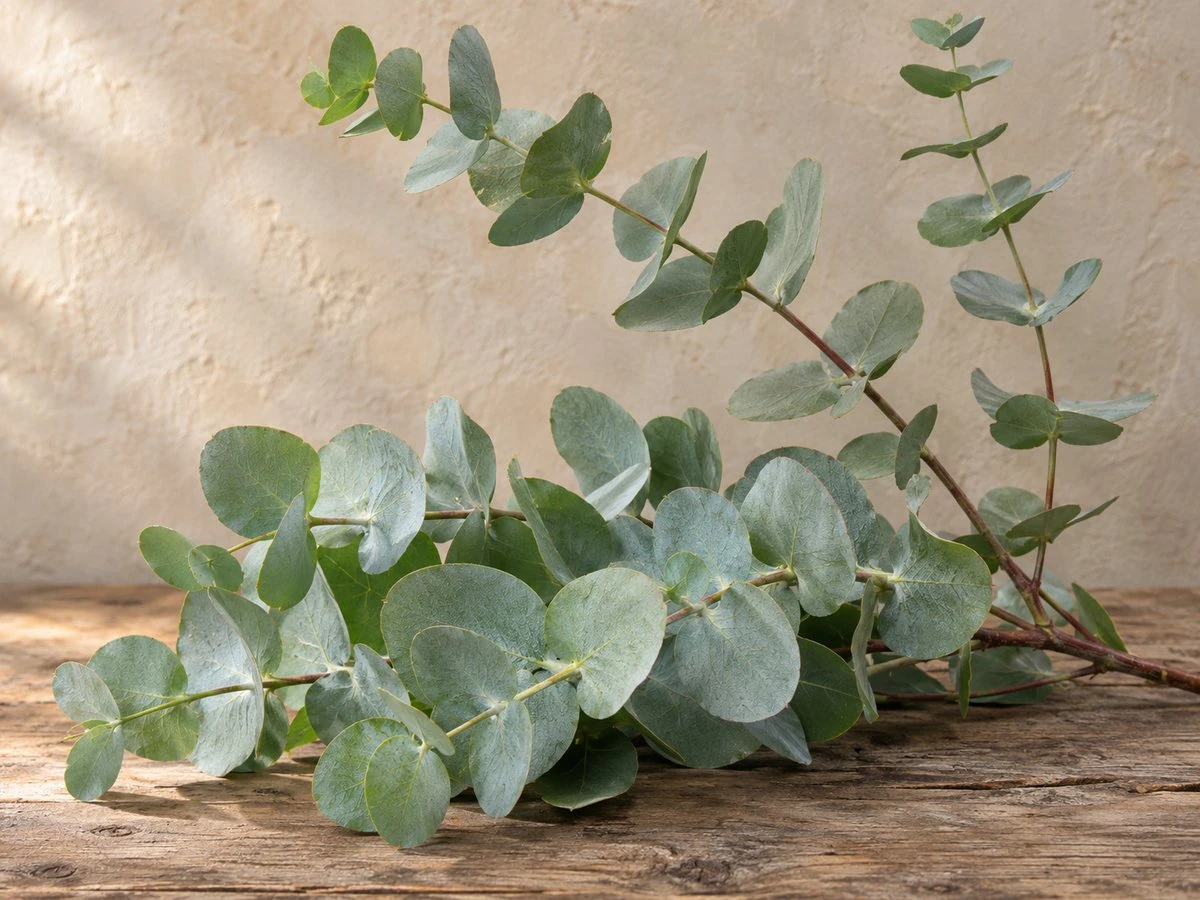
The first thing most people notice is the foliage. Many popular varieties carry rounded, silvery blue-green leaves that grow opposite each other along the stem when young, then shift to an alternate, hanging arrangement as the plant matures. That change is normal and is one reason a single stem can look quite different at its base and its tip.
Stems are usually long, upright, and lightly branched. The leaves are thick and leathery, with a waxy coating that gives them a muted, dusty finish rather than a glossy shine. Some varieties carry small buds or seed capsules along the stem, which add a fine, textured line to an arrangement.
Common Varieties in Floral Work
Several forms turn up regularly in bouquets and greenery bunches. Silver dollar eucalyptus is the rounded, coin-like leaf most often used in wreaths and loose, airy arrangements. Blue eucalyptus, often sold as a taller, more upright stem, has a narrow leaf that reads as a fine vertical line. Baby blue eucalyptus carries small, densely packed leaves along branching stems, which gives it a softer, fuller outline.
Naming in the trade is not always precise. The same common name may be applied to more than one species by different growers and wholesalers, so treat labels as a general guide rather than a botanical guarantee.
Color and Traditionally Associated Meanings
Cut eucalyptus sits in the gray-green range, from cool silver to deeper sage. Those muted tones are part of why it works so well as a supporting element: it calms brighter blooms without competing with them.
Eucalyptus is traditionally associated with protection, healing, and renewal in floral and herbal customs, and in some traditions it is linked to clear thinking and refreshment. These are customary associations, not universal meanings. What a stem signals depends on the culture, the occasion, and the person receiving it, and the same greenery can read as restful to one recipient and purely decorative to another.
Season and Availability
Eucalyptus is grown in many regions around the world, and cut stems are widely available through most of the year. Supply and quality still shift with the growing season and with weather in the main production areas, so the exact varieties on offer vary from month to month.
Because the stems travel well and hold up out of water for a while, they appear in wholesale bunches and in finished arrangements across most markets. If a particular form matters for a project, it is worth asking your florist what is in the cooler that week.
Cut-Stem Care
Treat eucalyptus as a hardy greenery rather than a delicate bloom. Strip any leaves that would sit below the water line, recut the stem ends at an angle, and place them in clean water. Change the water every few days and recut the ends each time, since the woody stems seal over quickly.
Stems kept in a cool spot away from direct sun and heating vents last longer than those left on a sunny counter. If a stem wilts, a long soak in cool water often revives it. Some varieties will also dry successfully: hang small bunches upside down in a dry, airy space, and the leaves keep much of their shape and color for later use in dried arrangements.
Arrangement and Design Uses
Eucalyptus earns its place through structure and texture. A few tall stems set the outline of a vase arrangement before any flowers go in, and shorter pieces fill the middle so blooms rest on a bed of foliage rather than sitting directly on the rim.
It works equally well on its own. A simple bunch in a clear glass vase has a clean, sculptural look that suits mantels, entry tables, and desks. The foliage also makes an effective base for a wreath or garland, and it can be tucked into a bouquet wrap as a finishing edge. Because the stems are woody, cut them with sharp shears or a knife rather than ordinary scissors, which crush the stems and slow water uptake.
Gifting Occasions
Eucalyptus suits gifts that aim for a calm, thoughtful tone. It is a common choice for get-well and sympathy arrangements, where its quiet color reads as steady rather than festive, and it also appears in housewarming and host gifts, where a living-looking bunch needs little upkeep.
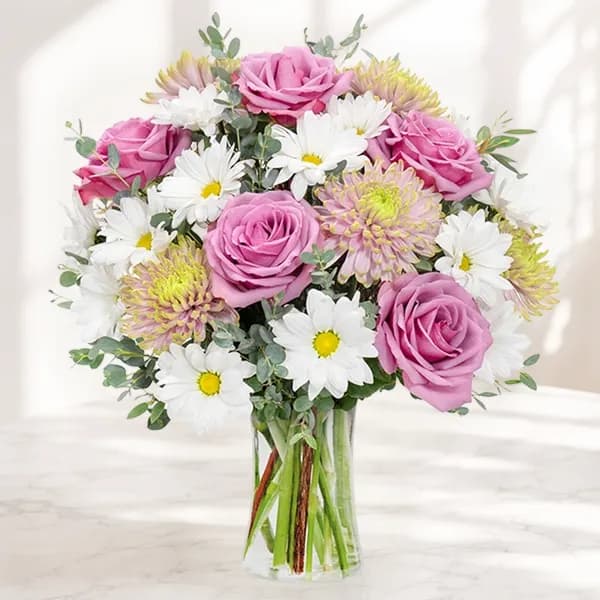
It pairs easily with roses, lilies, daisies, and other classic blooms, which makes it a flexible accent for birthdays and thank-you gifts too. Birthday Surprise – Pink Poem shows the pairing in practice, with eucalyptus greenery working alongside lavender roses and white daisy mums in a clear glass gathering vase.
Frequently Asked Questions
How long does cut eucalyptus last in a vase?
With regular water changes and fresh cuts, most stems stay presentable for one to two weeks, and the more durable varieties often hold their look longer. Expect leaves near the water line to yellow first, and remove them as they fade.
Can eucalyptus be dried and reused?
Yes. Small bunches hung upside down in a dry, ventilated space dry well, and the leaves usually keep their shape and muted color. Keep dried stems out of humid rooms, since moisture makes the foliage limp.
Is eucalyptus a flower?
Not in the way most people mean it. The plants do produce small blossoms, sometimes with prominent stamens, but the cut stems sold for arranging are valued for their foliage. In a bouquet, eucalyptus functions as greenery rather than as a focal bloom.
For more greenery and bouquet ideas, browse Great Flowers.