Delphiniums (Delphinium)
A detailed evergreen guide to delphiniums, covering identification, varieties, traditional color symbolism, seasonal availability, cut-flower care, arrangement ideas, and gifting occasions.
Overview and Identification
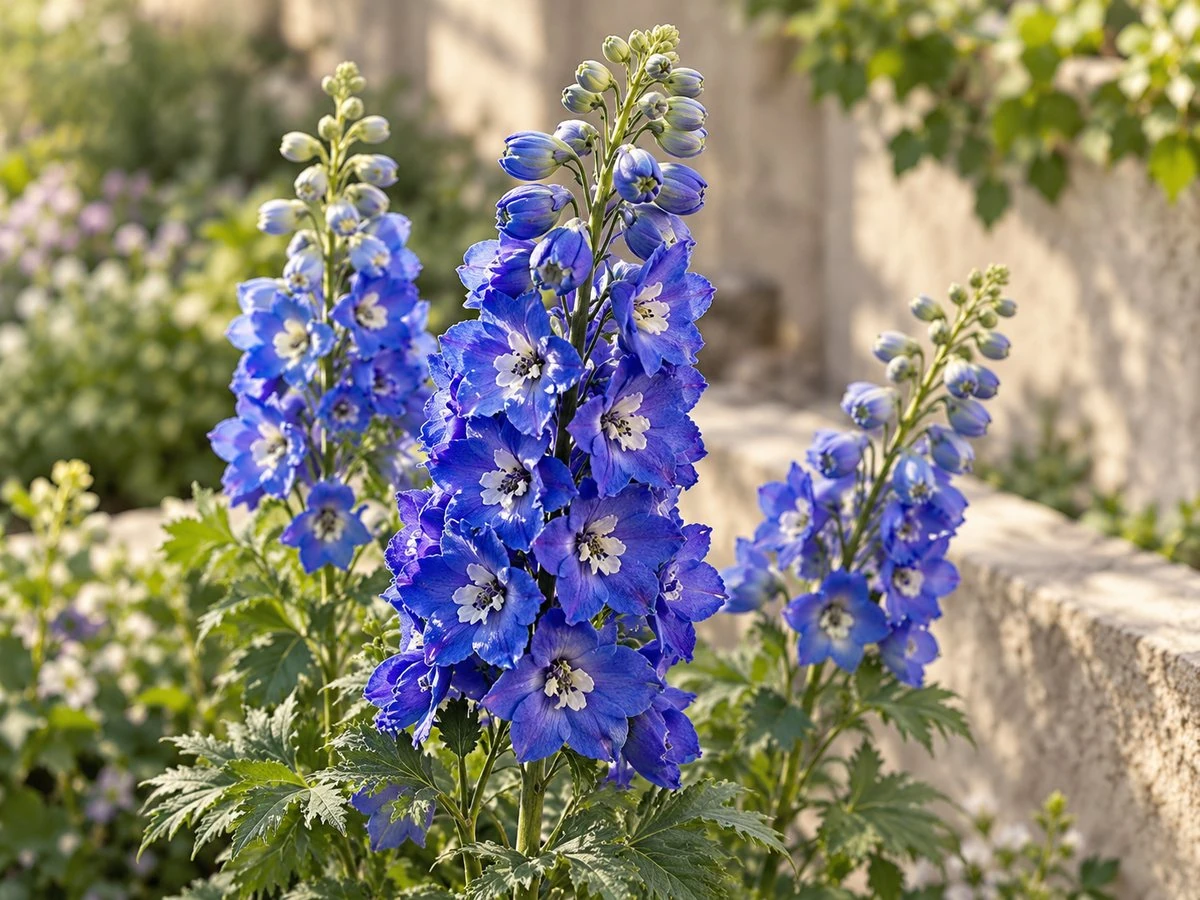
Delphiniums are tall, upright perennials grown for their dramatic spikes of densely packed flowers. Plants typically reach three to six feet in the garden, with some forms climbing higher on sturdy stems. Each bloom carries a central cluster of small spurred petals, creating a vertical line that stands out in borders and beds. Foliage forms a low mound of deeply divided green leaves that contrasts with the bare, flower-carrying stalks. The genus is often confused with larkspur, but true delphiniums retain their foliage through much of the season and produce sturdier, heavier flower spikes.
Common Varieties and Forms
Garden delphiniums are usually divided into two broad groups. The tall, traditional forms—often called candle delphiniums—produce long, dense spires that are widely used as cut flowers. Shorter, bushier types, sometimes labeled belladonna or elatum hybrids, suit smaller spaces and mixed borders. Both forms share the same basic flower structure: five petal-like sepals with a small central pocket, or spur, at the back of each bloom. Newer hybrids continue to expand the range of heights and color intensities available to home gardeners and commercial growers alike.
Colors and Traditional Symbolism
Delphiniums appear in blue, purple, pink, white, and sometimes yellow or near-black shades. Blue and purple varieties are the most common and have long carried associations with calm, dignity, and lightheartedness in various cultural traditions. White delphiniums have traditionally been connected with purity and new beginnings. Pink forms are often linked to affection and joy. These meanings are traditional associations rather than universal facts; interpretation can shift by era, region, and personal context. When selecting flowers for a specific message, consider the recipient's own associations alongside any symbolic tradition.
Season and Availability
In many growing regions, delphiniums flower from early summer into midsummer, with peak garden display in June and July. Because the stems are sensitive to heat, the best cut-flower availability often follows cool spring and early summer crops. Imported stock extends market presence into late summer and early fall in some areas. Local availability shifts with climate, so sourcing from growers in your region often yields the freshest stems. Greenhouse production has smoothed availability in some markets, but seasonality still influences price and stem quality.
Cut-Flower Care
Delphinium stems benefit from prompt handling after harvest. Strip the lower leaves that would sit below water, then cut the stems at an angle under running water. Place them in a clean bucket with fresh floral preservative and store in a cool, shaded location away from drafts and direct sun. Re-cut the stems every two to three days, refreshing the water each time. Because the blooms open from the bottom upward, purchase or harvest when the lower florets are open but the top buds remain tight for the longest vase life. Avoid crowding the stems, which can bend or damage the delicate spikes.
Arrangement and Design Uses
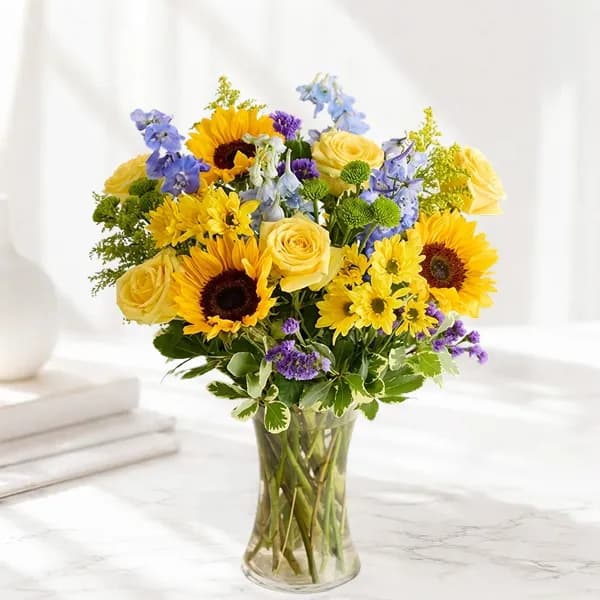
The strong vertical line of delphinium spikes suits formal or structural arrangements. They work well as focal points in tall, narrow vases, or as backdrops in low, wide bouquets where height adds dimension. Mixing delphiniums with rounder flowers—such as roses or hydrangeas—creates contrast between line and mass. The European Meadow arrangement pairs golden sunflowers and yellow roses with soft blue delphinium and purple statice for a balanced, countryside-inspired display that demonstrates how delphiniums can soften brighter companions without competing for attention. For table centerpieces, a single delphinium spike in a slender bud vase can stand alone as a minimal, refined statement.
Gifting Occasions
Delphiniums fit occasions that call for elegance without formality. A tall, single-variety bouquet works as a thoughtful anniversary or birthday gift, especially when the recipient appreciates understated structure. Mixed arrangements using delphiniums alongside roses or other seasonal flowers suit housewarmings, congratulatory gestures, and thank-you bouquets. Their long vase life and strong presence make them practical for gifts intended to stay in view for days rather than hours. In some traditions, blue delphiniums have been given to express openness and willingness to listen, making them a subtle choice for reconciliation or encouragement.
Frequently Asked Questions
Do delphiniums come back every year?
Most garden forms are perennials and return each season under suitable conditions. Performance depends on climate, soil, and whether winter protection is provided. In very cold or very wet climates, plants may need extra care or may be grown as annuals instead.
How tall do delphiniums grow?
Garden forms vary widely; traditional spikes often reach three to six feet, while shorter varieties stay closer to two feet. Height is influenced by genetics, soil richness, and moisture.
Why do delphinium stems wilt quickly?
Stems are naturally hollow and sensitive to handling and heat. Prompt conditioning, clean water, and cool storage are the most reliable ways to extend their freshness. Prompt attention after purchase or harvest makes a noticeable difference.