Chrysanthemums (Chrysanthemum)
Chrysanthemums are popular autumn-blooming flowers known for their dense petals and wide color range. Learn about their varieties, traditional meanings, care tips, and gifting occasions in this practical guide.
Overview and Identification
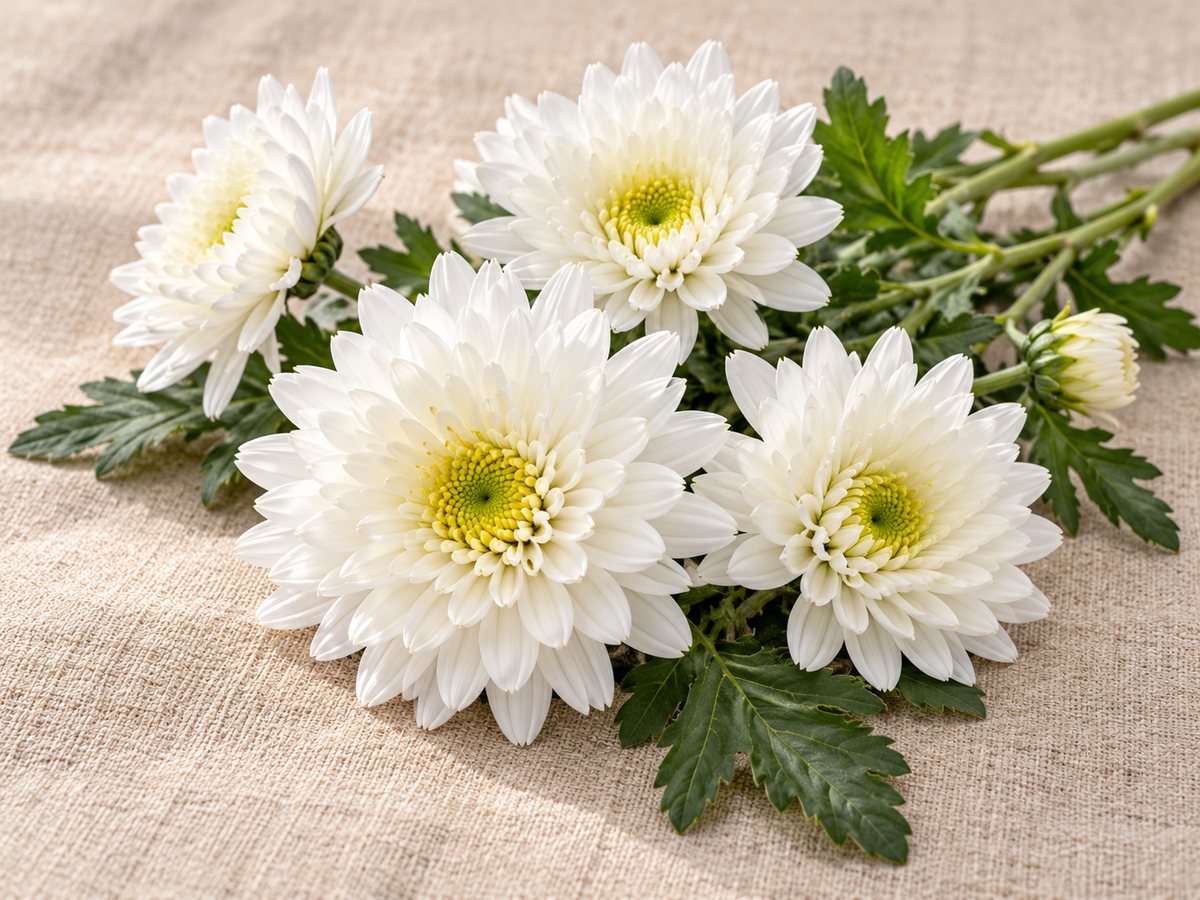
Chrysanthemums are a genus of flowering plants in the Asteraceae family, which also includes daisies, sunflowers, and zinnias. The name comes from Greek words meaning "golden flower," though modern cultivated varieties appear in nearly every color except blue. The plants produce composite flower heads made up of many small individual florets, which is why they are often called "mums" for short. Each bloom consists of central disc florets surrounded by ray florets, giving the flower its full, rounded appearance.
Chrysanthemums are herbaceous perennials that are commonly grown as annuals in cut-flower gardens. The flowers range from small pom-pom types to large spider varieties with long, thin petals. Foliage is typically lobed and slightly aromatic. When identifying chrysanthemums, look for the characteristic layered petal structure and the dense, cushion-like flower form that distinguishes them from other daisy-family plants.
Common Varieties and Forms
Nurseries and florists generally classify chrysanthemums into several major forms. Pom-pom mums have small, rounded blooms that look like little balls of petals. Single or daisy-type mums feature a central disc surrounded by a single row of ray florets, resembling a classic daisy shape. Spider mums have long, tubular petals that splay outward in all directions, creating an airy, spidery silhouette. Quill mums have straight, tube-shaped petals that radiate uniformly from the center.
Button mums are compact and heavily petalled, making them popular in bouquets and arrangements. Anemone types have a prominent central cushion of short florets surrounded by a flat ring of ray florets. Garden mums, the varieties most commonly sold in fall, are bred for outdoor planting and produce masses of blooms on low, bushy plants. Cut-flower varieties are selected for stem length, bloom size, and vase life rather than cold hardiness.
Colors and Traditionally Associated Meanings
Chrysanthemums appear in a broad palette including white, yellow, gold, orange, burgundy, pink, lavender, and green. The traditionally associated meanings of chrysanthemums vary considerably by culture and context, so it is best to treat these as associations rather than universal facts. In many Western traditions, white chrysanthemums are linked with sympathy and remembrance, while yellow and gold blooms are associated with friendship, joy, and celebration. Red varieties often signify love or deep admiration.
In some East Asian cultures, chrysanthemums are symbols of longevity and nobility, and they appear in art and festivals as positive emblems. In parts of Europe, however, white chrysanthemums are strongly associated with mourning and are traditionally placed on graves. Because these associations differ widely, consider the recipient's cultural background and personal preferences when selecting colors. What matters most is the context in which the flowers are given.
Season and Availability
Chrysanthemums are naturally autumn-blooming plants that respond to shorter day lengths by initiating flower buds. In gardens, they typically flower from late summer through fall, with peak bloom in September and October in many regions. Commercial growers manipulate light exposure in greenhouses to produce flowering plants and cut stems year-round, so chrysanthemums are generally available throughout the year from florists and garden centers.
For garden planting, spring is the best time to set out young plants after the danger of frost has passed. This gives roots time to establish before the plant flowers in autumn. Container-grown mums sold in bloom during fall are often treated as seasonal decorations, though they can be planted outdoors for return blooms in future years depending on local climate conditions.
Cut-Flower Care
Chrysanthemums are known for their excellent vase life, often lasting two weeks or longer with proper care. When you receive or purchase cut stems, remove any leaves that would fall below the water line, as submerged foliage decays quickly and encourages bacterial growth. Recut the stem ends at an angle with a sharp, clean knife or scissors before placing them in fresh water.
Use a clean vase filled with fresh water and a commercial flower food packet if available. Change the water every two to three days and re-trim about half an inch from the stems each time. Keep the vase away from direct sunlight, heating vents, and ripening fruit, which releases ethylene gas that accelerates wilting. Removing spent blooms helps remaining flowers last longer. If flower heads droop, recutting stems under water and placing them in warm water for an hour can revive them.
Arrangement and Design Uses
Chrysanthemums are versatile flowers in floral design, used in everything from simple hand-tied bouquets to large formal arrangements. Their sturdy stems and long vase life make them practical choices for centerpieces, wreaths, and standing sprays. Pom-pom and button types work well as filler flowers, adding texture and volume between larger focal blooms such as roses or lilies. Spider mums provide dramatic height and movement in linear designs.
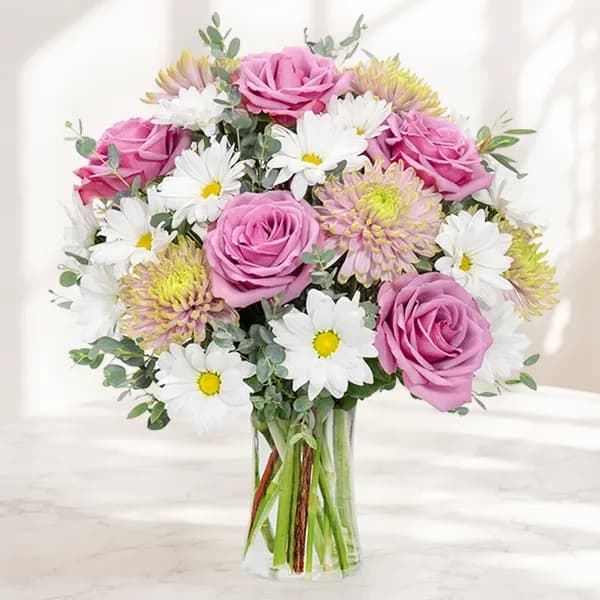
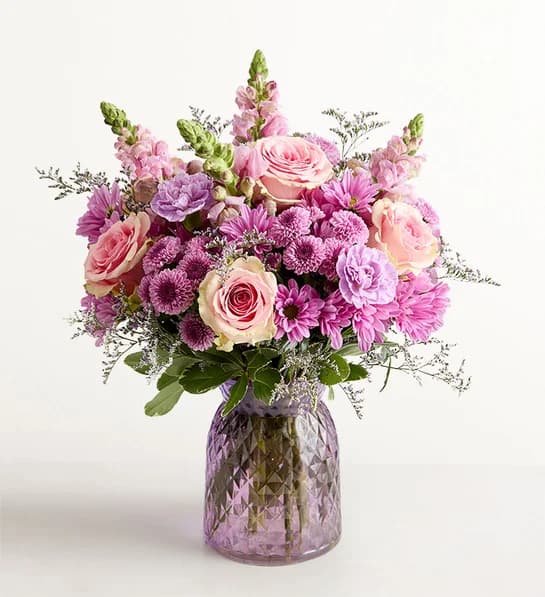
Their autumnal color range makes chrysanthemums a natural choice for harvest-themed displays and seasonal decor. White varieties are frequently incorporated into sympathy arrangements for their clean, peaceful appearance. The Pink Poem features white daisy mums arranged alongside lavender roses and eucalyptus in a clear glass gathering vase, demonstrating how chrysanthemums blend with complementary flowers in a mixed design. Their compact bloom form also makes them suitable for corsages and boutonnieres when smaller florets are selected.
Gifting Occasions
Chrysanthemums suit a wide range of gifting occasions thanks to their varied colors and traditional associations. In many contexts, they are given in autumn as cheerful seasonal flowers for hosts, friends, and family. They are common gifts for Thanksgiving gatherings and fall celebrations. Bright yellow and orange mums convey warmth and friendship, making them appropriate for get-well wishes, thank-you gestures, or congratulatory messages.
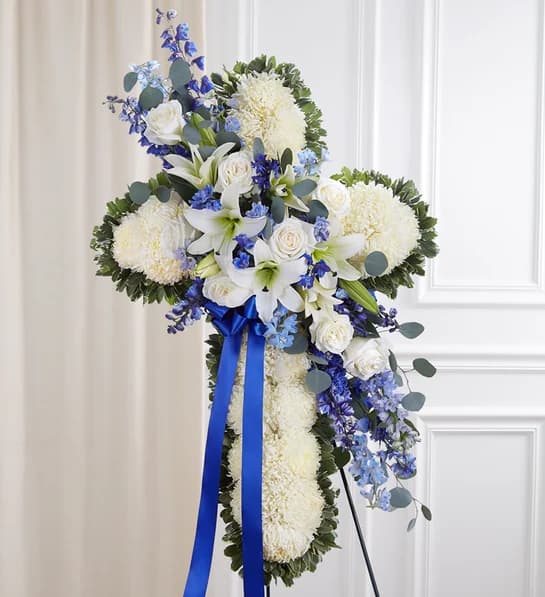
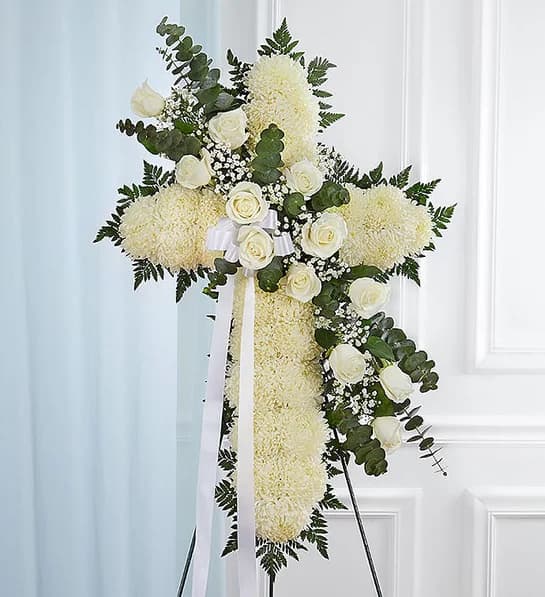
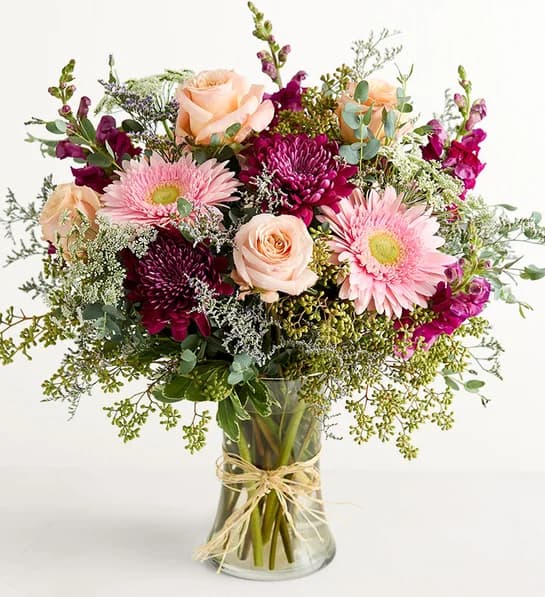
Because of their longstanding association with remembrance in some cultures, chrysanthemums are frequently included in memorial and sympathy tributes. The Blue & White Standing Cross features elegant white chrysanthemums among roses and lilies as a meaningful tribute. The White Standing Cross presents soft white chrysanthemums with roses and baby's breath for a peaceful expression of condolence. The Blush & Burgundy bouquet incorporates rich burgundy chrysanthemums with peach roses for a warm, elegant gift. When giving chrysanthemums, consider the cultural context and the recipient's personal traditions to ensure the gesture is received as intended.
Frequently Asked Questions
How long do cut chrysanthemums last in a vase?
With proper care, cut chrysanthemums typically last ten days to two weeks. Changing the water every two or three days, recutting stems, and keeping the arrangement away from heat and direct sun will maximize vase life.
Can chrysanthemums be grown in the garden?
Yes, garden mums are widely available and can be planted in spring for autumn blooming. They prefer well-drained soil and full sun. Depending on your climate, they may return year after year as perennials or be treated as annuals in colder regions.
What colors do chrysanthemums come in?
Chrysanthemums are available in white, yellow, gold, orange, burgundy, pink, lavender, and green. True blue is the one color not found in commercially cultivated chrysanthemoms.
Explore more flower guides and seasonal arrangements at Great Flowers.