Carnations (Dianthus caryophyllus)
A practical guide to carnations (Dianthus caryophyllus): how to identify them, the common cut-flower forms, color associations, availability, vase care and gifting occasions.
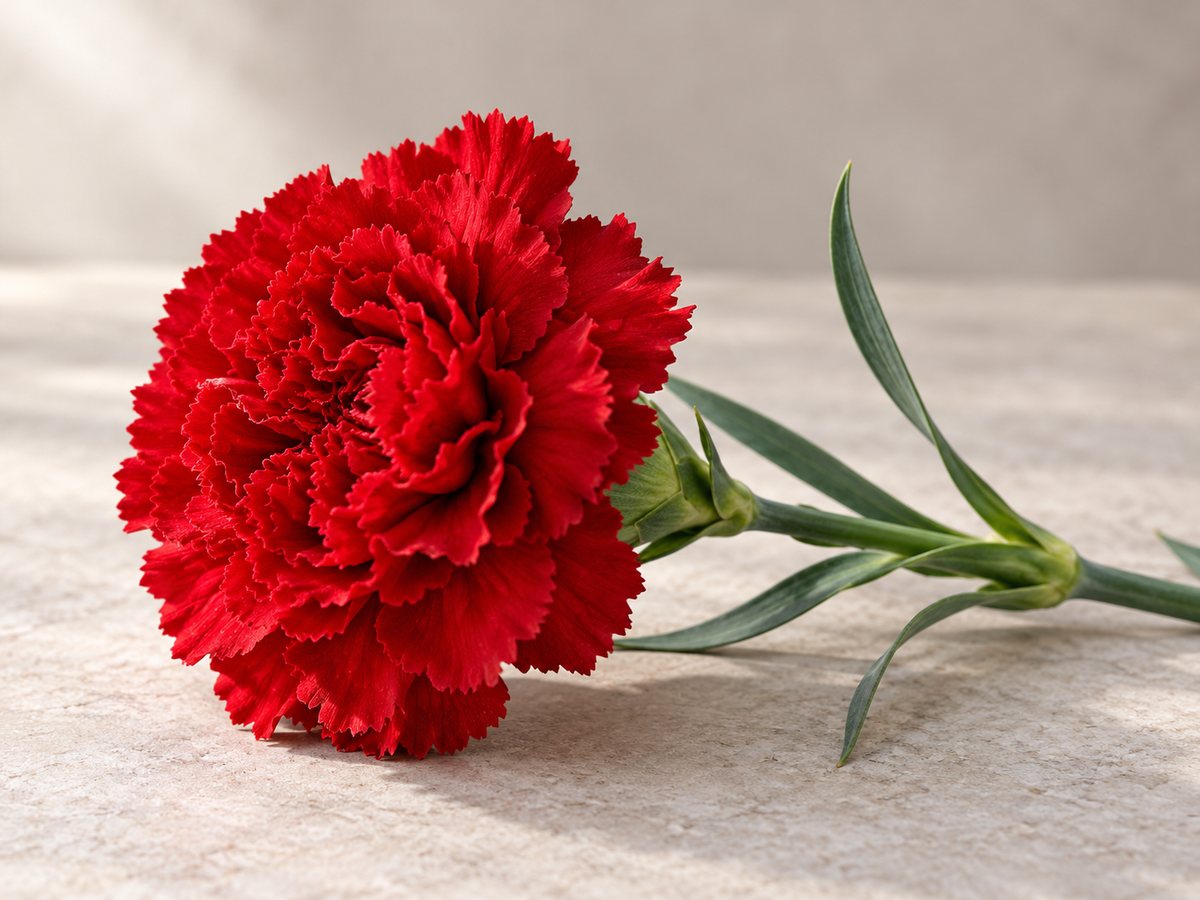
Carnations are flowering plants in the genus Dianthus, and the species most often sold as a cut flower is Dianthus caryophyllus. They are grown for their ruffled, many-petaled blooms, sturdy stems and long vase life. A stem may carry one large bloom or a cluster of smaller ones, and the flowers keep their shape well after cutting. That mix of structure, color range and durability is why carnations appear in everyday bouquets, formal designs and remembrance arrangements alike.
What Carnations Look Like
Recognizing a carnation is usually straightforward. The petals are layered into a rounded head, and their edges are fringed or serrated rather than smooth, which gives the flower a slightly ruffled outline. Foliage is narrow, blue-green and waxy, and stems show visible joints or nodes where leaves attach. Many carnations carry a warm, spicy scent often described as clove-like, though some modern varieties are much lighter in fragrance than older types.
The genus Dianthus also includes related plants such as pinks and sweet William (Dianthus barbatus). They share family traits but differ in flower size, form and growth habit, so a carnation sold by a florist is not the same plant as every other Dianthus grown in a garden.
Common Forms and Varieties
Three forms account for most carnations sold as cut flowers.
- Standard carnations produce one large bloom per stem. They are the classic florist carnation, with a full, dense head and a straight stem that is easy to place in a design.
- Spray carnations, also called miniature carnations, carry several smaller blooms on a branched stem. They read as lighter and more informal, and they are useful for filling gaps and adding texture to mixed bouquets.
- Disbud carnations are standards that had their side buds removed during growing so a single bloom develops larger and more uniform. The term describes a growing practice rather than a separate species.
Within these forms, flowers are sold in solid, bicolor and striped or flecked patterns.
Colors and Traditional Associations
Carnations come in a wide color range, including red, pink, white, yellow, orange, lavender and purple, along with bicolors and striped varieties. Miniature carnations follow a similar palette.
Color carries traditional associations in floriculture, but those associations are conventions rather than fixed facts, and they shift between cultures and generations. In many Western flower traditions, red carnations are linked with deep affection and admiration, pink with gratitude and a mother's enduring love, and white with remembrance and respect. Yellow carnations are often associated with friendship and cheerfulness in some traditions, while in others the same color has carried a cooler meaning. Lavender and purple are frequently chosen for elegance or quiet reflection.
Because meanings vary, it is worth treating color as a starting point rather than a message with one fixed translation. When an occasion is formal, sensitive or cross-cultural, the overall tone of the arrangement and the note that accompanies it usually say more than the color alone.
Season and Availability
Cut carnations are available year round in most flower shops. They are grown in greenhouses and shipped from a range of producing regions, so supply does not depend on a single local growing season. Quality and price can still move with demand: the weeks around major gift-giving dates tend to be busier and more expensive, and the availability of less common colors varies by shop.
Garden-grown Dianthus generally bloom in the warmer part of the year, but cut-flower supply is a separate matter from garden bloom times. If you are ordering for a specific date, it is reasonable to ask what is in stock and how fresh the delivery is.
How to Care for Cut Carnations
Carnations are known for a long vase life, and a few simple steps help them last.
- Recut the stems at an angle with a clean, sharp knife or shears before placing them in water.
- Remove any foliage that would sit below the waterline, since submerged leaves encourage bacteria.
- Use a clean vase and cool water, and add a floral preservative if one is provided.
- Change the water every two to three days and recut the stems lightly each time.
- Keep the arrangement out of direct sun, away from heat sources and drafts, and away from bowls of ripening fruit.
Carnations are sensitive to ethylene, the gas released by ripening fruit and by some other flowers, which can shorten how long blooms hold. If a stem wilts, a fresh angled cut and a cool water change often revive it.
Design and Arrangement Uses
Carnations are versatile in design. Their rounded heads work as mass flowers, filling space and building the shape of an arrangement, while their straight stems make them easy to place in a vase or a hand-tied bouquet. Spray carnations add movement and a finer texture between larger blooms.
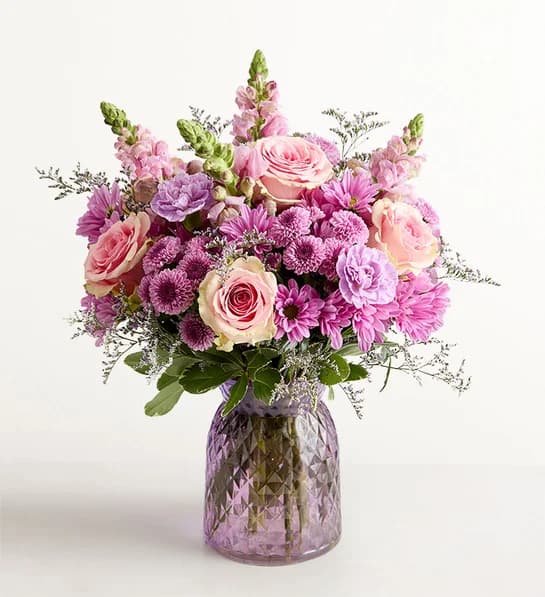
They combine well with roses, lilies, alstroemeria, chrysanthemums and seasonal filler, and they hold up in both tight, formal designs and loose, garden-style work. Because the heads are sturdy, carnations also appear in wreaths and standing tributes, where they help hold a large shape together.
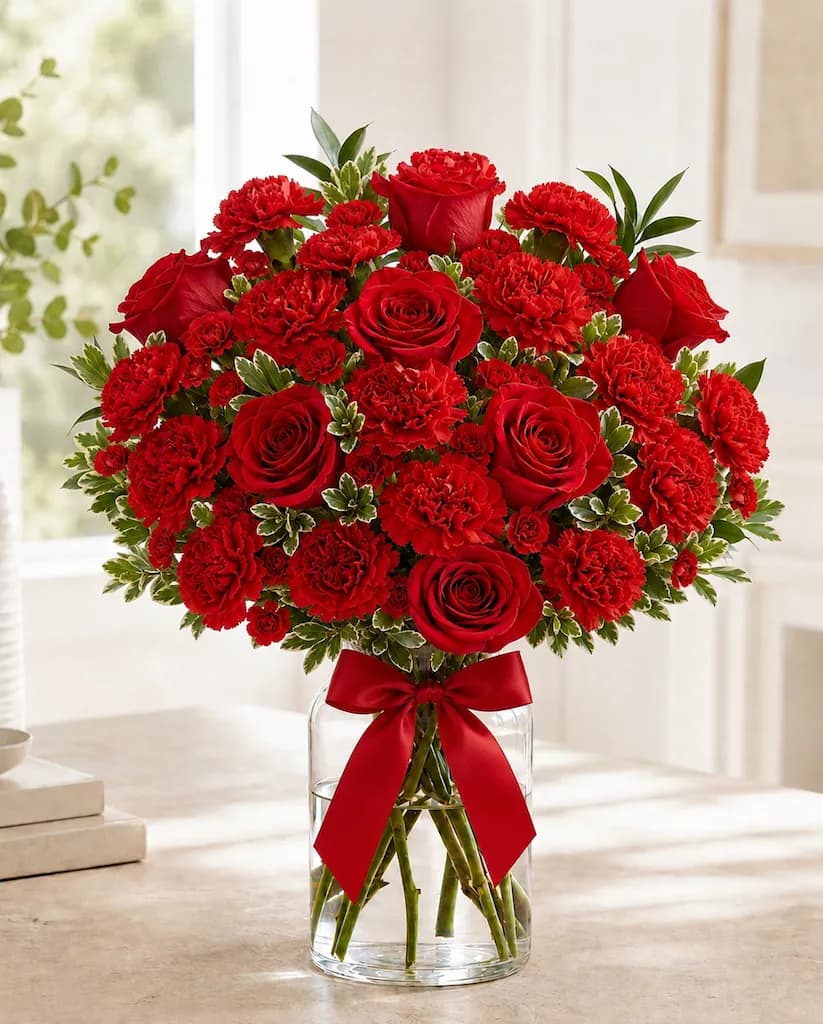
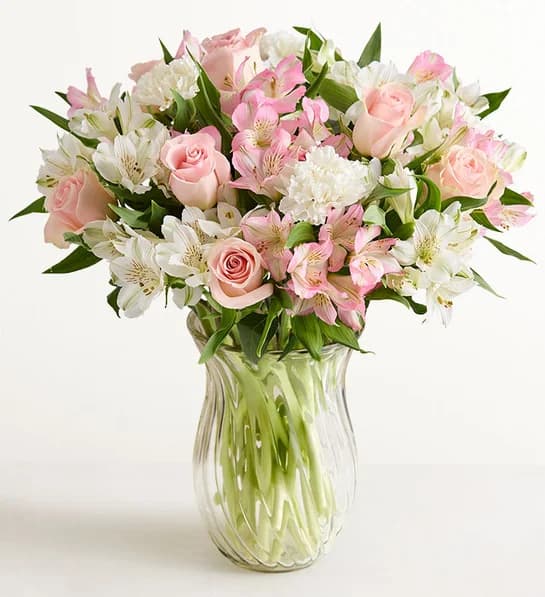
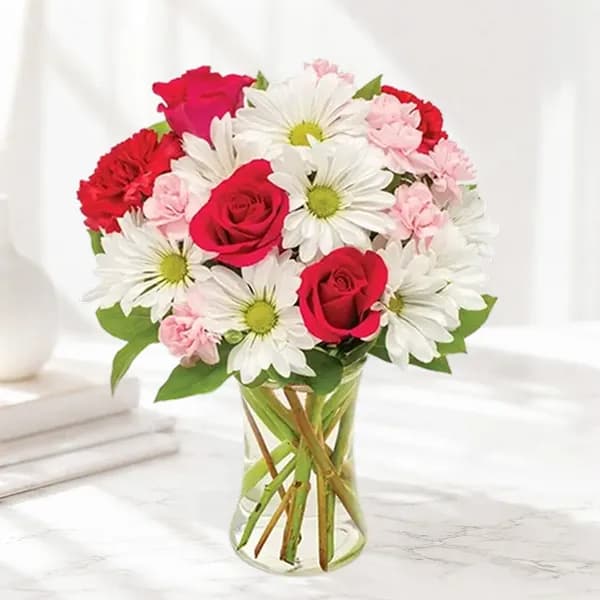
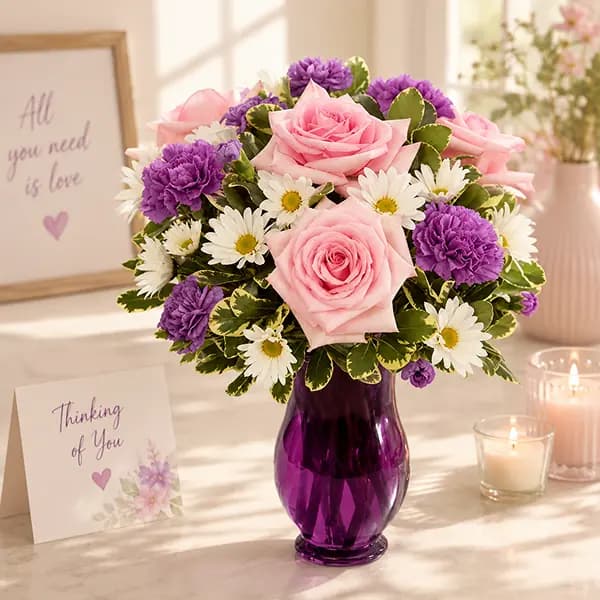
Carnations appear in several Great Flowers designs. Just For You pairs red roses with red carnations, while Petals of Grace uses white carnations alongside soft pink roses and alstroemeria. Mixed Floral Vase sets red carnations with white daisies and hot pink roses, and Regency Breeze works lavender carnations in with soft pink roses and white daisies.
Gifting Occasions
Carnations suit a wide range of occasions. They are a natural choice for birthdays, anniversaries, thank-you gifts, housewarmings, congratulations and everyday gestures that do not need a formal reason. Their long vase life also makes them practical when flowers have to travel or sit for a day before they are enjoyed.
For sympathy and remembrance, white, pink and lavender carnations are common in standing sprays, wreaths and casket tributes, where they contribute mass and quiet color. For romantic occasions, red and pink carnations are traditional. For a friend, mixed or brighter colors are often the easier read.
Color choice is personal. If you are unsure, matching the recipient's usual style or choosing a neutral palette is a safer approach than relying on a single symbolic meaning.
Frequently Asked Questions
How long do cut carnations last?
With clean water, recut stems and a cool spot, carnations commonly last one to two weeks, and some stems last longer. Removing spent blooms from a spray stem can keep the rest of the stem looking fresh.
Do carnations have a scent?
Many carnations have a spicy, clove-like fragrance, but the strength varies widely between varieties. Some modern cut varieties are bred for stem strength and vase life and carry very little scent, so it is reasonable to ask about fragrance if that matters to you.
Are carnations only used in formal arrangements?
No. Carnations appear in casual bunches and mixed everyday arrangements as often as in formal designs. Their range of colors and forms lets them move between both settings.
Carnations are a dependable, widely available flower with a long vase life and a broad color range, and they are worth understanding before you choose or care for them. For more flower guides and arrangements, visit Great Flowers.