Alstroemeria (Alstroemeria)
Alstroemeria, often called Peruvian lily, is a South American genus prized for its long-lasting, colorful blooms. Learn about varieties, meanings, care, and arrangement ideas.
Overview and Identification
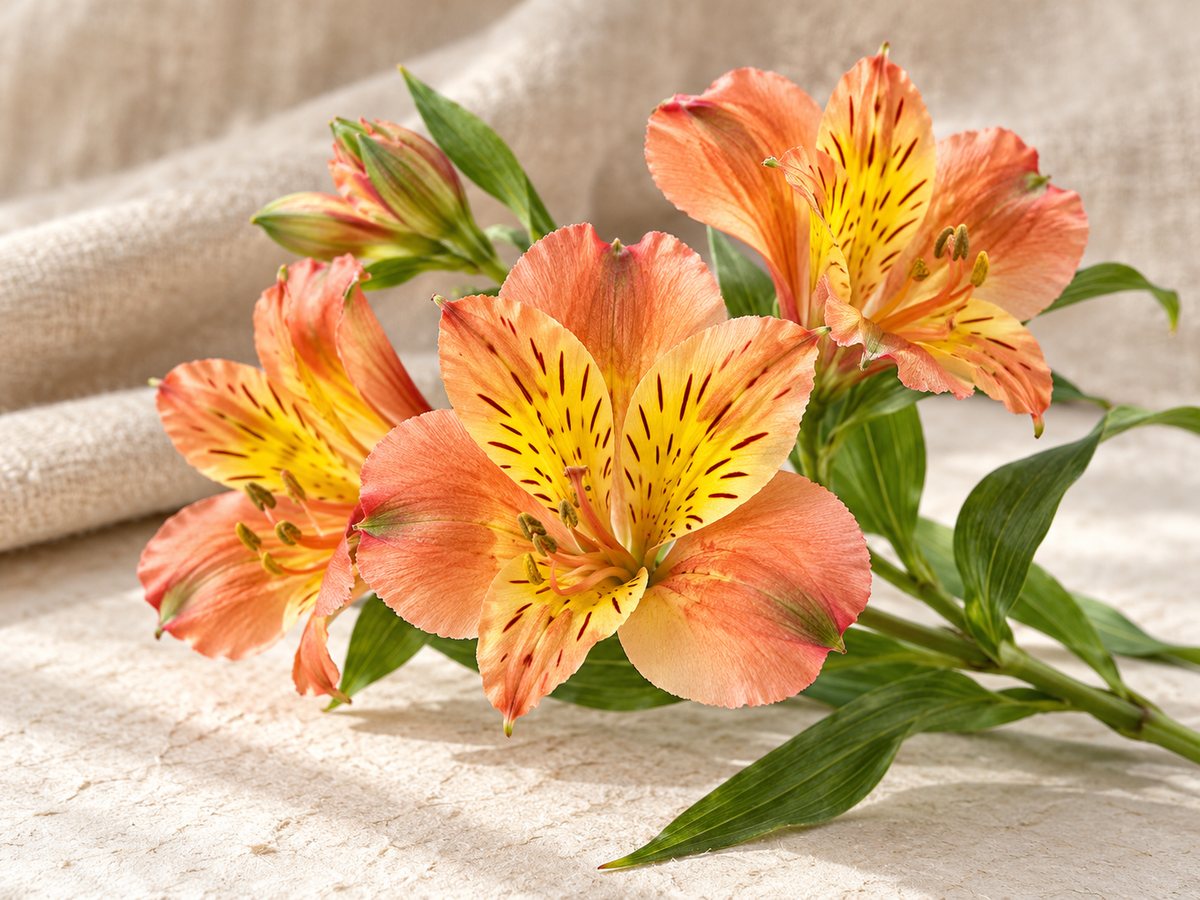
Alstroemeria is a genus of flowering plants native to South America, often called Peruvian lily or lily of the Incas. Despite these common names, alstroemeria is not a true lily and belongs to its own family, Alstroemeriaceae. The genus includes dozens of species, with many hybrids developed for the cut-flower trade. Alstroemeria is valued for its long-lasting blooms, graceful stems, and wide range of colors.
The flowers are borne in clusters at the top of upright stems and have six tepals, the petal-like structures typical of monocots. The blooms are often marked with streaks, spots, or contrasting lines, which adds to their visual interest. Leaves are typically lance-shaped and arranged alternately along the stem.
Common Varieties and Forms
The alstroemeria most often seen in florist shops are hybrids, bred for vase life, stem length, and color range. These hybrids are typically grouped by height and use. Standard varieties produce long stems suitable for cut-flower arrangements, while compact forms are popular in pots and garden borders.
Named cultivars are numerous and continue to expand. Some are selected for their large, open blooms; others for their compact growth or specific color patterns. Because hybridization is active, the exact lineup of available cultivars shifts over time.
Colors and Traditionally Associated Meanings
Alstroemeria blooms come in a broad palette, including white, cream, yellow, orange, peach, pink, red, purple, and bi-color combinations. Within this range, certain colors carry traditional associations. Pink alstroemeria is often linked with romance and affection, while orange varieties are associated with warmth and enthusiasm. Yellow blooms suggest friendship and goodwill, and white is associated with purity and sympathy.
It is important to note that these associations are traditional and cultural rather than universal. Different cultures may assign different meanings to the same flower, and context always shapes interpretation. What matters most in a gift is the message the sender intends to convey.
Season and Availability
Alstroemeria is grown commercially around the world and is widely available year-round in most markets. Because it is cultivated in multiple regions and in greenhouses, it is not tied to a single short harvest window. This consistent availability makes it a reliable choice for arrangements and bouquets in any season.
In the garden, bloom time depends on local climate and planting conditions. In many regions, garden alstroemeria flowers from late spring through summer, with some repeat blooming into fall where conditions are favorable.
Cut-Flower Care
Alstroemeria is prized as a cut flower for its long vase life, often lasting one to two weeks or more with proper care. To maximize longevity, start by choosing stems with at least one or two open buds and several still-closed buds, which will open in sequence over several days.
- Recut stems at an angle under clean water to open the vascular tissue.
- Remove leaves that would sit below the waterline to reduce bacterial growth.
- Use fresh, clean water and a flower food packet if available.
- Keep arrangements away from direct heat, drafts, and ethylene-producing fruit.
Alstroemeria stems can be gently untangled from neighboring stems to allow blooms space to open fully. If a stem droops, recutting and rehydrating in fresh water often restores it.
Arrangement and Design Uses
Alstroemeria is a versatile design flower. Its clustered blooms, slender stems, and fine foliage give arrangements a light, airy quality that works in both formal and casual settings. It pairs well with roses, carnations, chrysanthemums, and seasonal greenery, adding texture and color without overwhelming the composition.
Because it comes in so many colors, alstroemeria fits into almost any palette. It is frequently used in mixed bouquets, where it provides a filler or secondary bloom that extends the visual life of the arrangement as its buds open over several days.
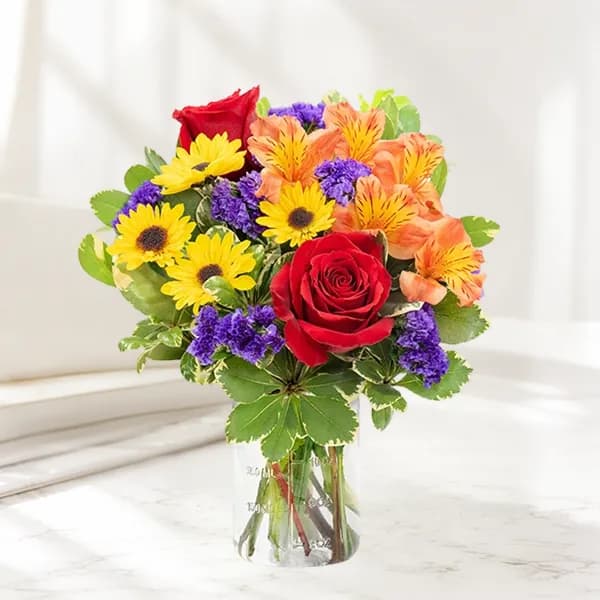
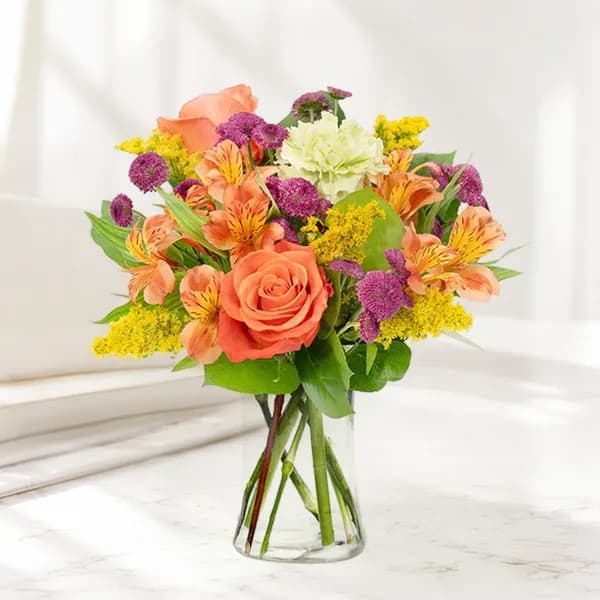
For example, Hearth Happiness features orange alstroemeria alongside red roses, yellow poms, and purple statice in a rustic canning jar, giving the arrangement a warm, layered look. Touch of Ginger combines alstroemeria with orange roses and bright seasonal accents in a clear glass vase, creating a vibrant mixed bouquet.
Gifting Occasions
Alstroemeria suits many gifting situations. Its association with friendship and support makes it appropriate for thank-you gestures, get-well wishes, and congratulations. It is also a popular choice for birthdays, anniversaries, and housewarmings, where its long vase life is appreciated.
Because it is not strongly tied to a single holiday or sentiment, alstroemeria is a flexible choice when the occasion is general or the recipient's preferences are unclear. It reads as thoughtful without being overly formal.
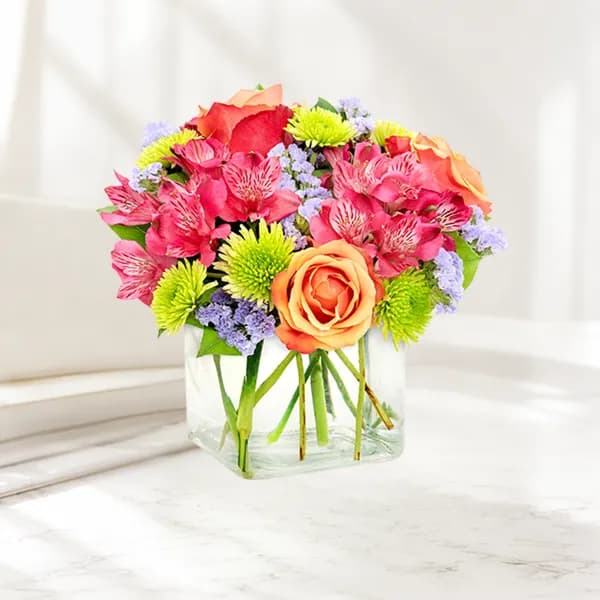
Elated/Trophy Bouquet shows how alstroemeria can anchor a celebratory arrangement, paired with orange roses, green athos poms, and seasonal blooms in a compact cube vase.
Frequently Asked Questions
How long does alstroemeria last in a vase? With regular water changes and stem recuts, alstroemeria typically lasts one to two weeks. The buds open gradually, extending the display beyond many other cut flowers.
Is alstroemeria a perennial? Many alstroemeria species and hybrids are perennial in suitable climates, returning year after year where winters are mild enough. In colder regions, they may be grown as seasonal plants or lifted and stored indoors.
Can alstroemeria be grown in containers? Yes. Compact varieties adapt well to pots and can be moved to sheltered positions in winter. Good drainage and consistent moisture support healthy growth.
For more floral inspiration and expert arrangement ideas, visit Great Flowers.